
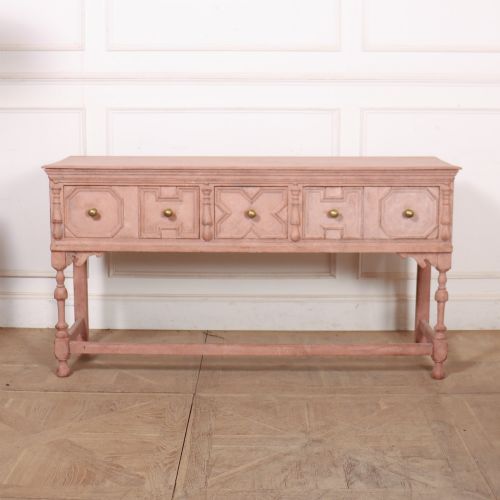
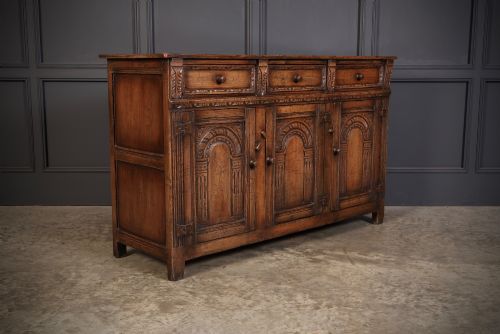
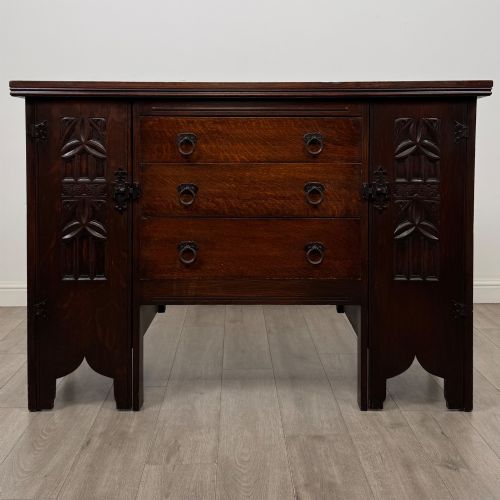
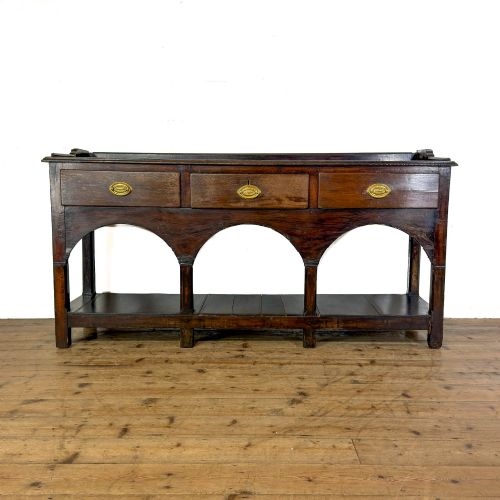
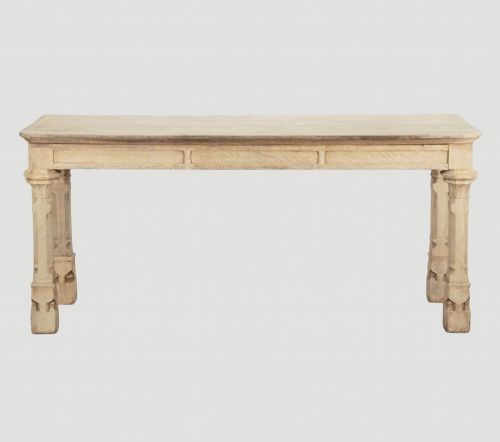
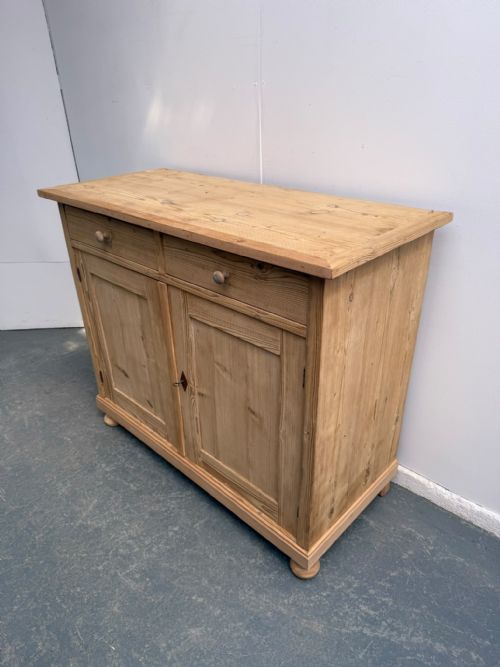


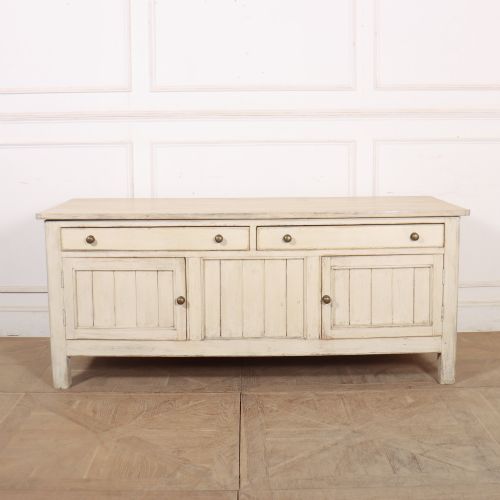
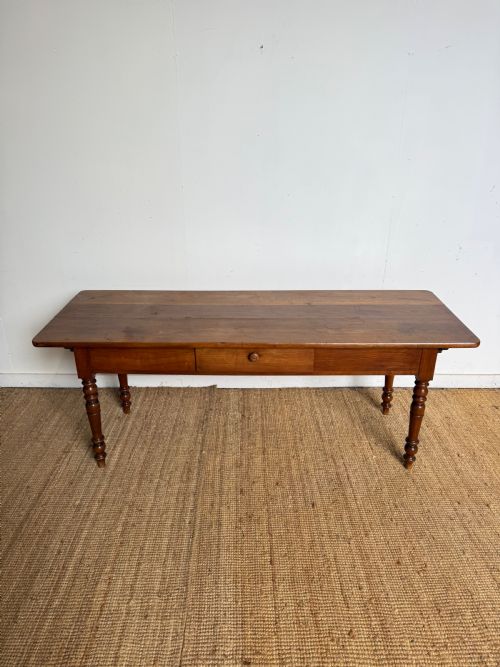

Rustic Wood Server
A rustic wood server brings honest, hardworking character to a room, offering sturdy surface space and deep history through its timber.
Rustic Wood Server
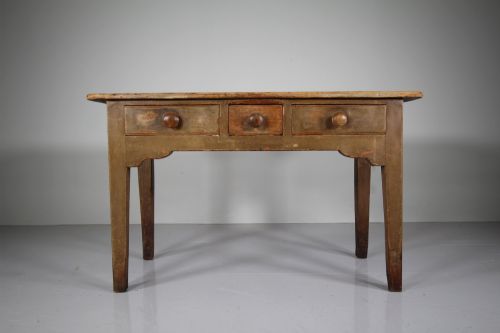
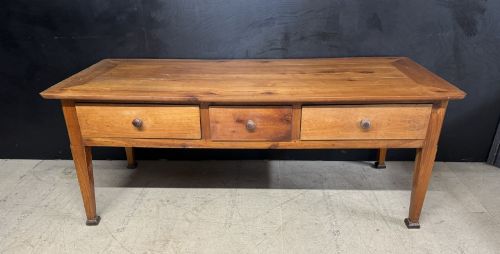
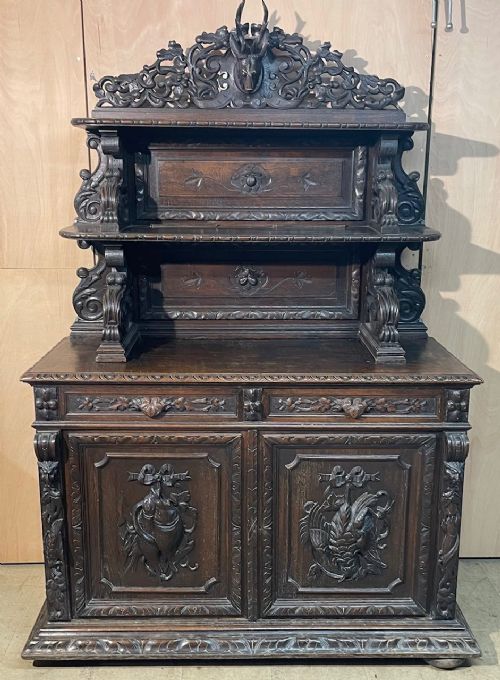
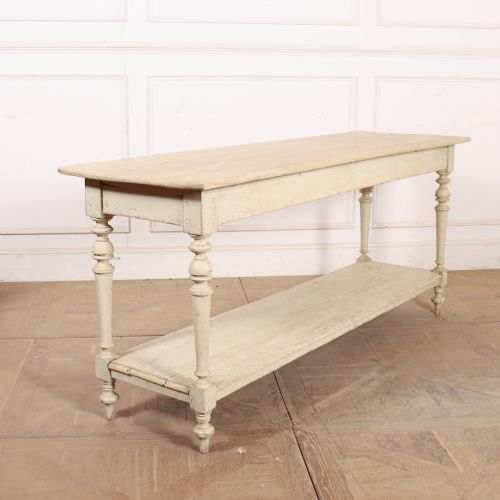
A rustic wood server takes many forms across domestic furniture, appearing as sideboards, dresser bases, console tables and serving tables. These pieces originate from various regions including England, France, Spain and Sweden, spanning the eighteenth and nineteenth centuries.
Buyers seeking a rustic wood server encounter heavy oak, pine and fruitwood constructions shaped by country and provincial traditions. Forms range from potboard dressers and drapers tables to heavy oak sideboards and narrow console tables.
The selection leans heavily on vernacular European pieces intended for utilitarian use in kitchens, halls and dining rooms. Examples stretch from early Georgian oak bases to Edwardian and Arts and Crafts iterations.
Materials and construction
Makers utilised solid timbers such as oak, pine, walnut, chestnut and fruitwood, often pairing structural hardwoods with softer secondary woods. Surfaces show the results of historical waxing, painting, bleaching and natural timber ageing.
Joinery relies on traditional methods suited to heavy domestic furniture, including panelled construction and pegged joints. Iron and brass hardware appear on drawers and cupboards, anchoring the functional design of each server.
Many items display the surface wear of active kitchens and working houses, from scrubbed tops to historical layers of paint. Bleached finishes and waxed patinas reveal the grain and texture accumulated over centuries.
Listings feature items from the eighteenth, nineteenth and early twentieth centuries, including Victorian, Edwardian and Georgian eras.
Distinctions in quality
Quality rests in the integrity of the timber selection and the restraint of regional craftsmanship. Dense, well-figured oak and burr elm carry greater presence than simpler utility pine.
Proportion and utility define the best pieces, where deep drawers, potboards and balanced proportions serve daily function. Original surface treatments, such as untouched paint or honest bleached patinas, elevate a piece above later alterations.
The Rustic Wood Server Glossary
- Potboard dresser
- A dresser base featuring an open lower shelf for storing pots and heavy kitchenware. This lower tier sits just above the floor on short feet or stiles.
- Drapers table
- A long, narrow utility table originally utilised in cloth merchant shops for measuring and folding textiles. They often feature multiple small drawers beneath a generous timber top.
- Bleached oak
- Oak timber treated to strip dark historical finishes, leaving a pale, chalky surface tone. This treatment became popular for lightening heavy antique furniture.
- Dresser base
- The lower cabinet portion of a kitchen dresser, complete with drawers and cupboards beneath a flat top. These pieces functioned independently as serving surfaces.
- Bread prep table
- A heavy domestic work table designed for kneading dough and preparing daily meals. These tables exhibit thick timber tops bearing the scars of heavy domestic labour.
Rustic Wood Server: Frequently Asked Questions
What is a rustic wood server used for?
These pieces function as sideboards, serving tables and console storage units in dining rooms, kitchens and hallways. Their sturdy tops and drawer space provide practical storage and display surfaces.
Historically, they served utilitarian domestic roles in preparing food and storing household provisions. Today, they bring grounded character and surface utility to contemporary interiors.
How do I date a rustic wood server?
Dating relies on examining the timber species, construction joinery, tool marks and historical surface treatments. Eighteenth-century pieces often display pegged joints and hand-sawn boards, while nineteenth-century items introduce machine assistance.
Regional styles also point to specific eras, such as early Georgian vernacular work versus late Victorian or Arts and Crafts production. Secondary woods and hardware help confirm the period of manufacture.
Where were these servers made?
The pieces originate from domestic workshops across rural England, France, Spain, Sweden and Hungary. Provincial makers relied on local timber stocks available in their specific regions.
French provincial pieces often feature fruitwood or chestnut, while English examples favour sturdy oak and pine. Each region developed distinct proportions and drawer configurations.
How do I maintain a wooden server?
Maintain the timber by applying natural beeswax periodically to nourish dry wood and preserve the surface patina. Avoid placing pieces near direct heat sources or strong sunlight to prevent timber splitting.
Clean surfaces gently with a dry or barely damp cloth, steering clear of harsh chemical polishes. Respecting the historical surface wear ensures the piece retains its authentic character.