

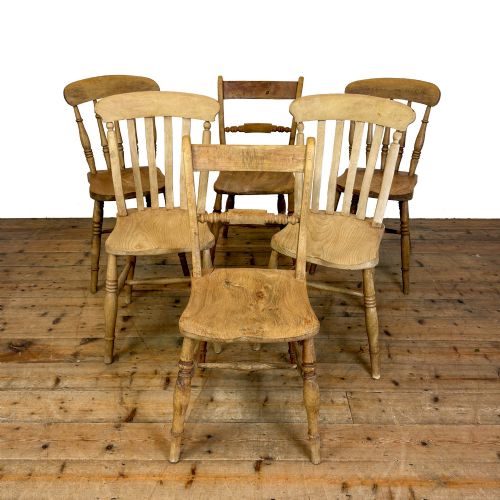
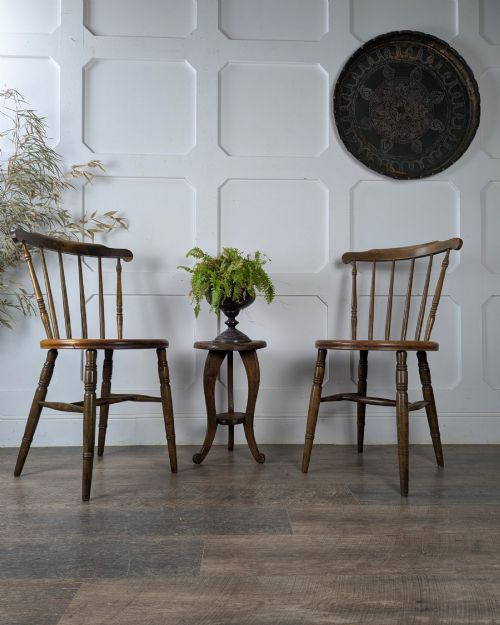
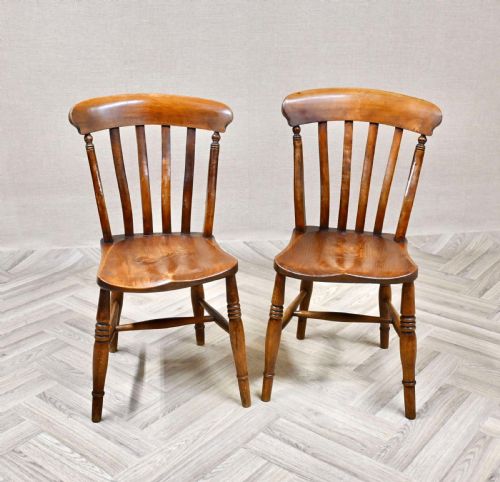
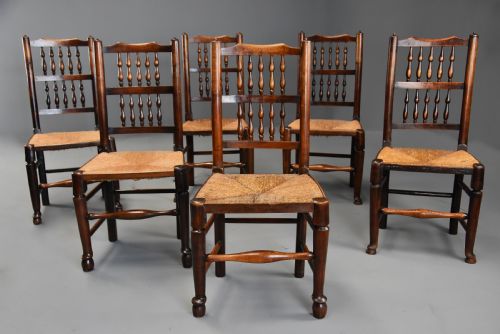
Rustic Wood Dining Chairs
These rustic wood dining chairs bring honest vernacular character to a room, offering sturdy construction and tactile timber grain grown through centuries of rural British domestic life.
Rustic Wood Dining Chairs
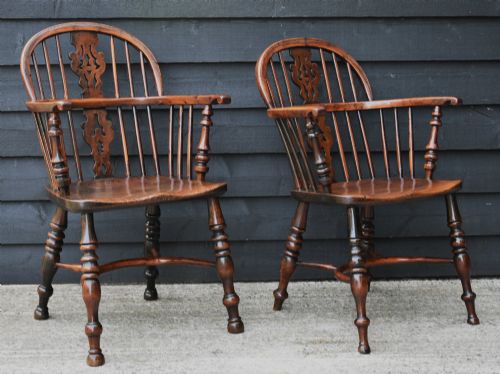
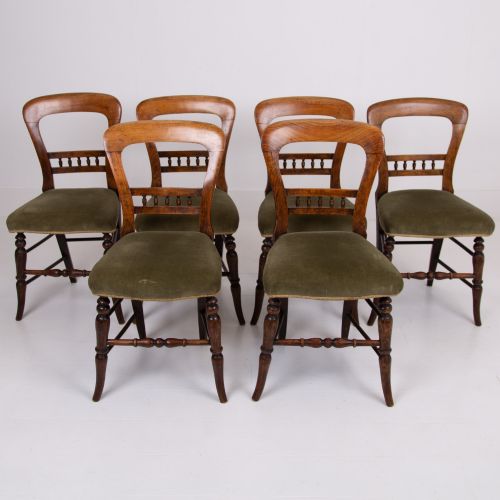
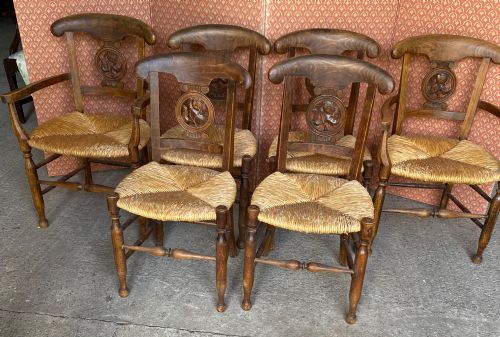
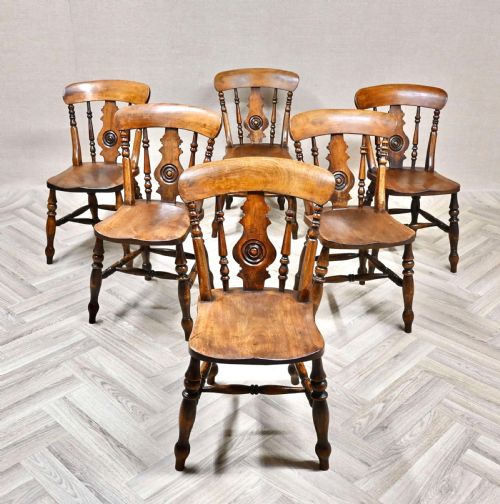
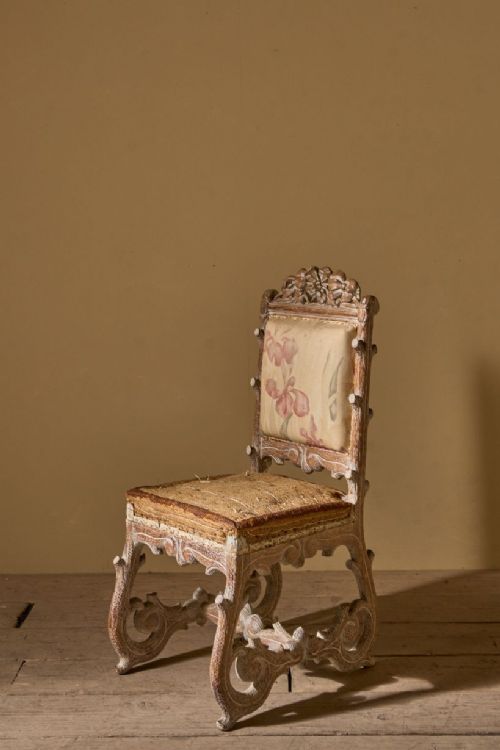
Rustic wood dining chairs embody the practical traditions of country workshops, appearing here in regional forms spanning the eighteenth, nineteenth, and early twentieth centuries. Buyers seeking these pieces encounter vernacular seating designed for farmhouse kitchens, cottages, and provincial dining rooms.
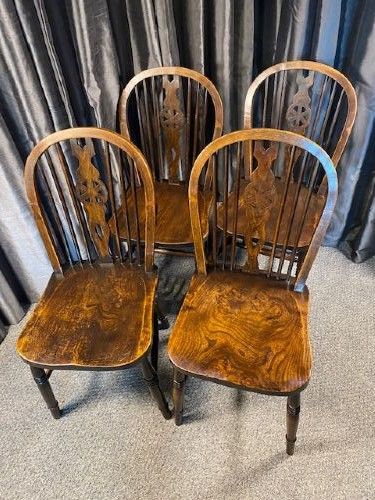
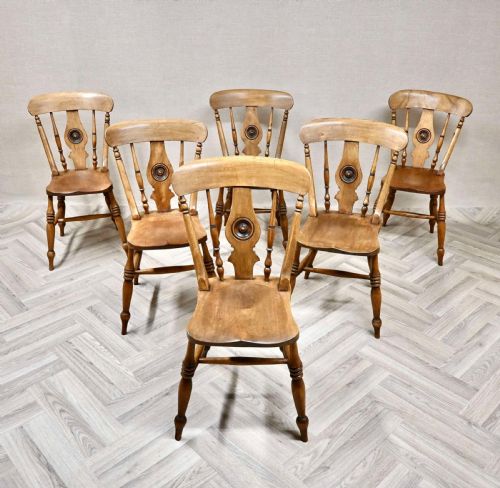
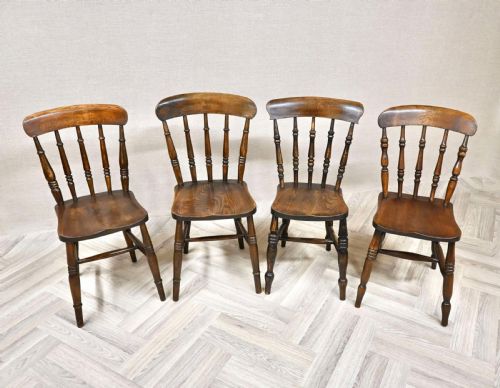
The selection ranges from single side chairs to matched sets of six or more, including carvers, armchairs, and benches. Windsor forms dominate the offerings, alongside ladder-backs and spindle-backs rooted in English, French, and Dutch country traditions.
Origins stretch across specific rural styles such as Shropshire farmhouse, Victorian country, and English country vernacular. Elm, ash, oak, and yew wood provide the structural foundation for these enduring domestic seats.
Materials and construction
Makers utilised contrasting native timbers, typically pairing robust elm seats with flexible ash or fruitwood for spindles, hoops, and bows. This combination allowed rigid strength where weight rests and springy resilience in the bentwood components.
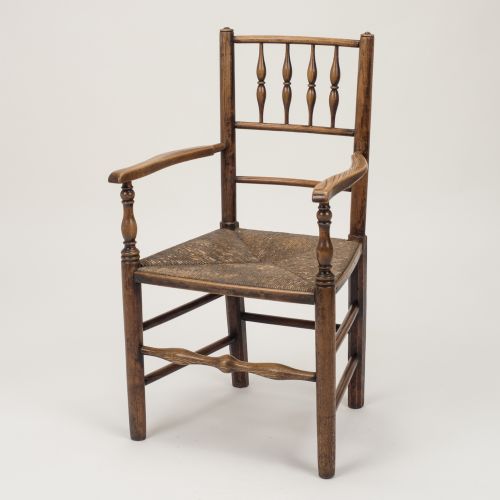
Joinery relied on traditional techniques including wedged tenons, turned components, and bobbin or spindle turnings secured with stretchers. Seats were frequently shaped from solid timber blocks or woven from natural rush to support daily use.
Surface treatments developed organically through decades of polishing, wax application, and handling, resulting in patinated finishes that reveal the grain and natural figure of the hardwood.
Rustic Wood Dining Chairs Retail Price Guide 2026
Typical asking prices for rustic wood dining chairs among the pieces listed under this phrase on Sellingantiques today, from the lower quarter to the upper quarter. They describe what is for sale here now, not the wider market.
Defining quality
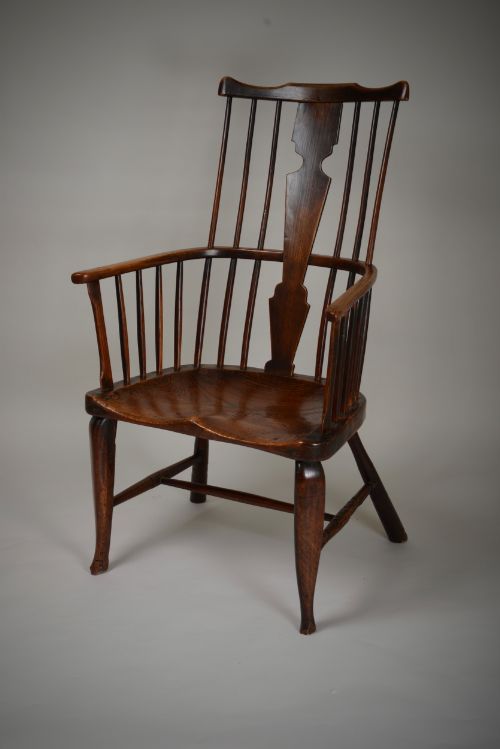
Quality rests in the integrity of the timber selection and the harmony of the regional design, where master provincial makers achieved balanced proportions in high-back or comb-back Windsors. Superior examples retain original matching components across a set rather than assembled replacements.
The depth of the surface patina and the crispness of turning on spindles and legs distinguish workshop output. Subtle details like continuous arm bows, sculpted saddle seats, and double stretchers elevate utilitarian seating into sculptural craft.
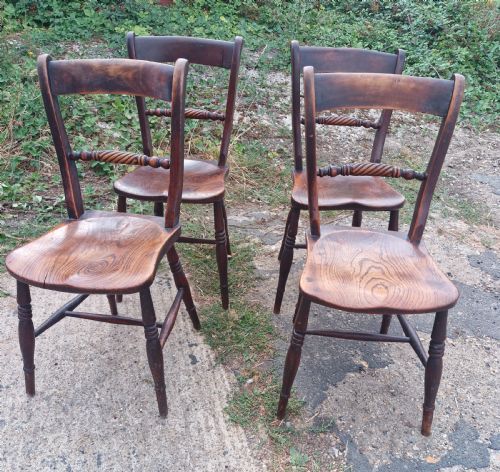
Dinco Penny Chairs·Windsor Worksop
The Rustic Wood Dining Chairs Glossary
- Windsor chair
- A chair built with a solid wooden seat into which the legs and back spindles are separately bored and wedged. This technique creates a light yet exceptionally rigid frame characteristic of rural production.
- Lathe back
- A chair back incorporating flat, vertical wooden slats turned or shaped on a lathe. These slats provide structured lumbar support while maintaining a lighter visual profile.
- Rush seat
- A seating surface woven from dried marsh rushes wound around a wooden frame. It offers a resilient, textured cushion that softens with age and regular friction.
- Bobbin turning
- A decorative woodwork technique producing a series of rounded, spool-like shapes along the length of a stretcher or leg. This pattern was favoured in seventeenth and eighteenth-century vernacular seating.
- Carver chair
- An armchair designed to sit at the head of a dining table or serve as a standalone fireside seat. They generally match the side chairs in a larger dining set.
Rustic Wood Dining Chairs: Frequently Asked Questions
How do I identify a Windsor chair?
A Windsor chair is defined by its construction, where legs and back spindles are fitted directly into a thick wooden seat rather than an independent frame. They often feature bentwood hoops or comb-backs.
Regional variations display distinct comb shapes, arm designs, and timber pairings like elm and ash.
Are rush seats durable for daily use?
Rush seats woven from natural marsh grasses offer surprising strength and flexibility for everyday dining. Regular wax maintenance and careful placement away from direct moisture help preserve the weave.
Over decades, the material darkens gracefully and conforms to the sitter.
How do I mix mismatched rustic chairs?
Harlequin sets of country chairs bring visual variety to a dining table by combining pieces with shared vernacular traits. Sticking to common timber tones, such as elm and ash, unifies chairs with different back designs like ladder-backs and spindle-backs.
Matching seat heights ensure comfort around the table.
What is a carver chair?
A carver chair is an armchair traditionally placed at either end of a dining table. In country sets, they match the style of the surrounding side chairs while offering supportive armrests.
Early examples feature broad elm arms bent from a single piece of timber.