
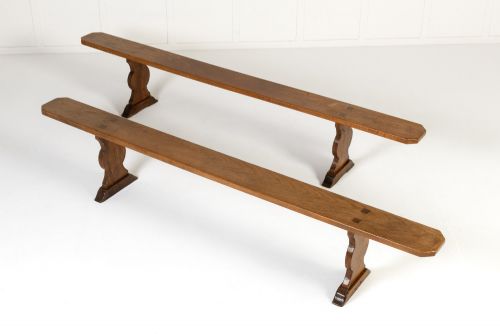
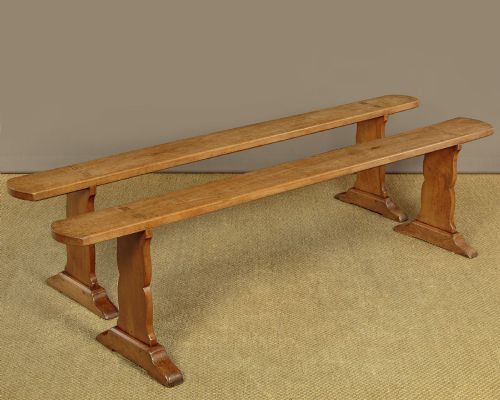
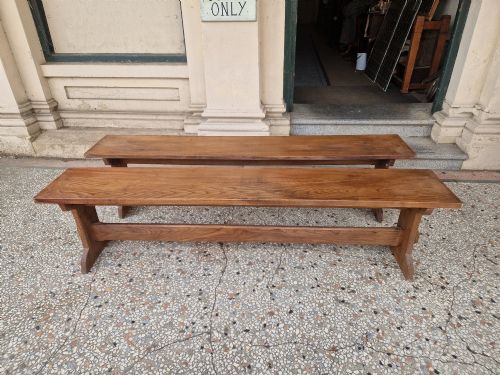


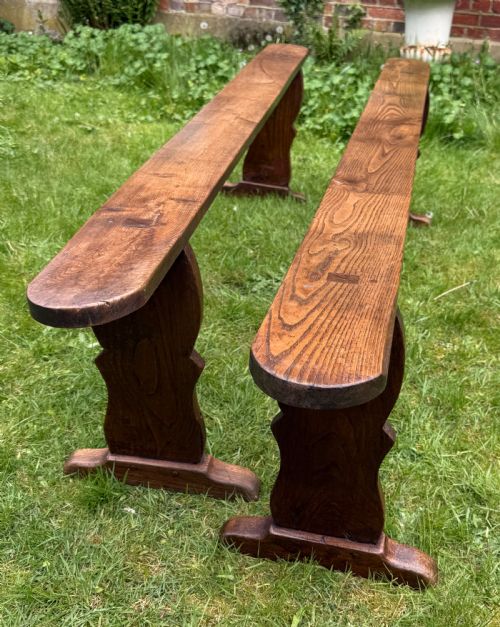
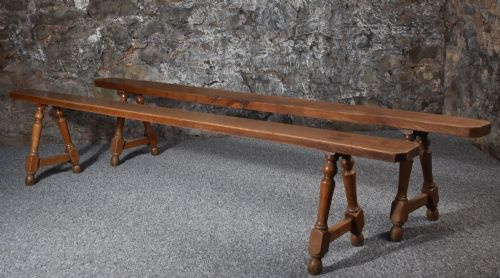
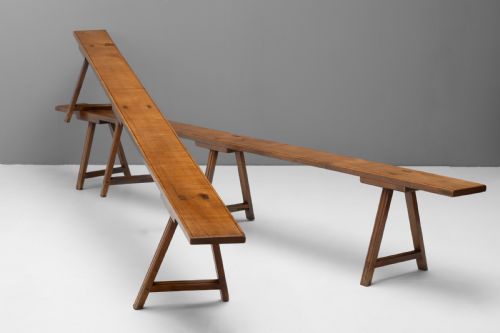


Rustic Trestle Bench Pair
A rustic trestle bench pair brings practical seating and robust character to dining spaces, forged from honest timber to last generations.
Rustic Trestle Bench Pair
A rustic trestle bench pair comprises matching seating units designed for communal tables, featuring periods ranging from the nineteenth century into the early twentieth century. Buyers seeking this phrase encounter dining benches, hall benches, and occasional footstools originating from French, Scandinavian, and general country traditions.
The configurations vary from long refectory examples to school seating and compact forms. Most pieces emerge from nineteenth century Victorian workshops or early twentieth century provincial makers.
Materials and Construction
These pieces rely on solid regional hardwoods such as oak, elm, cherrywood, and pine, selected for structural endurance in daily use. Carpenters utilised traditional joining methods to secure heavy timber tops to sturdy trestle supports.
Makers shaped fruitwood, hardwood, and pitch pine using hand tools that left subtle tool marks across the seating surfaces. The timber was left unadorned or finished with simple natural oils to highlight the grain.
School benches occasionally retain carved initials left behind by restless nineteenth century pupils.
Assessing Quality
Quality rests in the integrity of the timber selection and the retention of original surface patination. Superior examples display balanced proportions and tight structural joints that withstand heavy weight without timber fatigue.
Lesser pieces often exhibit excessive structural timber replacement or inappropriate modern hardware fixes. The depth of wear across the wood surface reveals the true age and authenticity of the pair.
The Rustic Trestle Bench Pair Glossary
- Trestle
- A structural support consisting of a horizontal beam fixed to two splayed legs. This design provides maximum legroom beneath long dining seating.
- Refectory
- A long dining hall traditionally found in monasteries or large institutions. Benches built for these settings required exceptional length and heavy timber construction.
- Fruitwood
- Timber sourced from fruit-bearing trees such as cherry or pear. Cabinet makers valued these woods for their dense grain and warm colour.
- Pitch Pine
- A durable resinous pine variety common in nineteenth century utilitarian furniture. It offers high resistance to wear in school and hall environments.
- Patina
- The surface sheen and colour acquired by wood through decades of handling and polishing. This natural skin indicates genuine age.
Rustic Trestle Bench Pair: Frequently Asked Questions
How were these benches used originally?
These benches served communal dining rooms, school halls, and large country houses where flexible seating capacity was essential.
Their sturdy trestle design allowed multiple diners to sit closely together along refectory tables.
Are these benches suitable for daily dining?
Solid hardwood construction makes these pairs robust enough for modern kitchen and dining room use.
Buyers should measure table heights and bench clearances to ensure comfortable seating alignment.
How do I care for antique timber benches?
Maintain the wood surface by applying natural beeswax periodically and avoiding direct heat sources.
Keep them away from damp environments to preserve the original nineteenth and early twentieth century timber.
What timber types appear most often?
Pine, oak, cherrywood, and elm form the majority of the available nineteenth and early twentieth century inventory.
French and Scandinavian provincial workshops favoured these locally sourced regional hardwoods.
How do I identify a matched pair?
Matched pairs share identical timber species, stretcher configurations, and proportional dimensions from the same workshop era.
Examine the grain patterns and wear marks to confirm they travelled together through history.