





Rustic Timber Console
A rustic timber console brings honest utility and time-worn character to a hallway or living space through sturdy vernacular construction.
Rustic Timber Console
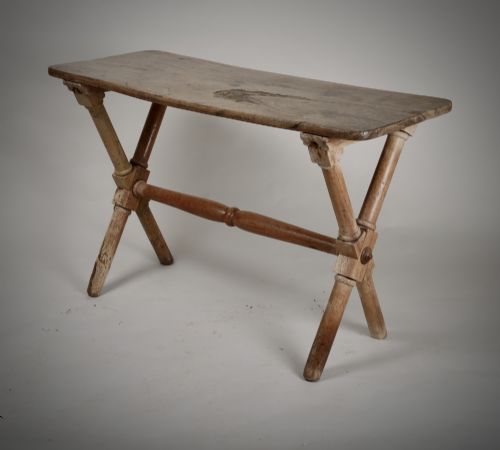
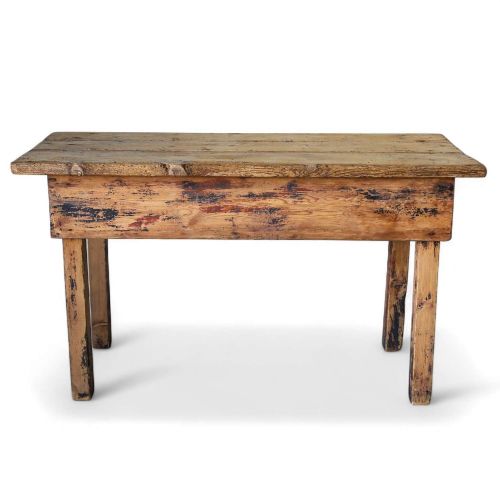
A rustic timber console emerges primarily from utilitarian forms such as workbenches, serving tables, and dresser bases rather than formal drawing-room furniture. When exploring a rustic timber console, buyers encounter sturdy pieces shaped by practical demands in country houses, workshops, and dairies.
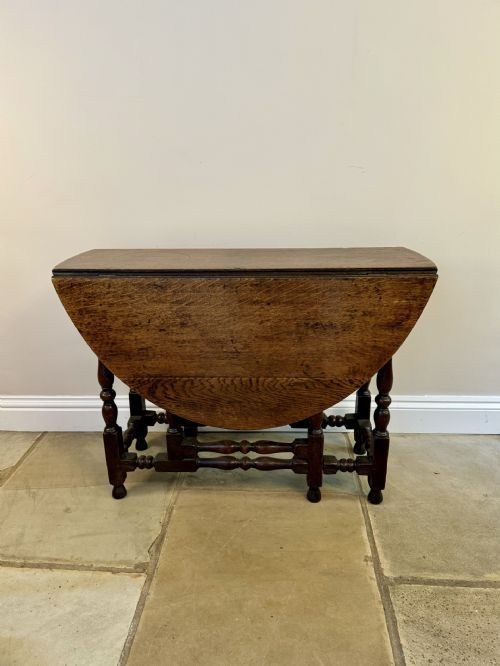
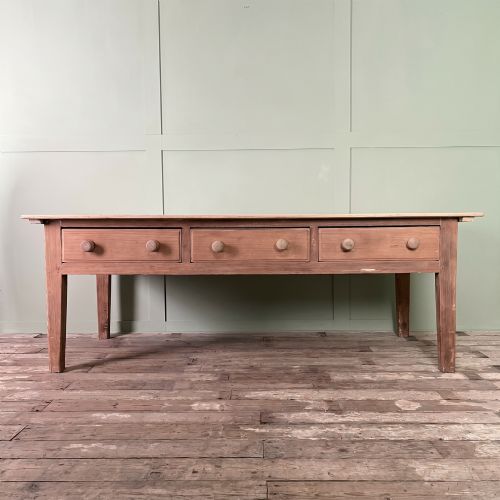
The selection ranges widely across European and British traditions, spanning French provincial workbenches, Welsh pine servers, and Italian painted tables. These surfaces display the physical evidence of past labour, from scuffed timber to old paint layers.
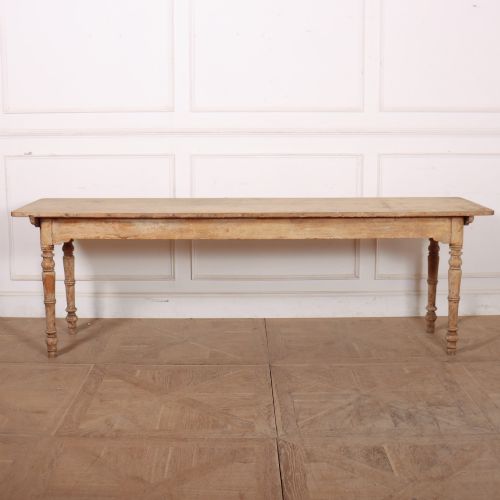
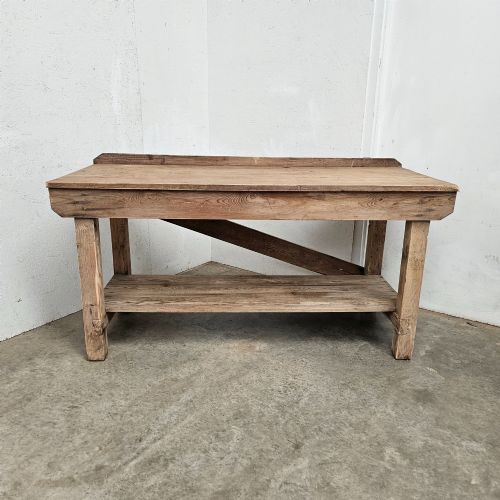
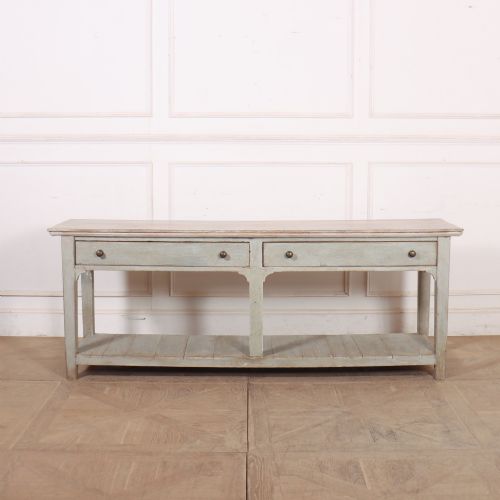
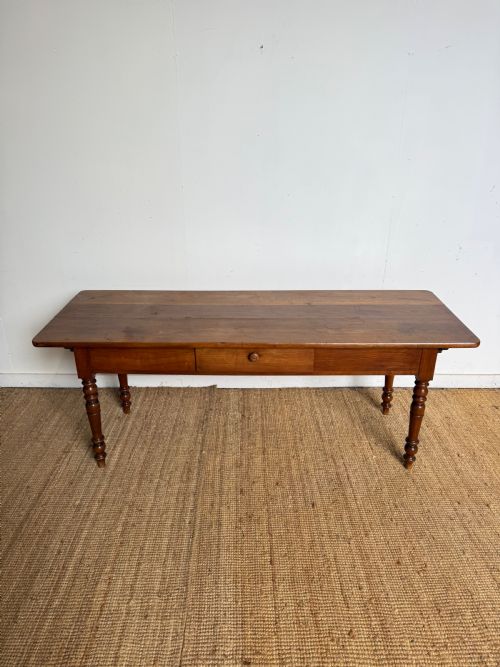
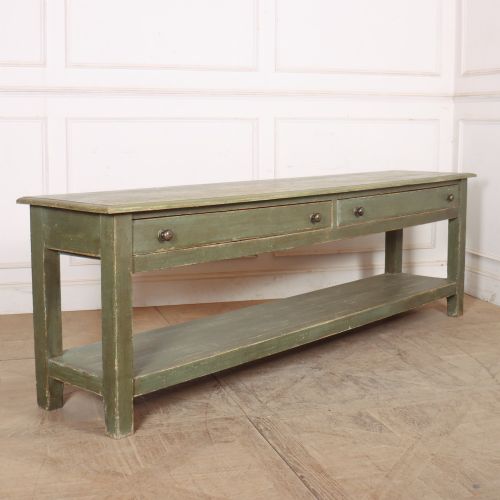
Formats include narrow side tables, potboard servers, and trestle structures designed to stand against walls or anchor narrow spaces. The unifying trait across these diverse origins is a heavy reliance on solid wood and straightforward joinery.
Materials and construction methods
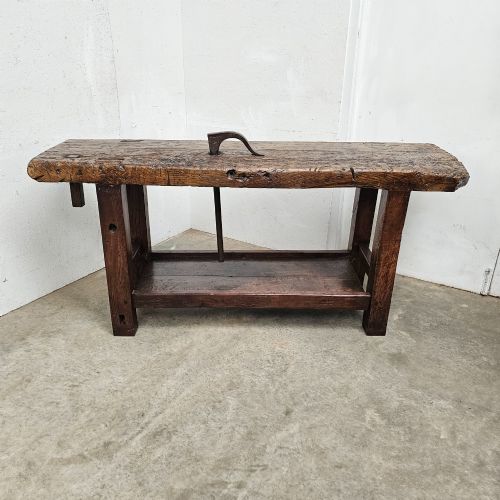
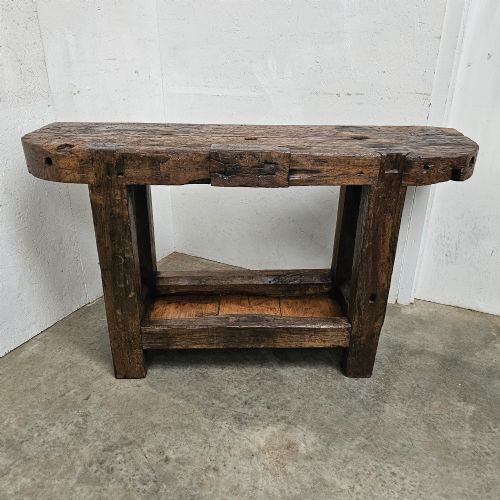
Makers relied on accessible regional woods like pine, oak, elm, ash, and sycamore, selecting timber for strength rather than decorative grain. Surfaces often show heavy board construction, exposed peg joints, and operational elements like wooden vices or clamping bars.
Secondary treatments included practical coats of paint, protective wax, or bare scrubbing that left the grain raised and textured. Iron hardware, from strap hinges to bracing brackets, provided structural reinforcement for items subjected to daily physical work.
Several heavy workbenches retain deep cut-marks from past carpentry alongside old iron vices that once gripped timber planks.
Distinguishing quality and integrity
Quality rests on the integrity of the original structure and the honesty of the surface wear. Pieces retaining their original working mechanisms, uncompromised timber thickness, and undisturbed patination stand apart from heavily restored examples.
Proportion and scale also dictate merit, as narrow depths and balanced heights determine how effectively a utilitarian form functions as a hall table or serving surface today.
The Rustic Timber Console Glossary
- Potboard
- A slatted lower shelf fitted beneath a table or dresser base, traditionally used for storing earthenware pots and heavy vessels.
- Workbench
- A heavy-duty carpenter or artisan table featuring thick plank tops, often fitted with wooden vices, screw mechanisms, or clamping bars.
- Dresser base
- A low sideboard or serving unit featuring drawers or cupboards beneath a flat top, common in country kitchens and dining rooms.
- Trestle table
- A rigid table design where the top rests on folding or fixed upright frames rather than standard corner legs.
- Patina
- The surface sheen and colour depth acquired by wood and paint through decades of handling, cleaning, and exposure to light.
Rustic Timber Console: Frequently Asked Questions
What is a rustic timber console used for?
These pieces serve primarily as narrow display and storage surfaces in hallways, living rooms, and kitchens. Their shallow depths allow them to fit into passageways where standard tables would obstruct movement.
Historically built for active tasks like food preparation or craft work, today they provide a stable top for lamps, books, and decorative objects while introducing warmth through aged wood.
How do I identify the age of these tables?
Age is determined by examining tool marks, timber shrinkage, construction methods, and the nature of the surface wear. Hand-sawn boards, peg joinery, and old iron hardware typically point towards nineteenth-century or earlier origins.
Sellers often reference specific decades or centuries based on regional styles and construction techniques, though many vernacular items lack maker marks or exact dates.
Are these tables suitable for daily use?
Solid wood construction and sturdy frames make these pieces exceptionally resilient for everyday domestic life. Their surfaces are built to handle regular placement of objects without structural strain.
Many retain the scars of past utility, meaning modern use simply adds to their established character rather than compromising a delicate finish.
How do I care for antique wood surfaces?
Maintenance requires minimal intervention, relying chiefly on dry dusting and occasional application of natural beeswax to nourish dry timber. Avoiding direct heat sources and excessive moisture protects the old grain and historic finishes.
Harsh chemical cleaners should be avoided entirely to preserve the accumulated patina and original surface texture.