
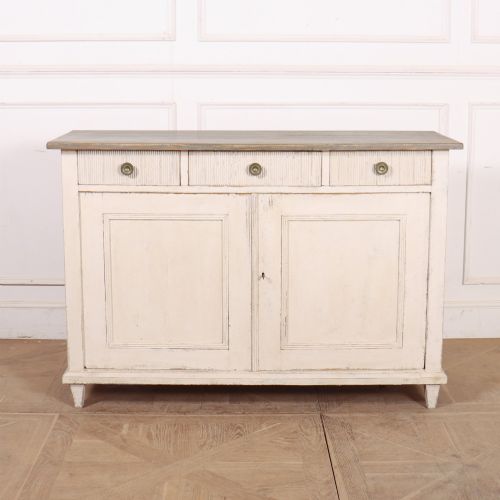
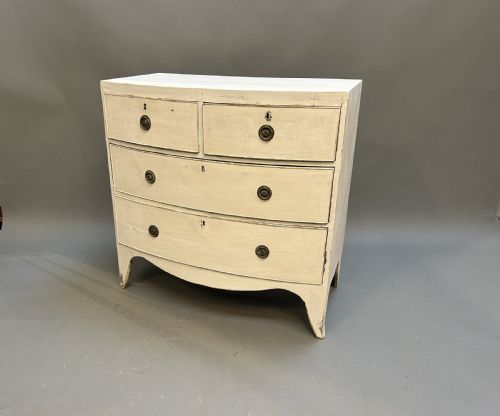


Rustic Swedish Dresser
A rustic swedish dresser brings honest northern craft and worn painted surfaces into modern rooms.
Rustic Swedish Dresser
A rustic swedish dresser represents the practical storage furniture of northern homes, built from local timber during the nineteenth century. These pieces encompass pine cupboards, sideboards, chests of drawers, and kitchen cabinets shaped by Scandinavian country traditions and Gustavian aesthetics.
The inventory on this page consists predominantly of nineteenth century pine examples, including pieces dated to 1800, 1890, and 1920. Buyers frequently encounter cupboards, chests of drawers, and buffets decorated with painted finishes rather than polished mahogany or oak.
Makers utilised regional pine to construct sturdy storage for rural and provincial households. Alongside pieces described specifically as Swedish, the selection includes related Scandinavian country items and continental painted furniture.
Materials and construction methods
Carpenters built these items using solid pine, relying on the timber available across Scandinavian forests. Iron and brass fittings such as hinges and handles complete the construction of doors and drawers.
Surfaces received layers of paint, sometimes finished with techniques like ragwork painting or presenting original scraped paint. This painted pine creates the matte, weathered texture characteristic of country furniture from this period.
The documented pieces span from the year 1800 through the nineteenth century up to 1920.
Assessing quality and character
Quality rests in the survival of original decorative surfaces and the integrity of the pine construction. Pieces retaining their early painted finishes or distinct ragwork decoration possess greater visual depth than later repainted items.
Proportion and scale distinguish finer pieces from utilitarian workshop output. Well-balanced Gustavian lines and clean architectural mouldings elevate a simple pine cupboard into a refined example of regional design.
The Rustic Swedish Dresser Glossary
- Gustavian
- The Swedish interpretation of neoclassical style, named after King Gustav III, featuring restrained carved detail and lighter painted finishes. It bridges formal court taste and country practicality.
- Ragwork paint
- A decorative paint finish applied by manipulating colour with rags to create a textured, mottled surface. This technique added visual depth to plain pine furniture.
- Scraped paint
- A surface treatment where layers of old paint are partially scraped back to reveal underlying colours. Collectors prize this honest record of a piece's chronological history.
- Pine
- A softwood native to northern Europe that formed the structural basis for everyday Scandinavian furniture. Its accessible nature suited the painted traditions of country workshops.
Rustic Swedish Dresser: Frequently Asked Questions
How do I care for painted pine furniture?
Keep these items away from direct sunlight and sudden temperature changes to protect the aged pine and delicate paint layers. Dust gently with a dry cloth.
Avoid chemical polishes or modern cleaning agents that can soften or strip historic painted finishes.
Are these pieces strictly from Sweden?
While many items originate specifically from Sweden, the broader category includes Scandinavian country pieces and continental folk art. Regional styles share similar pine construction methods.
Makers across the region adapted neoclassical Gustavian tastes into practical furniture for local households.
What is original scraped paint?
Original scraped paint refers to a surface where earlier decorative layers remain partially exposed through intentional weathering or gentle removal over time. This reveals the true age of the piece.
Collectors value this honest patination because it shows how the furniture was used and decorated across generations.