


Rustic Spanish Wooden Table
A rustic spanish wooden table brings centuries of character to a room, built from heavy walnut, elm or chestnut for hard daily use.
Rustic Spanish Wooden Table
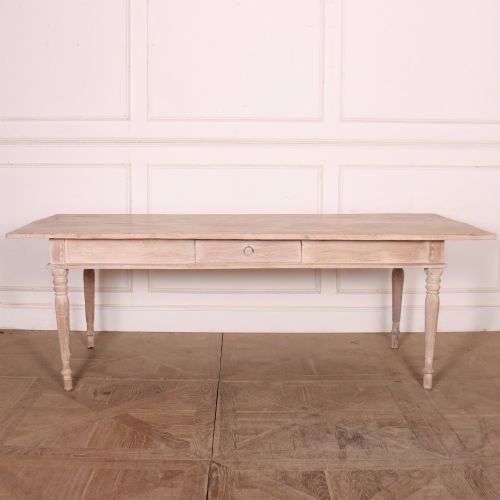
When you search for a rustic spanish wooden table, you encounter substantial forms spanning the seventeenth, eighteenth and nineteenth centuries. These pieces encompass dining tables, refectory tables, console tables, side tables, coffee tables, and occasional tables shaped by provincial and farmhouse traditions.
The version you are most likely to meet on this page is a walnut or elm dining table or console. Walnut dominates the earlier centuries, while elm, chestnut, pine, and fruitwood appear across farmhouse and provincial examples.
Origins stretch across regions like Catalonia and the Basque country, yielding vernacular forms such as trestle tables and shepherd's tables. These survivors show the marks of utility, shaped for domestic work and dining before entering the antique market.
How they were made
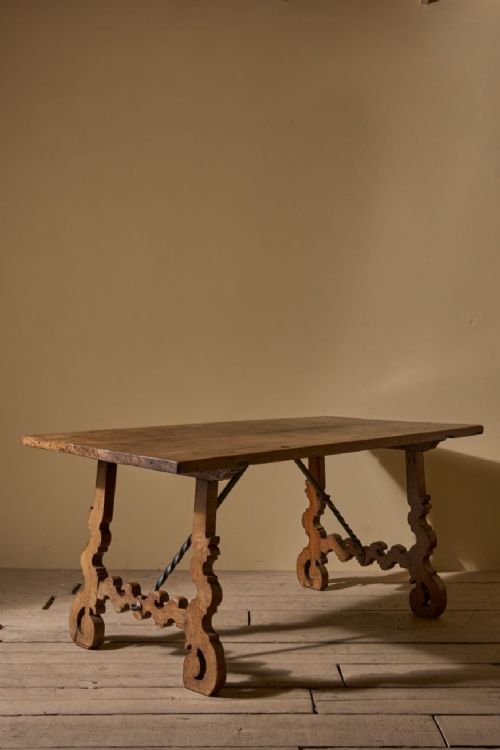
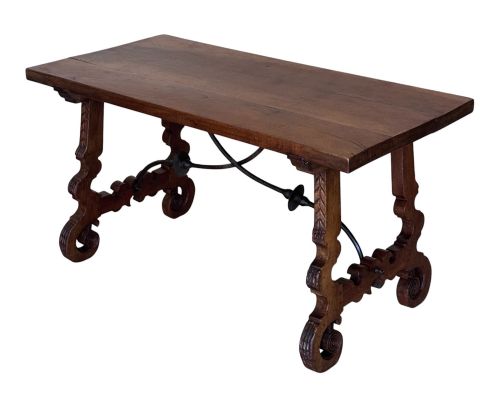
Construction relies on solid timbers like walnut, oak, chestnut, and elm, selected for strength and worked by hand. Planks are joined with traditional framing methods, often supported by heavy stretcher bars or trestle bases designed to steady long tops.
Object forms on this page range from large dining tables and refectories down to compact occasional tables and storage boxes.
What varies in quality
Quality separates pieces by the selection of primary timbers and the integrity of their structural survival. Dense, figured walnut and seasoned chestnut represent the upper tier, retaining substantial thickness in the top boards and original bracing.
The degree of unaltered surface texture and honest patina dictates the standing of an example. Pieces retaining their original wrought iron work and uncompromised joinery command greater appreciation than those with extensive replacement timber.
The Rustic Spanish Wooden Table Glossary
- Refectory table
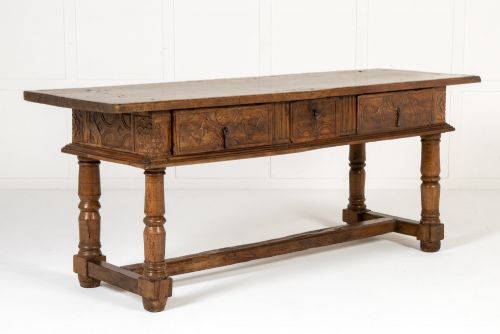
- A long, narrow dining table traditionally used in communal dining halls. These examples feature robust wooden legs united by low stretchers for stability.
- Trestle table
- A table consisting of two or more support frames connected by a horizontal beam or stretcher. This construction method allows maximum legroom along the length of the top.
- Console table
- A wall-mounted or freestanding table designed to sit against a flat surface. They often serve narrower spaces in halls and living areas.
- Fruitwood
- Timber sourced from fruit-bearing trees such as pear or apple, known for a fine grain and warm tone. It appears in provincial furniture alongside walnut and chestnut.
- Patina
- The surface sheen and colour developed over decades of handling, light, and polishing. It serves as an indicator of age and continuous use.
Rustic Spanish Wooden Table: Frequently Asked Questions
How do I clean a wooden table?
Dust regularly with a dry cloth and avoid harsh chemical sprays that strip the aged surface. Wax can be applied occasionally to nourish the dry timber.
Keep the piece away from direct heat sources and dramatic humidity changes to prevent the old planks from splitting.
Can I use an antique table daily?
These tables were built for heavy domestic service and handle normal daily use with ease. Using placemats and coasters protects the surface from moisture rings and heat damage.
Treat the aged wood with care, and it will continue to serve as a central gathering place in a modern home.
How do I date a Spanish table?
Dating relies on timber selection, tool marks left by hand-working, and structural construction details. Seventeenth and eighteenth-century examples frequently employ heavy walnut and simple iron stretchers.
Later nineteenth-century pieces often introduce elm or pine with modified framing techniques suited to provincial workshops.
What is a trestle base?
A trestle base uses upright supports joined by a central horizontal beam rather than four individual corner legs. This design offers robust support for heavy top boards.
It remains a hallmark of early farmhouse and refectory furniture found across Spanish and continental regions.