


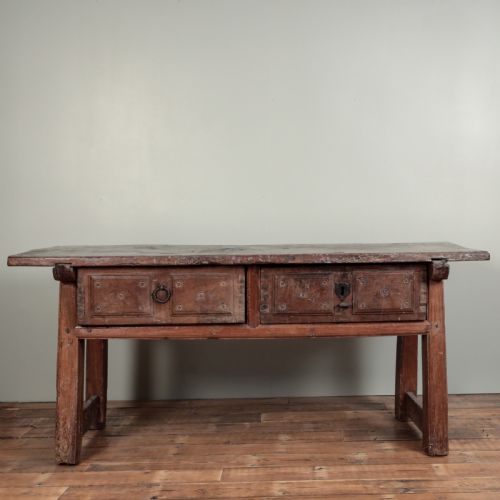


Baroque Trestle Table
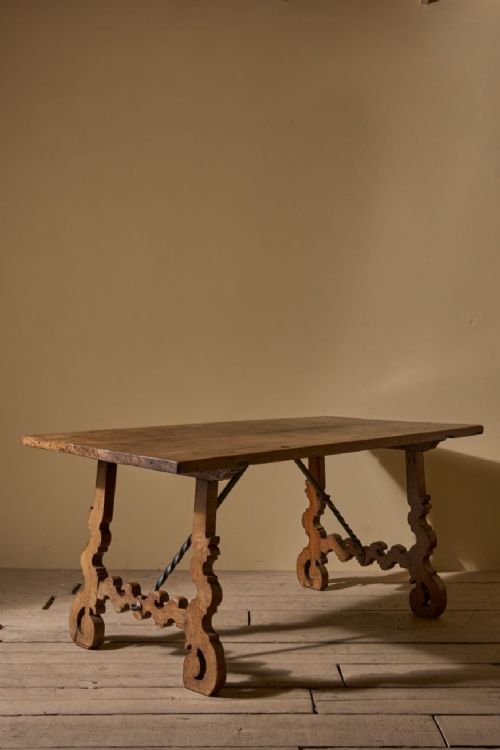
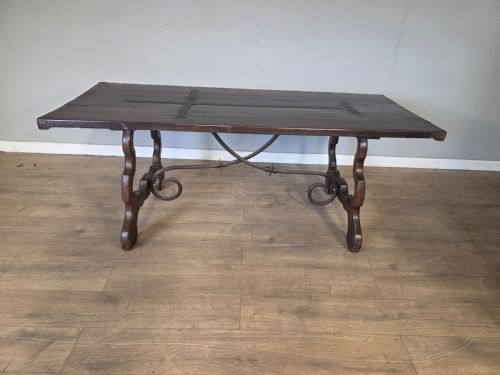
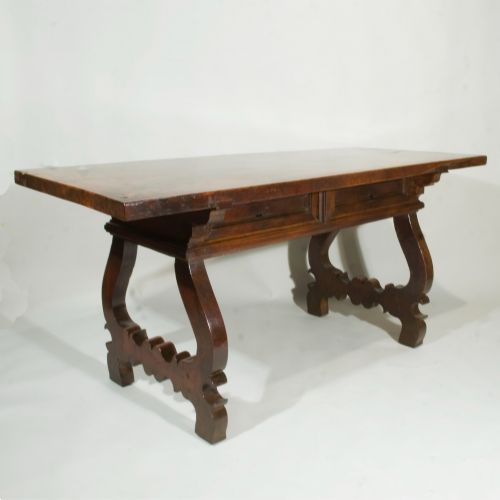
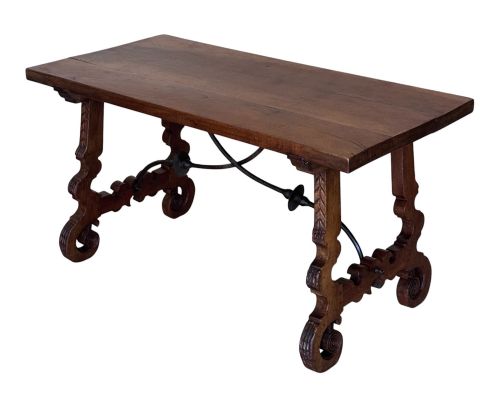
A baroque trestle table brings heavy timber and architectural stretchers into a room, offering the bold proportions collectors seek.
Baroque Trestle Table
When you search for a baroque trestle table, you are looking at substantial heavy timber furnishings built for dining, console use, or central display. These forms span dining tables, side tables, console tables, centre tables, and desks.
The versions you are most likely to meet on this page hail primarily from the seventeenth and eighteenth centuries, alongside later revival pieces from nineteen hundred and nineteen twenty. They draw heavily on Spanish baroque and continental provincial traditions.
How they were made
Joiners built these pieces using solid walnut, oak, and fruitwood timber, paired with wrought iron and iron for bracing and stretchers. This combination provided the heavy structural support necessary for large dining and console surfaces.
Craftsmen utilised thick timber planks for the tops, securing them to trestle bases with traditional joinery and visible metalwork. Surfaces developed depth over centuries, often retaining an original patina on the bare wood.
Current listings feature walnut, oak, and fruitwood spanning the seventeenth, eighteenth, and nineteenth centuries, alongside revival pieces.
What varies in quality
The distinction between top examples and lesser ones lies in the depth of the original patina and the integrity of the timber. Solid walnut surfaces with undisturbed age show superior character compared to heavily restored boards.
Proportion and the weight of the iron stretchers also dictate standing. Pieces retaining their early ironwork and unblemished structural mass command greater attention than those with replaced elements.
The Baroque Trestle Table Glossary
- Patina
- The surface sheen and colour developed by wood through age and handling. This condition marker indicates minimal harsh stripping by later restorers.
- Refectory table
- A long narrow dining table designed for communal dining halls. This form often utilises heavy trestle supports and a central stretcher.
- Console table
- A table designed to stand against a wall, frequently secured with brackets. These forms act as serving surfaces or display furniture in grand rooms.
- Continental provincial
- Furniture made in European regions outside major metropolitan design centres. These objects adapt formal baroque layouts into sturdier local versions.
Baroque Trestle Table: Frequently Asked Questions
What is a baroque trestle table?
A heavy wooden table supported by trestle ends, often joined by iron stretchers. These sturdy forms originated for dining and administrative use.
They rely on substantial timber planks and architectural framing to hold massive weights without wobbling.
How do I style a trestle table?
Place the table in a dining room or hallway where its long proportions can command the space. Pair it with simple seating to let the heavy timber base remain visible.
Avoid crowding the surface with small objects so the wood grain and original patina stay the focus of the room.
Are these tables solid wood?
The listings show pieces constructed from solid walnut, oak, and fruitwood timber. These dense woods provided the structural backbone for early European furniture.
Joiners avoided veneers on these robust trestle designs, relying instead on thick planks that could withstand heavy daily use.
How do I spot a revival piece?
Revival items from the early twentieth century often mirror seventeenth century forms but lack deep centuries-old wear. Look closely at the joinery and surface texture for clues about age.
True seventeenth century timber displays distinct tool marks and a softened patina that modern workshops cannot easily replicate.