



Rustic Round Wooden Table
A rustic round wooden table brings immediate warmth and honest character to a room through solid timber construction and time-worn surfaces.
Rustic Round Wooden Table
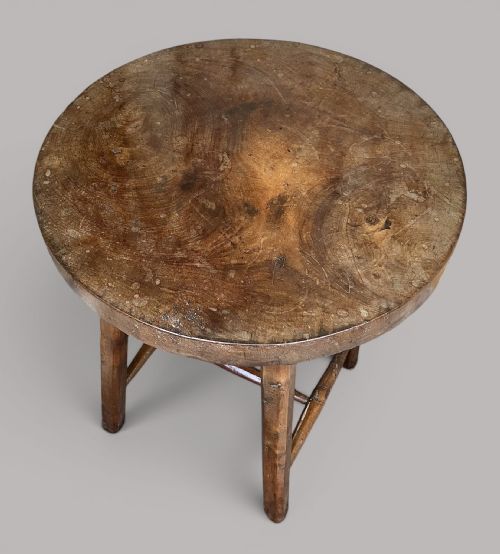
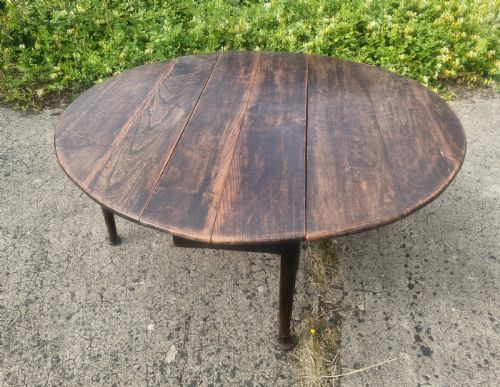
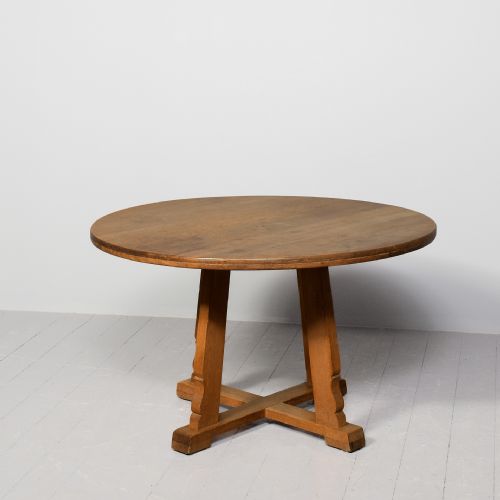
A rustic round wooden table encompasses practical domestic forms from the eighteenth, nineteenth, and early twentieth centuries, designed for daily utility in kitchens, taverns, and country houses. These pieces range from compact tripod cricket tables and occasional tables to large elm dining tables and painted supper tables.
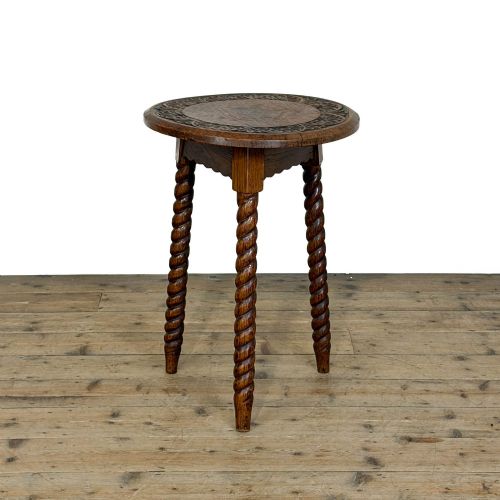
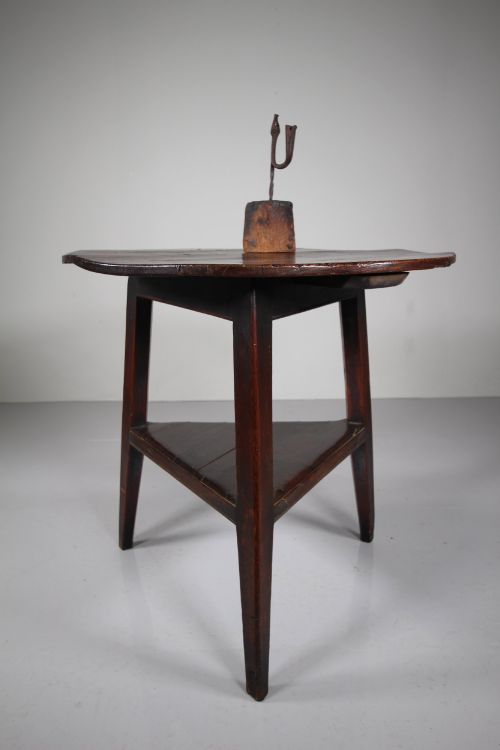
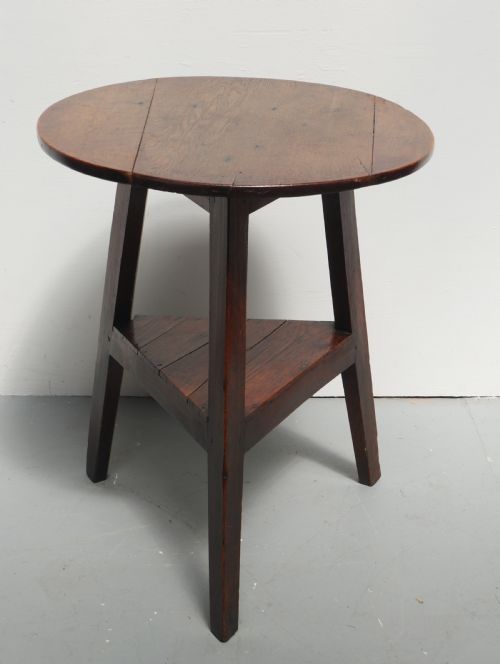
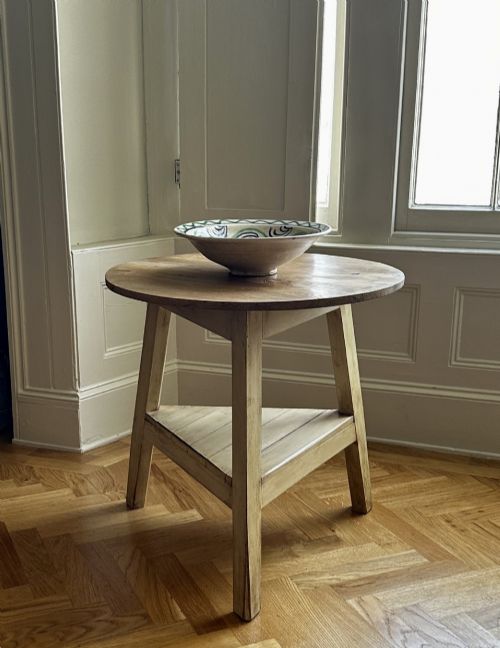
The rustic round wooden table most commonly met on this page is the cricket table, typically constructed with three splayed legs and a circular top. Dating frequently from the Georgian and nineteenth-century periods, these vernacular pieces often feature native timbers such as oak, elm, pine, and ash.
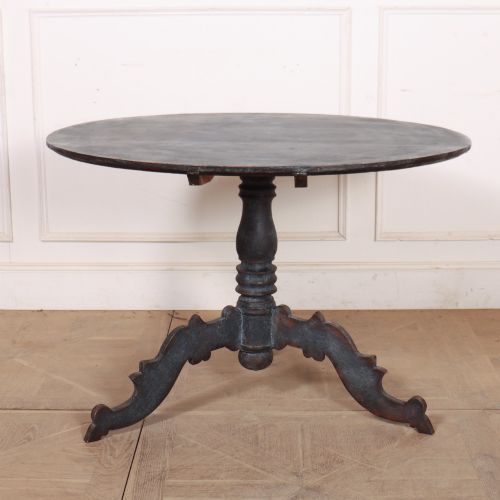
Buyers also encounter French and Swedish painted examples alongside Welsh and English country vernacular pieces, offering various scales from small side tables to larger dining and centre tables. Each piece reflects regional woodworking traditions prioritising sturdy construction over formal decoration.
How they were made
Makers utilised solid native hardwoods and softwoods including oak, elm, pine, walnut, and sycamore, often selecting timber for immediate local availability. Tops were joined from planks or cut from single wide boards, while legs were frequently turned on a lathe or shaped by hand.
Construction methods relied on traditional joinery such as pegged mortise and tenon joints, dovetails, and simple direct boring for tripod legs. Surfaces were finished with plain wax, oil, or historical layers of paint, allowing the natural grain and tool marks of the maker to remain visible.
What varies in quality
Quality rests in the integrity of the original construction, the thickness and selection of the timber top, and the balance of the frame. Pieces that retain their original unstripped surfaces, untouched patination, and unaltered bases hold greater historical integrity.
Proportion and the harmony of the turned or splayed legs dictate visual success, with tighter joinery and thoughtful detailing separating utilitarian items from finer country workshop productions.
The Rustic Round Wooden Table Glossary
- Cricket table
- A small three-legged circular wooden table originating in Britain, traditionally designed with splayed legs to remain stable on uneven flagstone floors.
- Vernacular furniture
- Items made by local cabinetmakers or carpenters for everyday domestic use, adhering to regional styles rather than court or metropolitan fashions.
- Tripod table
- Any table supported by three legs radiating from a central point or joined beneath a circular top.
- Pad foot
- A simple foot shape where the leg terminates in a flattened, rounded pad resting directly on the floor.
- Dropleaf table
- A table with hinged flaps on one or two sides that can be raised to extend the surface area.
- Patina
- The deep surface sheen and colour acquired by wood and paint over centuries of handling, cleaning, and exposure to light.
Rustic Round Wooden Table: Frequently Asked Questions
What is a cricket table?
A cricket table is a traditional three-legged round table designed to stand steadily on uneven cottage floors.
Their compact size makes them versatile for use as bedside tables or beside armchairs.
How do I care for antique timber?
Protect antique wood from direct sunlight and sudden temperature changes to prevent the timber from splitting.
Apply a simple natural beeswax occasionally to nourish the surface and maintain the historic patina.
Where were these tables made?
These pieces were produced in local rural workshops across Britain, France, Sweden, and Hungary for domestic use.
Local craftsmen relied on native timbers available in their immediate surrounding regions.
Can I use an antique table daily?
Solid timber tables from these periods were built specifically for rigorous everyday tasks in kitchens and taverns.
Using coasters and placemats helps protect historic surfaces from modern moisture and heat.
How do I identify a Georgian piece?
Georgian tables display construction methods typical of the eighteenth century, including hand-sawn timbers and pegged joints.
Examining the underside often reveals tool marks and wood species characteristic of the period.