


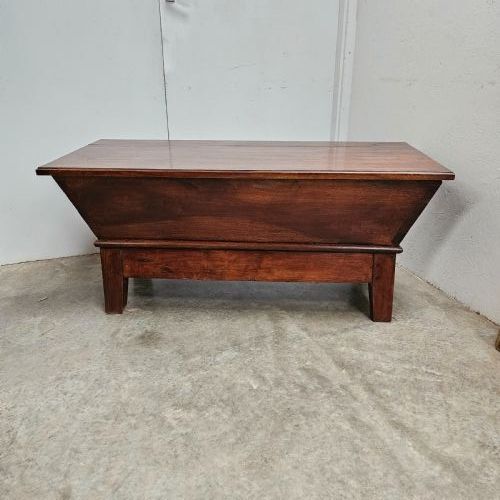

Rustic Provincial Coffee Table
These rustic provincial coffee table pieces bring earthy character and solid timber history straight into a sitting room.
Rustic Provincial Coffee Table
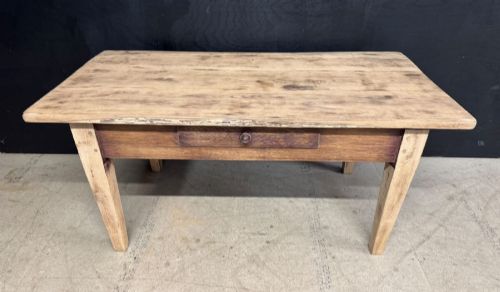
A rustic provincial coffee table brings everyday utility from earlier centuries into a modern sitting room through low, solid forms. Buyers searching for a rustic provincial coffee table encounter pieces built originally for work, dining, or storage, adapted now into low tables.
The selection here draws primarily from French origins, spanning the eighteenth and nineteenth centuries with styles described as farmhouse, country, and provincial. Common formats include low tables, coffee tables, and occasional side tables derived from larger domestic furniture.
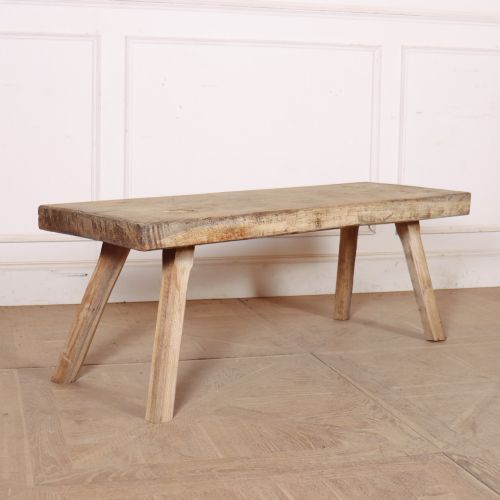
Makers often utilised domestic timbers available locally, resulting in heavy boards and sturdy frames designed for practical household tasks rather than formal display. Such tables carry the marks of regional workshop traditions across rural Europe.
How they were made
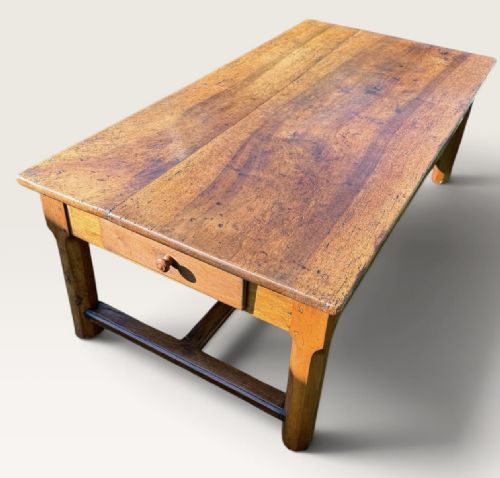
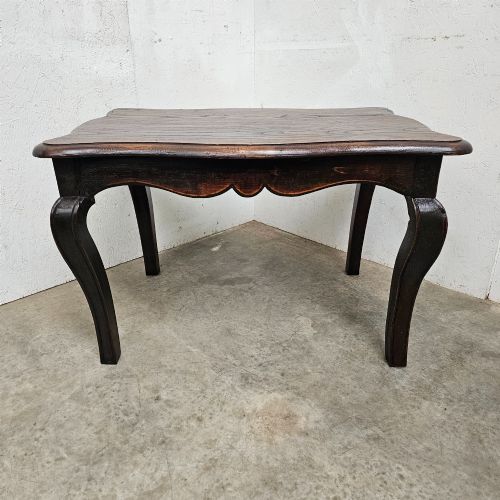
Construction relies heavily on regional hardwoods such as oak, walnut, fruitwood, sycamore, elm, and chestnut, selected for durability and local availability. Carpenters joined thick planks using traditional methods, often incorporating turned legs or trestle supports to bear heavy daily use.
Surfaces frequently show the natural grain and texture of timber through scrubbed, bleached, or patinated finishes developed over decades of domestic service. Iron fixings and simple drawers occasionally appear, adding structural stability and utility to the design.
One listed item served life as a dough-proving box before finding its place as a heavy low table.
What varies in quality
Quality rests in the integrity of the timber and the honesty of the construction, where substantial boards and original structural joints elevate a piece. Better examples display balanced proportions and a deep, untouched patina earned through authentic age.
The degree of regional detail and the choice of denser woods, such as walnut or older oak, separate standard workshop items from finer provincial creations. Alterations to height or surface condition also influence the character and standing of each individual table.
The Rustic Provincial Coffee Table Glossary
- Provincial
- Made in the regions rather than the capital, reflecting local materials and traditional workshop styles. These pieces often lack the formal ornamentation found in urban furniture.
- Patina
- The surface sheen and colour developed by wood over years of handling, polishing, and exposure to light. A rich patina indicates age and natural wear.
- Fruitwood
- Timber from fruit-bearing trees such as cherry, pear, or apple, used commonly by regional makers for its fine grain and warm tone. It yields a distinctive domestic character.
- Trestle
- A structural support consisting of a horizontal beam fixed to two splayed legs, providing stability for long or low tables. This form appears frequently in early provincial dining and work tables.
- Sycamore
- A pale hardwood belonging to the maple family, valued by country carpenters for its tough, clean surface. It often pairs with darker timbers in regional tables.
Rustic Provincial Coffee Table: Frequently Asked Questions
How do I clean a wooden coffee table?
Dust the surface regularly with a soft, dry cloth to prevent dirt accumulation in the grain.
Avoid harsh chemical cleaners and moisture, applying natural beeswax occasionally to nourish the historic timber.
Are these tables sturdy enough for daily use?
Most pieces were built from heavy hardwoods for demanding domestic work and easily withstand normal daily living.
Their solid construction provides robust support, though careful placement away from direct heat sources protects the old wood.
How can I tell an eighteenth century table from a nineteenth century one?
Earlier pieces often display hand-sawn board marks, simpler joinery methods, and deeper patination acquired over longer periods.
Nineteenth century examples sometimes feature more uniform machining or turned elements while maintaining traditional provincial forms.
What is fruitwood furniture?
Fruitwood refers to timber sourced from orchard trees like cherry, pear, or apple, utilised widely by regional makers.
This wood offers a smooth grain and warm colour that deepens distinctively across decades of exposure.