
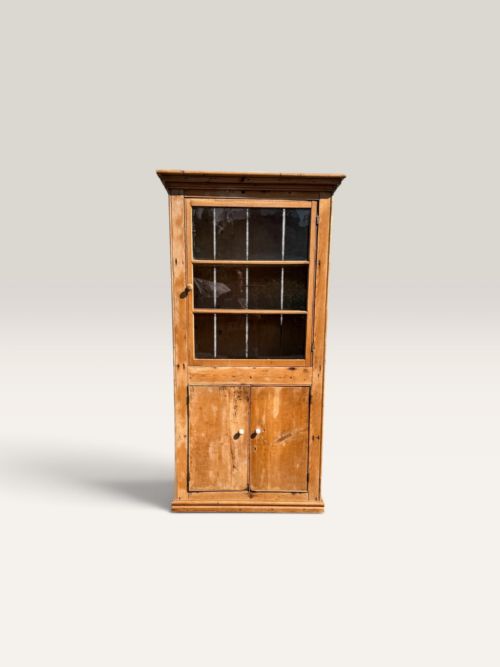
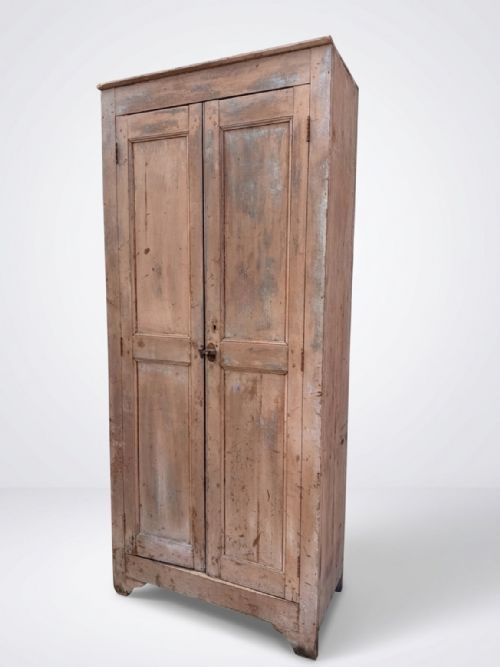
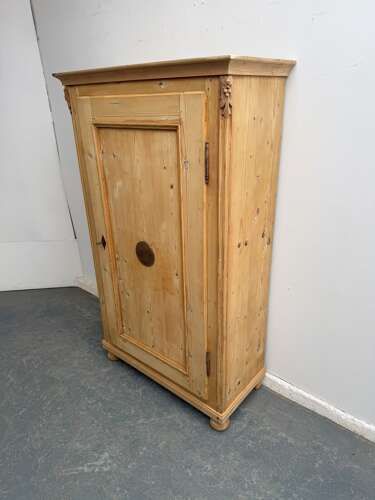
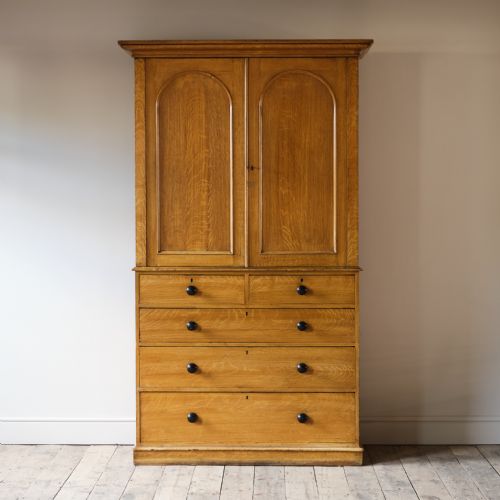
Rustic Pine Housekeeper Cabinet
These rustic pine housekeeper cabinets bring functional storage and honest country character to a kitchen or utility room.
Rustic Pine Housekeeper Cabinet
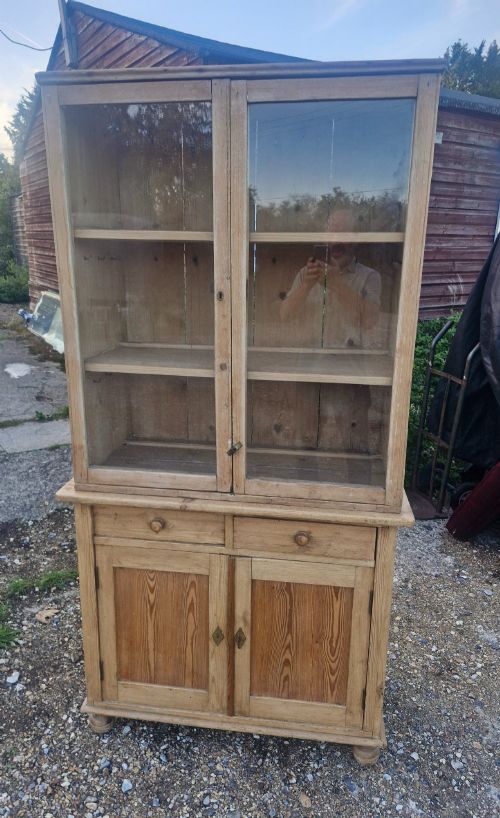
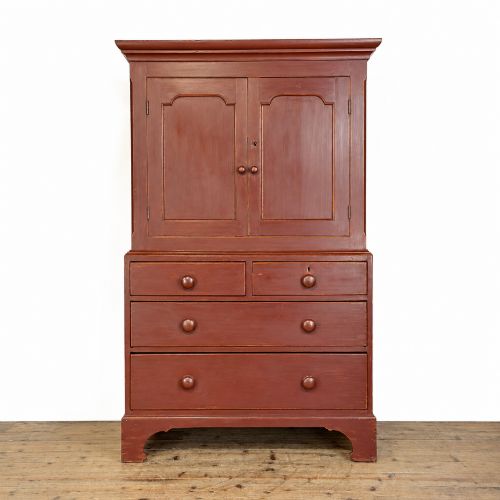
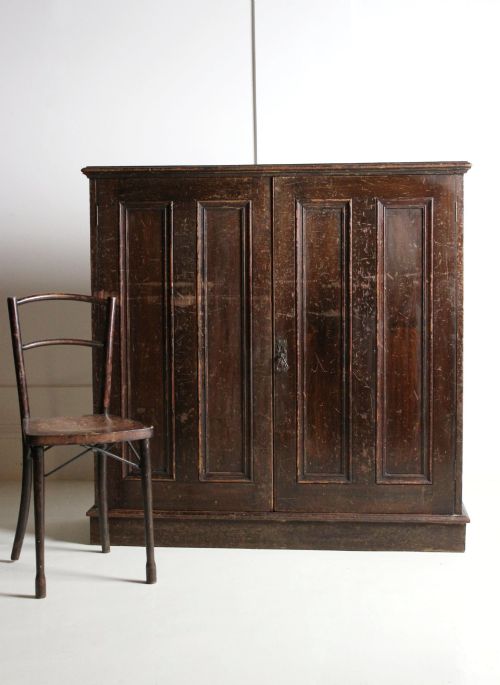
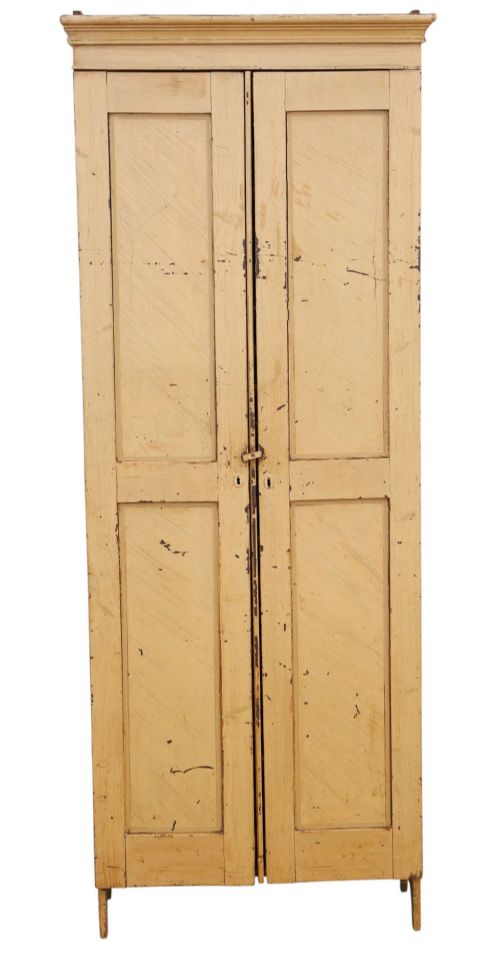
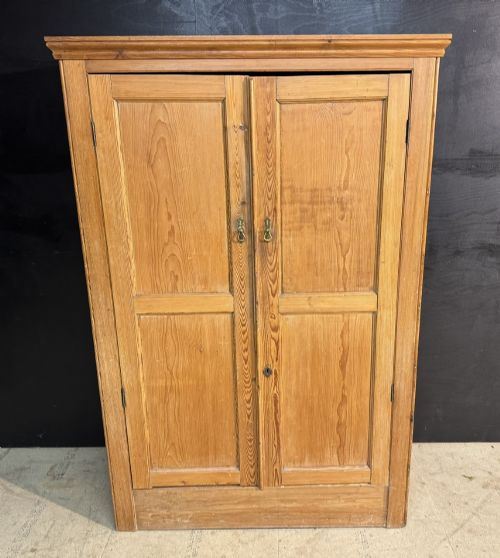
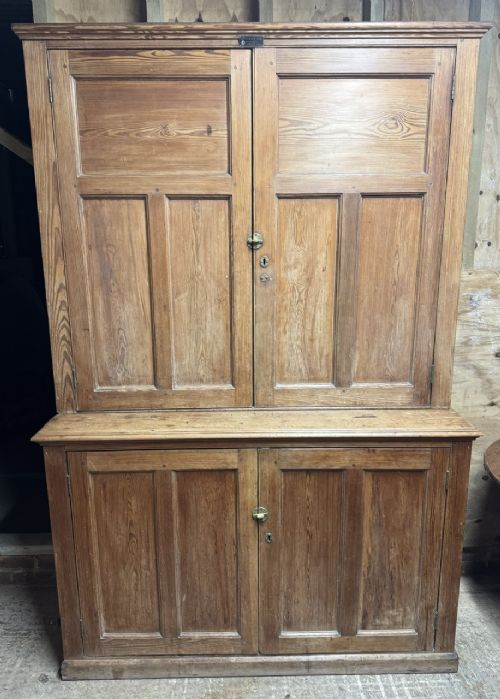
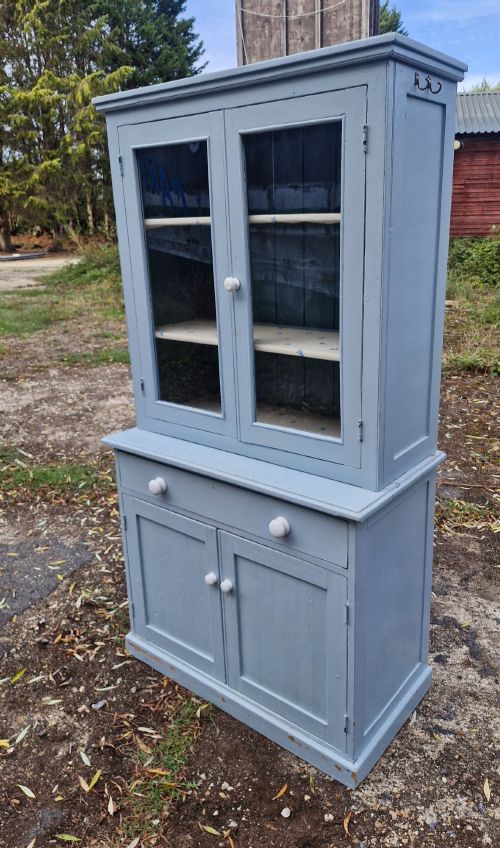
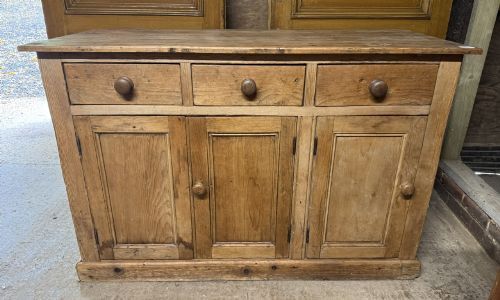
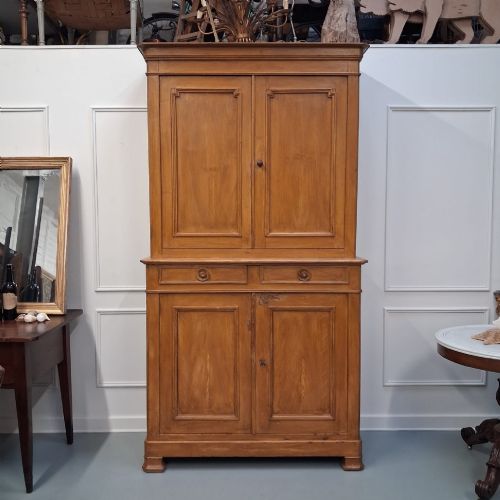
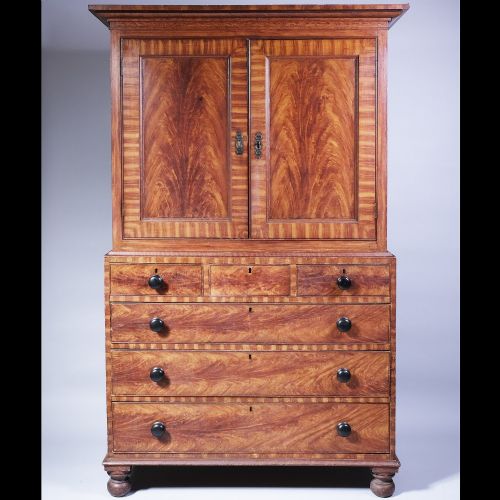
A rustic pine housekeeper cabinet provides substantial utility storage through cupboards, shelving, and drawers designed for domestic use. The pieces gathered here range from tall larder cupboards and linen presses to two-part kitchen dressers and school cabinets.
Most examples date from the Victorian period or the nineteenth century, constructed with practical household service in mind. Formats vary from single-door shallow units to large four-door configurations and French provincial or English country variants.
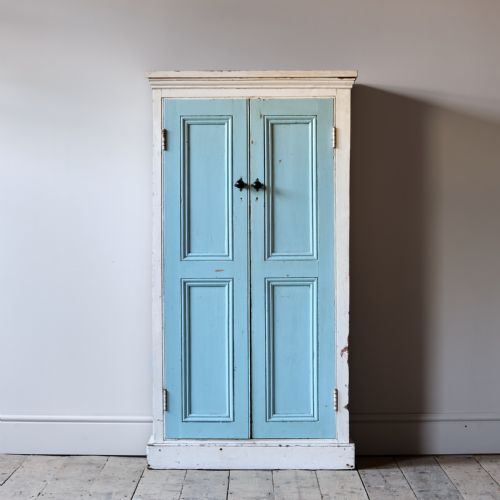
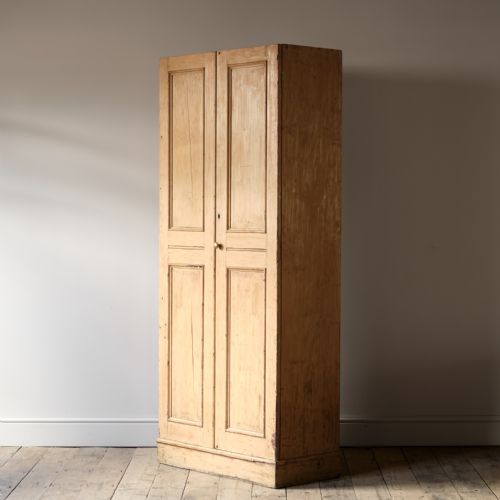
Buyers seeking this form will encounter both waxed natural wood surfaces and original painted finishes, including scumble glaze and cream paint. These items served primarily in domestic kitchens, larders, and country houses for provisions and linens.
How they were made
Construction relies heavily on solid pine, shaped into panels, doors, and internal shelving to withstand daily household demands. Iron and brass hardware such as hinges and latches secure the doors and drawers.
Many surfaces display original layers of paint, scumble glaze, or wax applied over the timber to protect the wood and suit domestic tastes. Glazed panels occasionally feature in the upper sections for the display of contents.
School cupboards frequently retain generous proportions because generations of pupils managed to lose an astonishing quantity of exercise books.
What varies in quality
The degree of preservation in original paintwork and surface finishes distinguishes standard utility items from more decorative examples. Cabinets retaining untouched scumble paint or early cream surfaces hold particular interest.
Joinery detail and structural proportion also separate individual pieces, from simple single-door cupboards to large multi-door presses with fielded panels and adjustable shelving.
The Rustic Pine Housekeeper Cabinet Glossary
- Housekeeper's cupboard
- A large storage cabinet traditionally used in country houses for linens, dry goods, and household provisions. These units often combine shelving with lower drawers or compartments.
- Scumble paint
- A decorative surface technique involving a translucent glaze dragged or mottled over a lighter base coat to imitate finer wood grain. This finish appears frequently on nineteenth-century country furniture.
- Linen press
- A tall cupboard designed specifically for storing folded textiles and garments, typically featuring sliding trays or shelves behind upper doors. Lower drawers provide additional enclosed space.
- Fielded panel
- A wooden panel with bevelled or recessed edges set within a heavier frame, adding depth and structural stability to cabinet doors. This technique appears on many Victorian pine pieces.
- Pine
- A soft timber widely utilised in British and continental country furniture for its accessibility and workability. It takes wax, polish, and paint readily.
Rustic Pine Housekeeper Cabinet: Frequently Asked Questions
What rooms suit a housekeeper cabinet?
These tall storage units function effectively in modern kitchens as larder cupboards for provisions and dry goods. They also provide generous linen and utility storage in hallways or bedrooms.
Their substantial presence anchors a room while offering practical enclosed space for everyday items.
How do I care for painted pine?
Original painted surfaces require gentle dusting with a dry or slightly damp cloth without chemical polishes. Waxed pine benefits from occasional natural beeswax applications to nourish the timber.
Protecting the wood from direct heat sources and excessive moisture preserves the integrity of both the paint and the pine beneath.
How do I date a pine cupboard?
Construction methods, such as hand-cut dovetails in drawers and backboards made from wider timber planks, generally point towards the nineteenth century or earlier. Hardware styles and the presence of original scumble glaze or early paint layers offer further clues.
Victorian pieces often display machine-sawn elements alongside traditional joinery as industrial techniques evolved.
Are these cabinets difficult to move?
Many housekeeper cabinets are heavy, solid wood structures that often require two people for transport and positioning. Some larger examples, such as two-part kitchen dressers, separate into upper and lower sections to ease movement.
Checking dimensions and access routes before delivery ensures the cabinet fits comfortably into its intended space.