
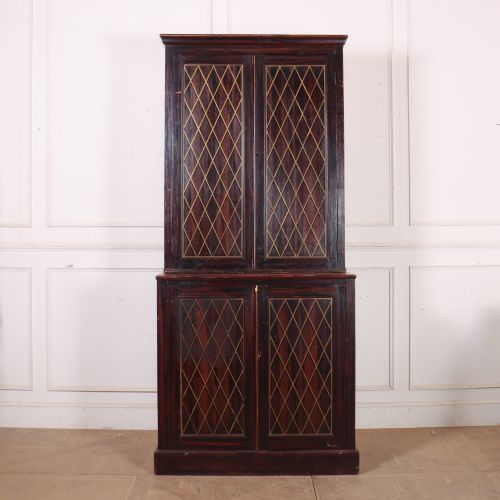
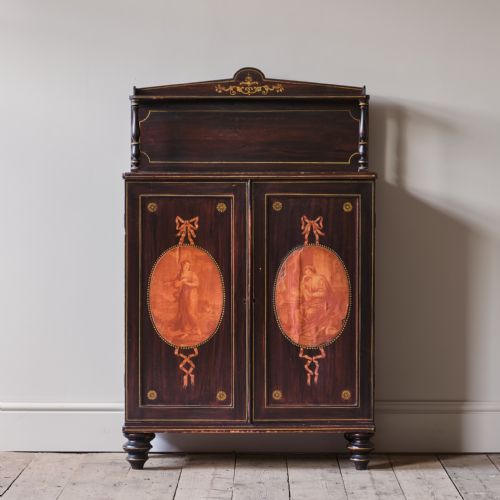
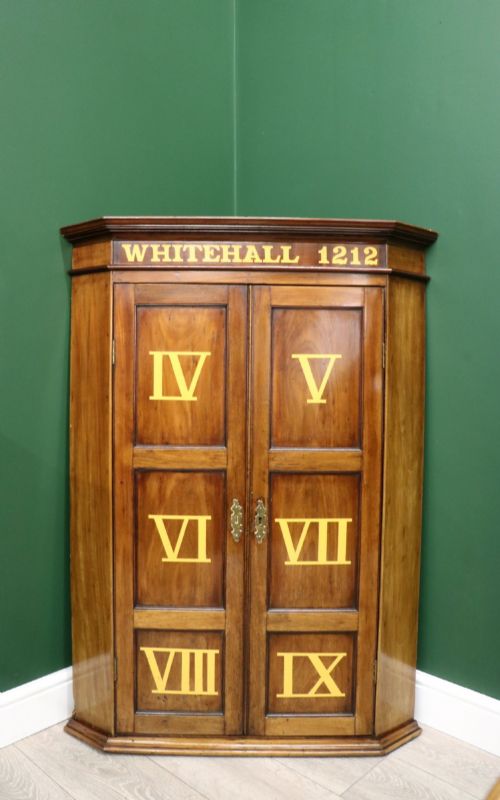
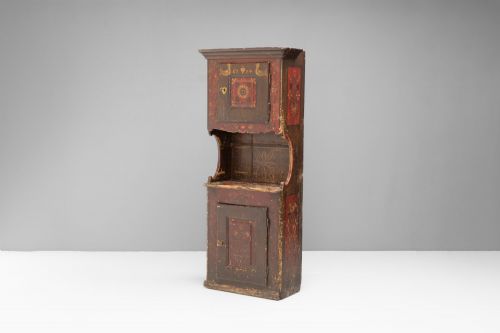


Brown Painted Storage Cupboard
A brown painted storage cupboard is a practical piece offering robust organisation, anchored by historic finishes and timber.
Brown Painted Storage Cupboard
A brown painted storage cupboard is a functional piece designed to keep household goods, linens, or provisions enclosed and out of sight. When searching for a brown painted storage cupboard, buyers encounter everything from modest pine kitchen dressers to grand housekeeping cupboards and narrow school cabinets.
The selection ranges across several centuries, drawing heavily on nineteenth-century pieces alongside Georgian and later twentieth-century examples. Common formats include single-door skeleton cupboards, corner cabinets, and marriage cupboards originating from British workshops and continental sources.
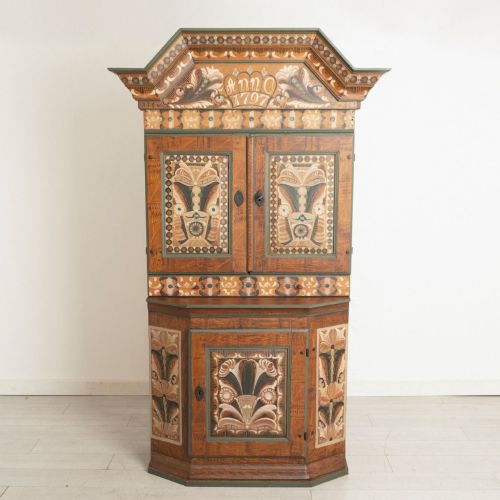
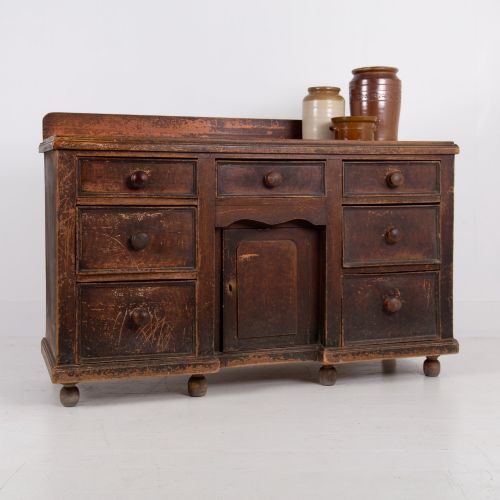
Pine and oak form the structural core of most items, though ash and mahogany also appear within specific dresser and corner cabinet designs. The surfaces carry layers of original pigment, scumble glaze, or simulated wood finishes that define their distinct visual character.
How they were made
Makers constructed these carcases using solid timbers like pine and oak, joined with traditional framing methods to withstand daily domestic use. Panels were fitted into grooved stiles and rails to allow for natural wood movement across changing seasons.
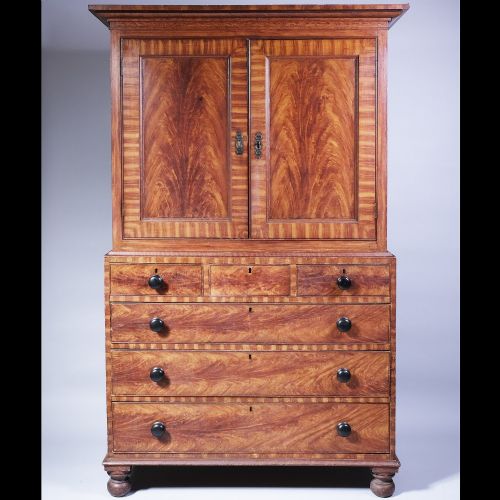
Surfaces were prepared and finished with oil or water-based pigments, frequently applying scumble glazes to imitate more expensive exotic hardwoods such as rosewood. Iron hinges, brass handles, and glass panels were then added to complete the hardware and doors.
Listings feature eighteenth-century, nineteenth-century, and 1930s periods, utilising pine, oak, ash, paint, brass, iron, gilt, and glass.
What varies in quality
The standard of a brown painted storage cupboard rests on the integrity of its original timber construction and the survival of its early surface finish. Pieces retaining untouched historical paint layers carry greater authenticity than those stripped or repassed in later decades.
Proportion and joinery distinguish utilitarian workshop items from finer formal furniture, such as Georgian corner cabinets or Regency chiffoniers. Hardware originality, from brass escutcheons to iron latches, also contributes to the overall integrity of the piece.
The Brown Painted Storage Cupboard Glossary
- Scumble paint
- A translucent or opaque glaze manipulated with combs, rags, or brushes over a lighter ground to imitate grain patterns like oak or rosewood. This decorative technique was widely utilised during the nineteenth century.
- Housekeeper cupboard
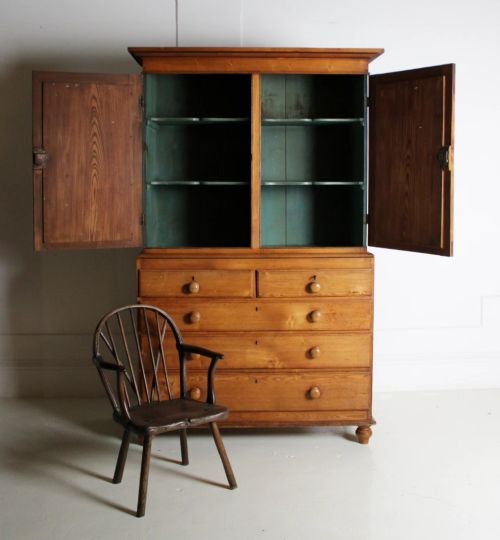
- A large storage carcase traditionally kept in the domestic quarters of a substantial residence for linens, dry goods, or crockery. These utility pieces usually feature panelled doors and internal shelving.
- Chiffonier
- A low sideboard or cabinet developed during the Regency period, often fitted with enclosed shelving beneath and a raised gallery or tier above. They serve as compact storage units for dining rooms and parlours.
- Skeleton cupboard
- A specialised cabinet design featuring glazed or open frames that allow contents to be viewed clearly while remaining secured. They frequently served institutional or school functions.
- Marriage cupboard
- A celebratory painted cabinet commissioned or gifted for a wedding, often bearing specific decorative motifs, initials, or dates unique to the union. Continental examples frequently display vibrant polychrome folk art.
Brown Painted Storage Cupboard: Frequently Asked Questions
What rooms suit a painted cupboard?
These cupboards adapt well to kitchens, hallways, and bedrooms where enclosed shelving provides practical organisation for daily items.
Their substantial storage capacity makes them suitable for holding tableware, linens, or books while adding texture to interior spaces.
How do I identify original paint?
Original paint surfaces typically exhibit natural wear, craquelure, and multiple underlying layers that correspond to the age of the timber carcase.
Examination under close light reveals whether the pigment has integrated into the grain rather than sitting as a modern, flat emulsion.
Are these cupboards suitable for daily use?
Solid timber construction and robust joinery allow these historic pieces to handle active everyday storage requirements without issue.
Internal shelving and working locks or latches provide functional reliability comparable to modern cabinetry.
What timber lies beneath the paint?
Pine serves as the primary wood for the majority of country and institutional pieces, offering a stable base for decorative surface treatments.
Other examples utilise oak, ash, or mahogany depending on the regional origin and the formal requirements of the original commission.