
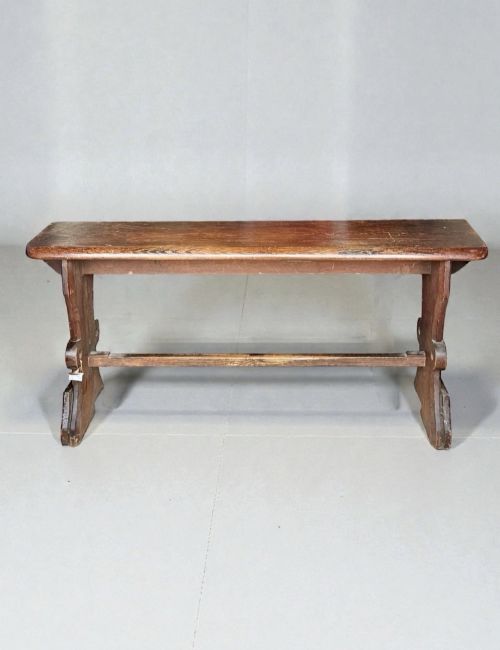


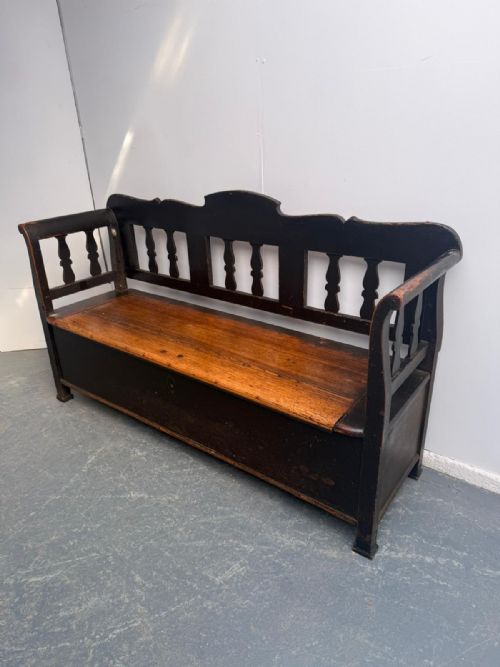
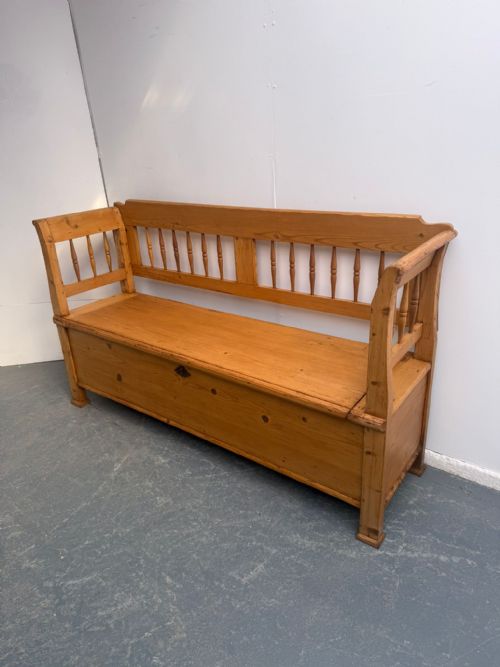

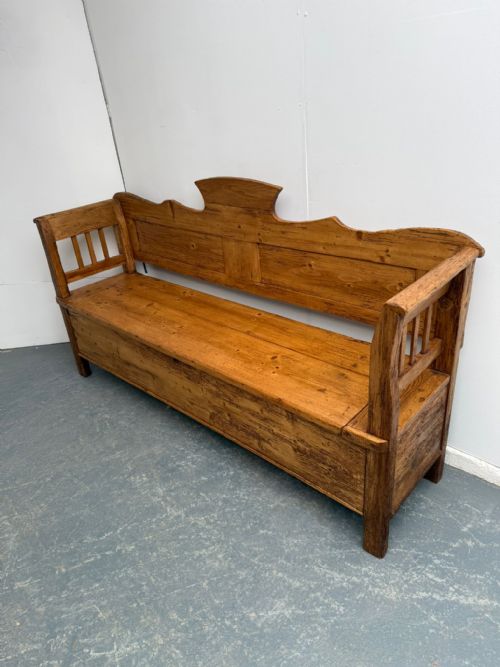

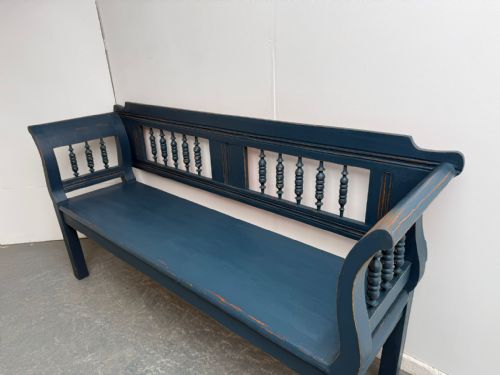
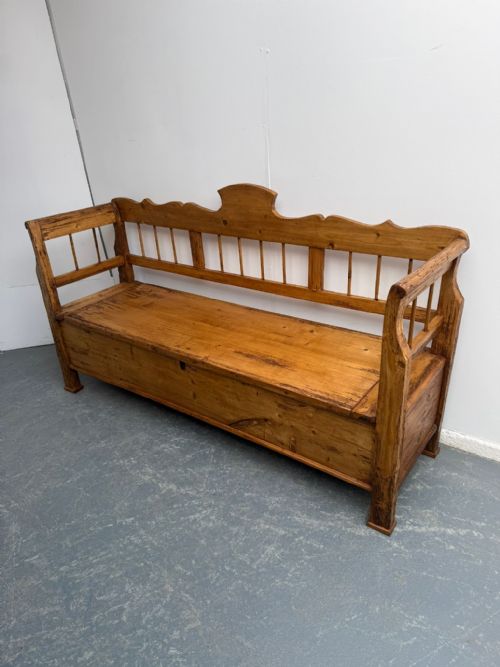
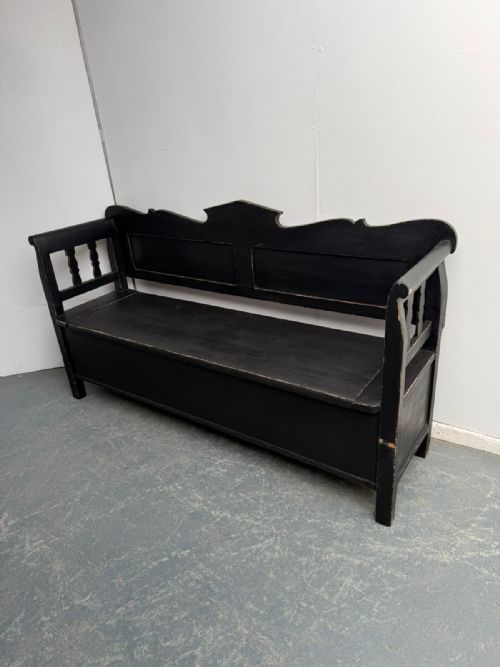
Rustic Pine Hall Bench
A rustic pine hall bench offers practical seating and storage, bringing utilitarian country charm straight into an entranceway.
Rustic Pine Hall Bench
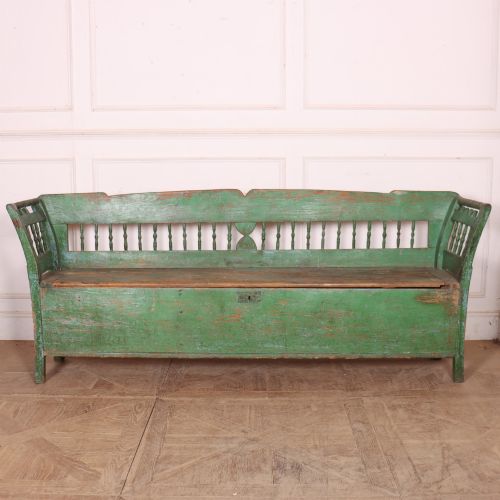
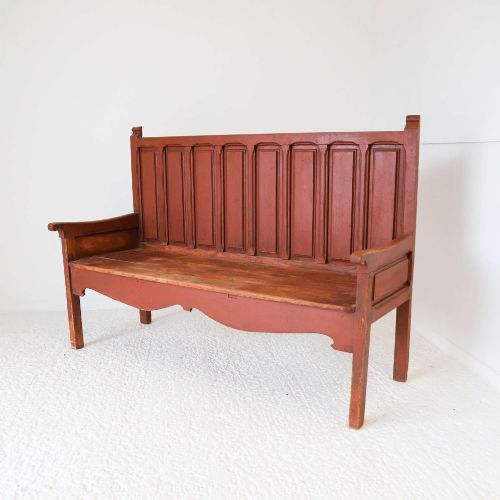
A rustic pine hall bench serves as a practical entranceway seat, often incorporating high backs or enclosed storage boxes to keep drafts at bay. When searching for a rustic pine hall bench, buyers encounter various regional forms including Hungarian settlers, Spanish canopied examples, and simple English tavern benches.
The pieces span multiple eras, appearing in Georgian, Victorian, and early twentieth-century formats alongside eighteenth-century folk art designs. Most examples found here originate from European country workshops, displaying straightforward utilitarian construction built for daily domestic use.
Materials and construction methods
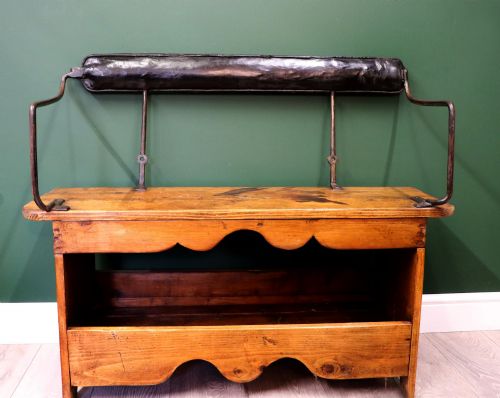
Makers utilised solid pine timbers, occasionally supplemented by chestnut or iron hardware, constructing sturdy frames designed for heavy household traffic. Surfaces received either simple wax finishes to preserve the natural grain or coats of paint in colours such as blue, grey, cream, and black.
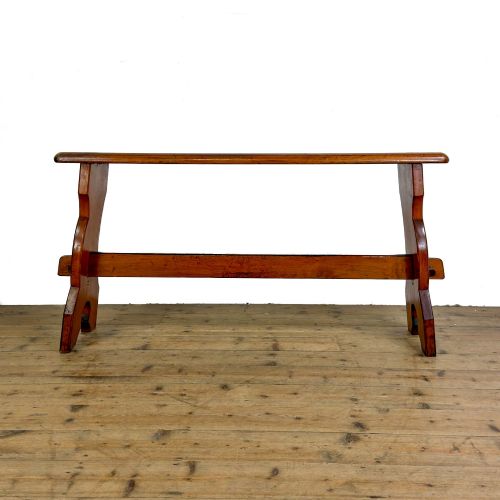
Joinery techniques relied on pegged mortise and tenon joints, panelled construction, and solid board assembly to ensure long-term durability. Storage variants incorporated hinged box seats, while other forms utilised trestle bases or spindled galleries.
Several listings include church organist and organ bench variations, proving that quiet Sunday musicians needed sturdy pine seating just as much as tavern keepers.
Assessing quality and character
Quality in these pieces rests primarily in the survival of original surface finishes, whether historic paint schemes or mellow waxed patinas built up over generations. Structural integrity of the original pine timbers and integrated box compartments also distinguishes finer examples from heavily altered items.
Regional details and folk art touches, such as carved panels or canopy hoods, elevate certain pieces beyond standard utilitarian seating. The balance of proportions and depth of accumulated wear reflect the authenticity of each bench.
The Rustic Pine Hall Bench Glossary
- Settle
- A wooden bench with high back, solid arms, and often a storage box beneath the seat. It was designed to block cold drafts in traditional hallways.
- Box settle
- A variant featuring a hinged seat lid opening to a deep storage compartment. This form doubled as a blanket chest and a hallway seat.
- Patina
- The surface sheen and colour developed through age, handling, and repeated waxing. It indicates long-term organic wear rather than artificial distress.
- Trestle bench
- A long seating form supported by upright side frames or legs connected by a horizontal stretcher. These benches often accompanied communal dining tables.
- Folk art
- Decorative or utilitarian objects created within a regional tradition by self-taught makers. These pieces incorporate local stylistic motifs and traditional painting methods.
Rustic Pine Hall Bench: Frequently Asked Questions
Where should I place a hall bench?
These benches suit entrance halls, narrow corridors, and boot rooms where visitors require a sturdy seat for removing footwear. They also function well along large dining tables or living room walls.
Ensure you measure the available floor space and passage width carefully, as high-back and box variants require adequate clearance to open storage lids.
How do I care for waxed pine?
Maintain waxed pine surfaces by applying a traditional beeswax polish periodically and buffing with a soft cloth. Avoid placing these pieces near direct heat sources to prevent the timber from splitting.
Keep moisture off the wood by using pads under wet items, and clean gently with a dry or barely damp cloth.
Are painted finishes original?
Many pieces retain historic or original paint layers, often visible as accumulated coats in colours such as grey, blue, and cream. Scrutinising surface wear and underlying timber helps determine the age of the paint.
Layered textures and natural flaking typically indicate authentic age rather than modern decorative application.
What is the difference between a settle and a bench?
A settle typically incorporates a high back, solid wooden sides, and occasionally a canopy to shelter the occupant from cold draughts. A standard bench offers simpler open construction without enclosed sides or high backs.
Both forms served domestic communal spaces, but settles provided superior weather protection in draughty period hallways.