


Rustic Oak Sideboard Rack
A rustic oak sideboard rack brings honest country character into a dining space, holding pottery and serving pieces with simple, robust charm.
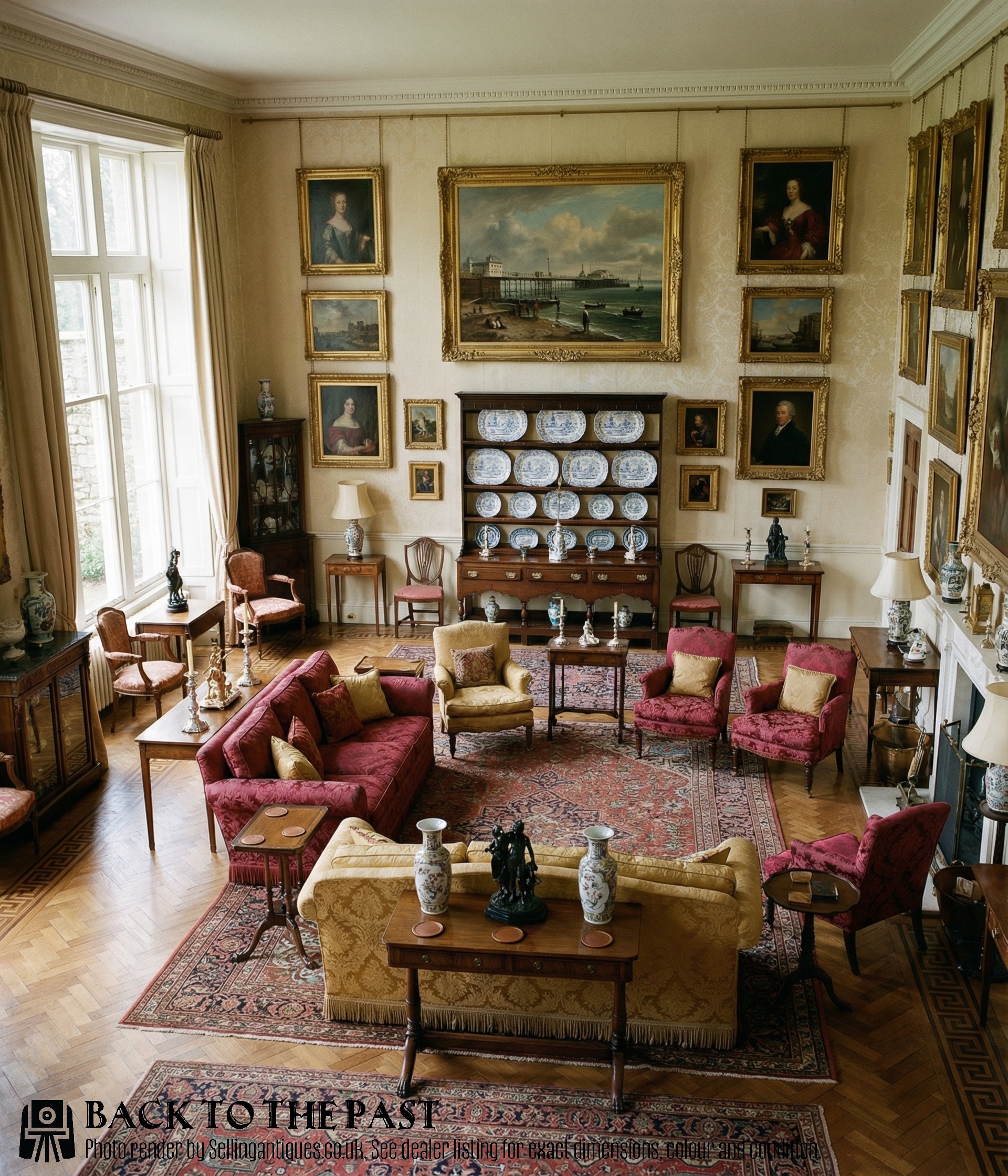
Rustic Oak Sideboard Rack
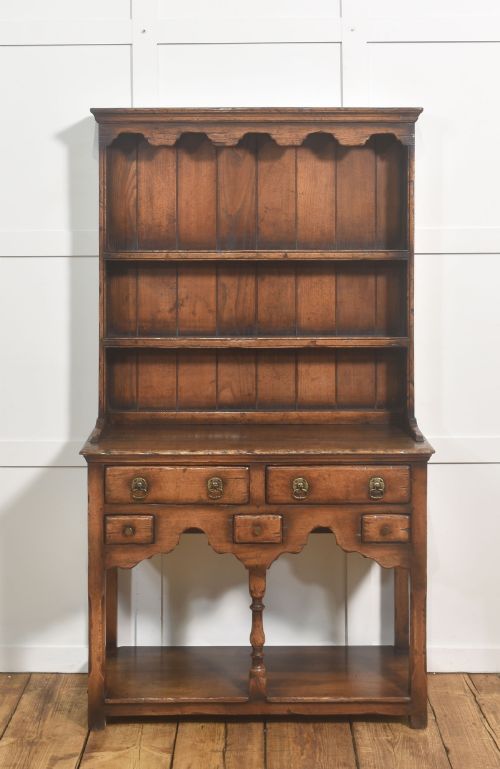
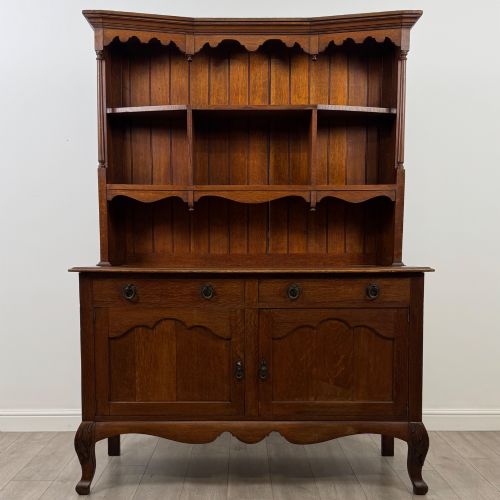
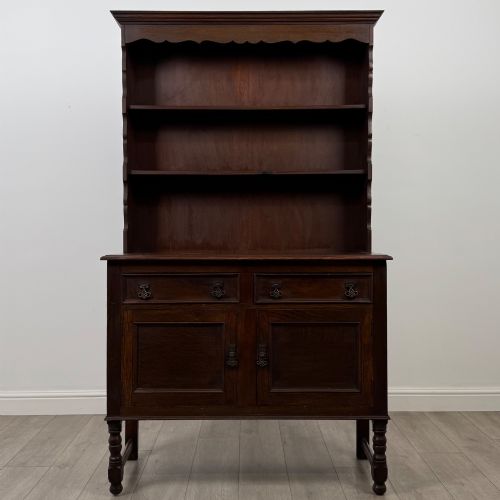
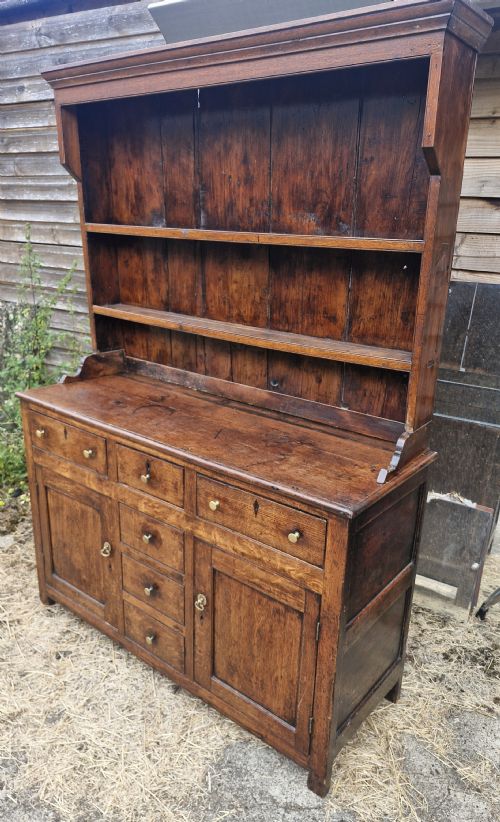
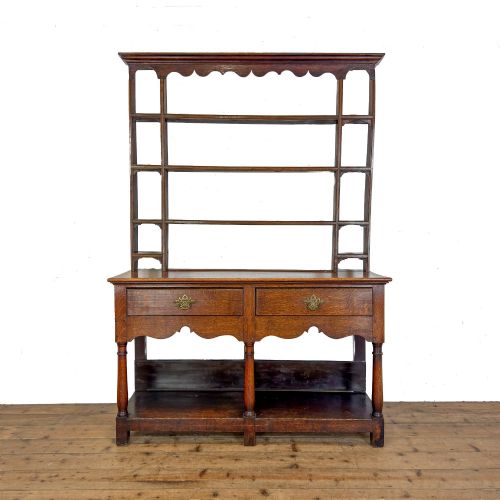
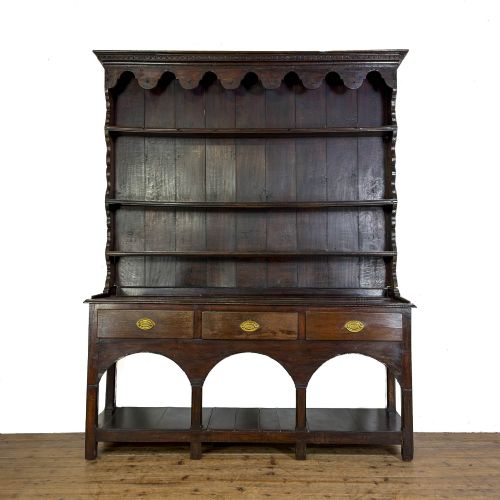
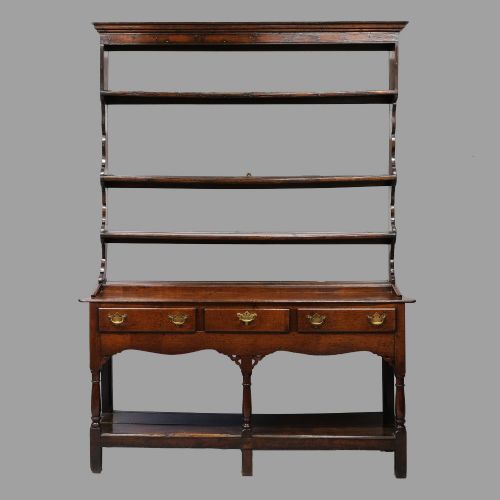
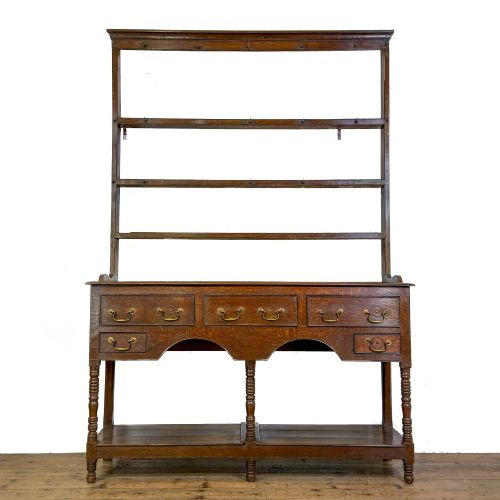
When you search for a rustic oak sideboard rack, you encounter vernacular kitchen furniture built to hold family pottery and dry foodstuffs in rural homes. The most common form on this page is the traditional Welsh dresser, combining a lower base of drawers and cupboards with an upper open-backed plate rack.
These pieces emerge from diverse regional workshops across the eighteenth and nineteenth centuries, spanning Georgian and Victorian country styles. Makers constructed them to serve as both storage units and display centres for everyday tableware.
The layout typically pairs a solid timber base, sometimes featuring potboards or breakfront drawers, with graduating upper shelves designed to lean plates securely. This straightforward architectural arrangement defines the domestic utility of rural English and Welsh interiors.
Materials and construction methods behind the racks
Cabinet makers relied primarily on native oak, complemented occasionally by secondary timbers like pine or elm, to build these heavy storage units. Boards were hand-sawn and joined with pegged mortise and tenon joints to withstand decades of daily use in busy farm kitchens.
Hardware details usually involve forged iron hinges and brass pulls or handles that patinate naturally over time. Potboard bases and open plate racks were integrated directly into the structural frame to support heavy earthenware without sagging.
Current listings feature oak as the primary timber, alongside brass hardware and painted finishes spanning the eighteenth to early twentieth centuries.
Factors distinguishing standard examples from finer works
Quality rests heavily on the integrity of the timber surfaces and the honesty of the construction, where rich native grain and deep patination elevate an example above plain utility. Pieces retaining their original upper racks and untouched potboard bases hold greater architectural interest for collectors.
The Rustic Oak Sideboard Rack Glossary
- Potboard
- A low slatted shelf fitted between the legs of a dresser base, traditionally used to store pots and heavy earthenware. This lower platform provides both structural stability and open storage.
- Plate rack
- The upper shelving unit fixed to the back of a dresser, featuring grooved boards and wooden guards to hold plates upright. It turns functional storage into an open display for ceramics.
- Vernacular furniture
- Domestic pieces made by local regional joiners for everyday use rather than high-style urban workshops. These items reflect local traditions and available materials.
- Breakfront
- A cabinet front where the central section projects forward past the flanking cupboards or drawers. This arrangement adds architectural depth to the piece.
- Warranted timber
- Solid wood harvested from local native forests rather than imported stock. In these pieces, native oak dominates the construction.
Rustic Oak Sideboard Rack: Frequently Asked Questions
What is a rustic oak sideboard rack?
A rustic oak sideboard rack is a traditional kitchen storage unit combining a lower base of drawers or cupboards with an upper open shelving frame. These pieces served as the central storage hub in rural homes.
They allowed families to keep everyday ceramics and serving dishes close at hand while displaying prized tableware.
How were these racks used originally?
Households used the lower sideboard surfaces for food preparation and storage, while the upper rack held plates upright for drying and display. The lower cupboards kept heavy pots and dry goods secure.
Over generations, they evolved from purely utilitarian kitchen furniture into prominent dining room display pieces.
How do I care for antique oak timber?
Keep these pieces away from direct heat sources and sudden humidity changes to prevent the solid oak boards from splitting. Apply natural beeswax sparingly to nourish the dry wood.
Avoid modern chemical polishes that can build up on the surface and dull the historic patination.
How can I tell an 18th-century piece apart?
Eighteenth-century examples often display hand-sawn board widths, pegged joints, and deep patination developed through centuries of domestic use. The construction tends to show simpler, sturdier vernacular joinery without factory standardisation.
Hardware and backboards also provide clues, as older pieces frequently use hand-forged iron and wider timber panels.