
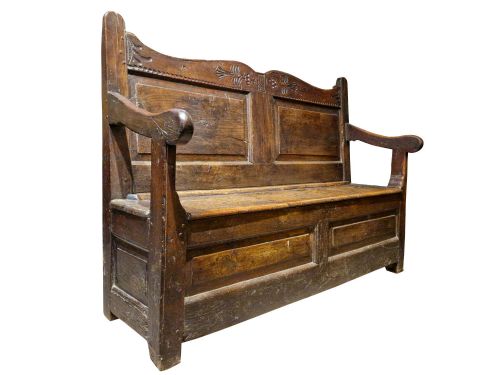

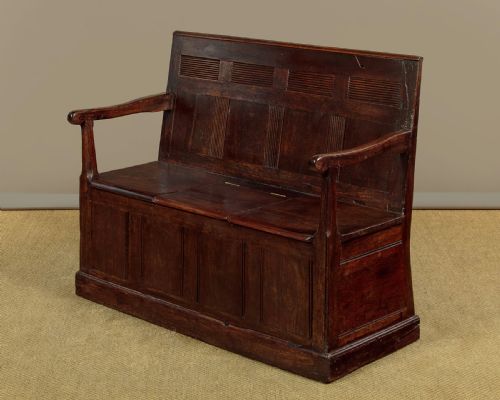


Rustic Oak Settle Seat
A rustic oak settle seat brings centuries of solid country craftsmanship straight into a modern hallway.
Rustic Oak Settle Seat
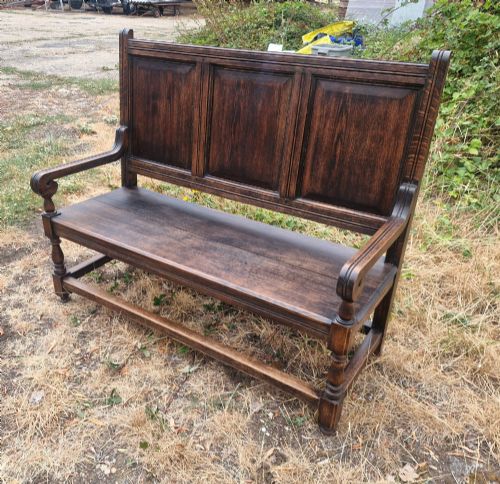
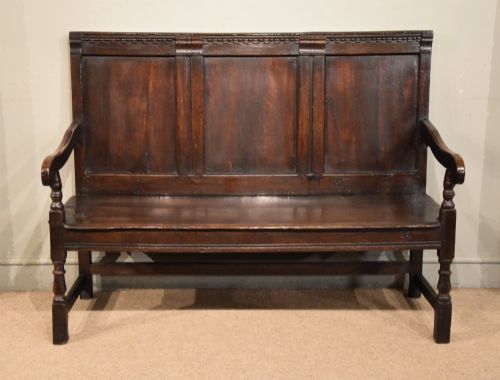
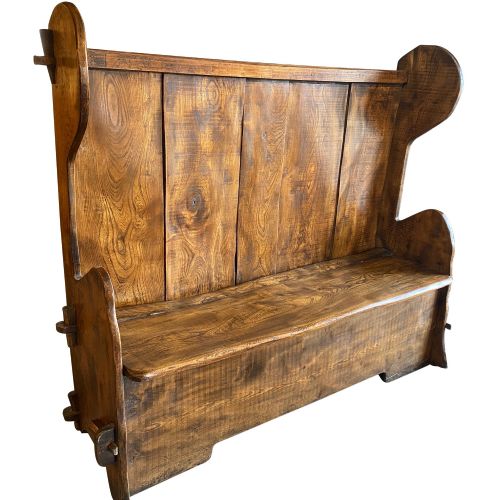
A rustic oak settle seat is a substantial wooden bench designed to provide high-backed seating and often built with integrated storage compartments beneath the cushion. When you search for a rustic oak settle seat, you encounter robust seating traditions spanning from the eighteenth century through to the Edwardian period and the early twentieth century.
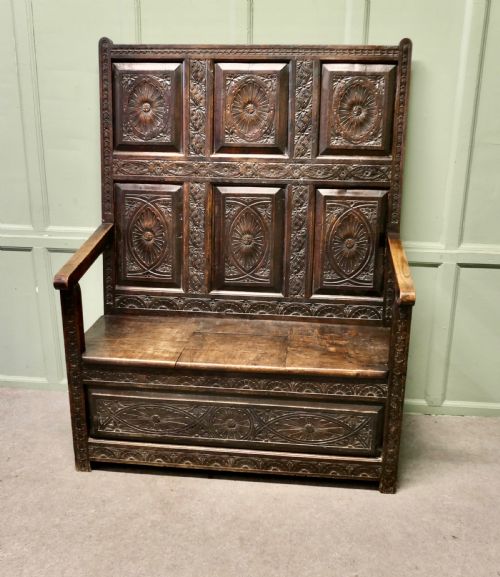
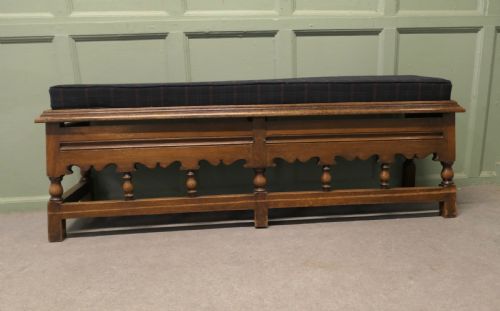
These pieces draw on diverse regional aesthetics including English, Welsh, French Provincial, and Jacobean Revival styles. They appear in forms ranging from high-backed box settles with solid storage bases to panelled hall benches and stickback country variants.
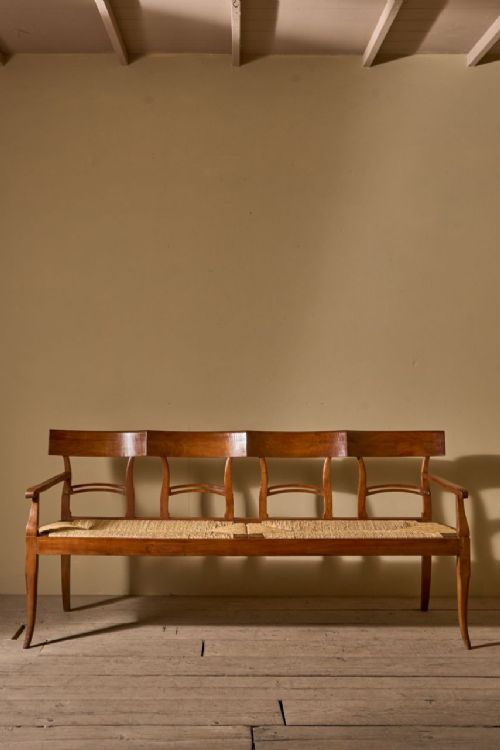
The primary material is oak, though related items incorporate elm, cherrywood, and chestnut, sometimes paired with rush seating or iron hardware. They serve equally well as practical boot stores in hallways or as characterful focal points in domestic interiors.
Construction and materials
Makers built these settles predominantly from solid timber planks of oak and elm, utilising traditional panelled construction to prevent warping across the broad backrests. Joinery relied on pegged mortise and tenon joints which gave the frames exceptional rigidity over centuries of daily use.
Secondary structural elements incorporate iron hinges, brass fittings, and hand-woven rush for seating inserts where solid wood was not deployed. Surfaces show the marks of hand carving, bleaching, liming, or simple wax finishing applied by regional cabinet makers.
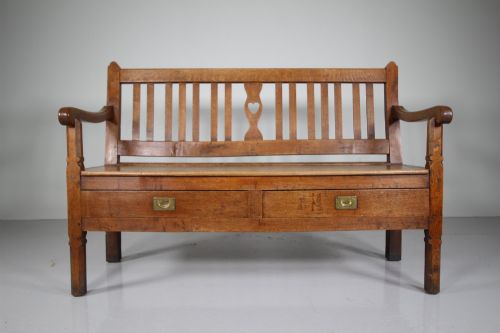
Regional variants incorporate Welsh heart motifs, French provincial lines, and English panelled box storage.
Judging quality and character
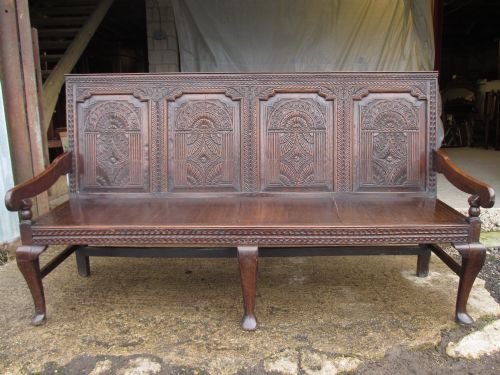
Quality rests in the integrity of the timber selection and the retention of original structural framing rather than pristine surfaces. Pieces featuring deeply carved panels, box storage bases with intact floorboards, and period-appropriate hardware command greater appreciation among collectors.
The graduation from standard utility seating to finer examples depends on regional proportions, such as high arched backs or heart motifs, and the preservation of honest patina developed through generations of domestic service.
The Rustic Oak Settle Seat Glossary
- Box Settle
- A bench featuring a closed wooden compartment beneath the seat, historically utilised for storage and draught exclusion. The hinged lid allows access to the interior cavity.
- Panelled Settle
- A seat constructed with vertical or horizontal wooden frames enclosing thin wooden panels within grooves. This technique accommodates seasonal timber movement without splitting.
- Stickback
- A chair or bench style where individual turned wooden spindles are inserted directly into a solid seat slab and upper rail. It represents lighter country construction.
- Rush Seating
- Woven marsh plant material forming the seating surface of certain chairs and benches. It provides a resilient and traditional texture.
- Patina
- The surface sheen and colour acquired by wood through age, handling, and waxing. It serves as an indicator of genuine period antiquity.
Rustic Oak Settle Seat: Frequently Asked Questions
What is a settle bench?
A settle bench is a traditional wooden seat with a high back designed to block cold draughts in older homes. Many examples include enclosed storage boxes beneath the seat lids.
They traditionally stood near hearths or in entrance halls to accommodate multiple people while offering protection from chill winds.
How do I date an oak settle?
Dating relies on examining construction methods, tool marks, and stylistic indicators such as panel thickness and joint pegged construction. Eighteenth-century versions often feature hand-split oak boards and pegged framing.
Later Victorian and Edwardian revivals tend to display machine-sawn timber elements and different joining techniques while mimicking earlier regional patterns.
Where should I place a settle?
Settles suit entrance halls, boot rooms, and spacious kitchens where their high backs create a distinct architectural presence. They function effectively as seating alongside dining tables or as standalone hallway furniture.
Ensure adequate wall clearance behind high backrests and consider pairing them with cushions for enhanced comfort during extended seating.
Are these benches comfortable?
Original settles were built for utility and draught exclusion rather than ergonomic lounging, featuring upright wooden backrests. Adding loose squab cushions transforms them into comfortable seating for daily use.
The deep seats and supportive high backs make them well suited for reading or resting in hallways and living spaces.