



Welsh Country Furniture Bench
Welsh country furniture bench pieces bring honest vernacular craft into a room, offering sturdy seating with centuries of history.
Welsh Country Furniture Bench
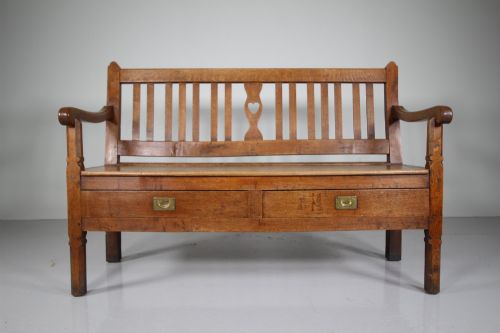
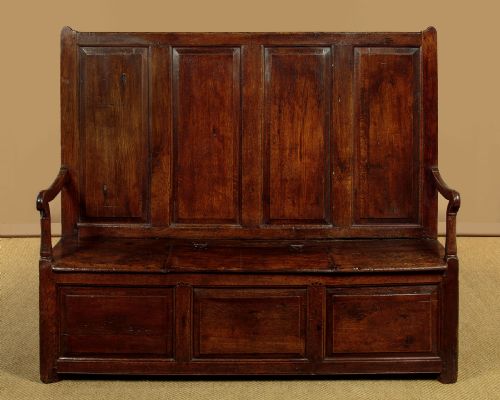
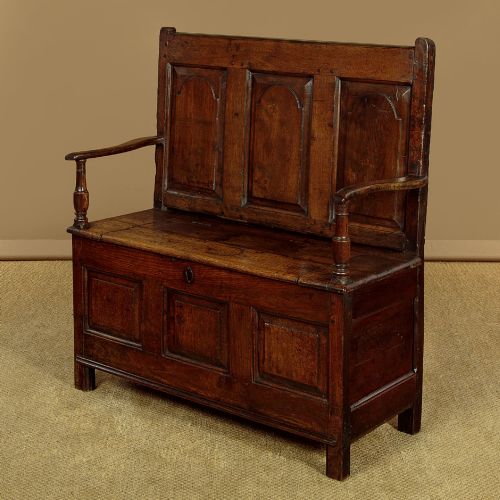
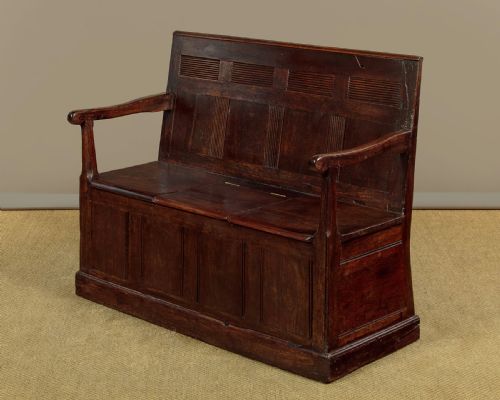
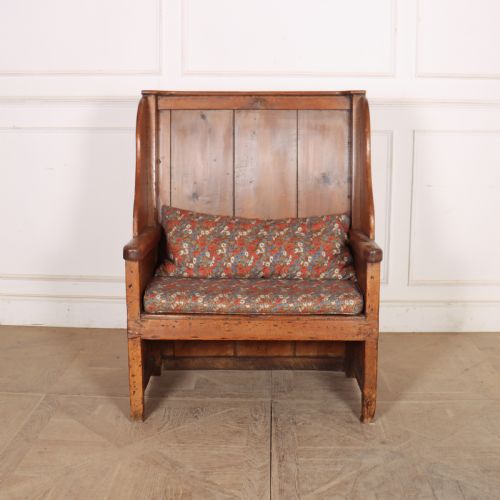
A welsh country furniture bench encompasses robust domestic and tavern seating spanning the seventeenth century through to the nineteenth century, including vernacular designs in oak and pine. Buyers exploring this category encounter tall-backed settlement seats, long tavern forms, box settles, and multi-functional chair-tables.
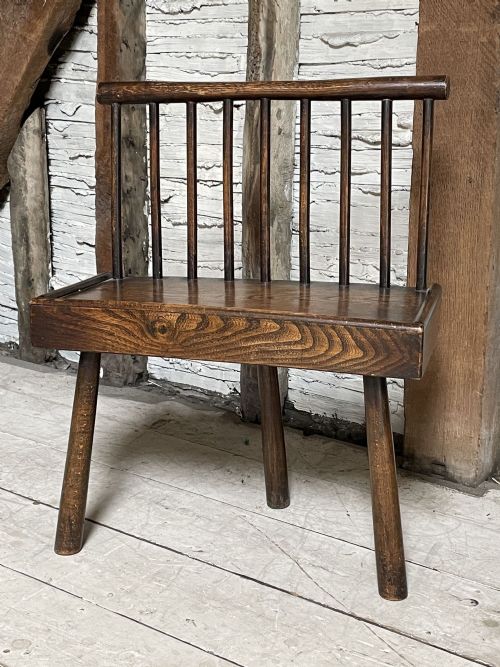
The pieces appearing here lean heavily toward sturdy oak and painted pine constructions reflecting Welsh vernacular, Georgian country, and rustic farmhouse traditions. Examples range from compact child-sized stickback settles and small eighteenth-century box settles to expansive nine-foot refectory benches.
Materials and construction methods
Local timbers dictate the construction, with solid oak and pine forming the primary structures of these seats, occasionally supplemented by iron, brass, and fabric elements. Cabinet makers and rural joiners utilised sturdy pegged joints, board construction for box settles, and turned or stickback supports.
Surfaces frequently display aged patination or historical painted finishes, particularly on pine tavern and farmhouse examples originating from West Wales. Structural longevity relies on thick timber boards and traditional joinery designed for heavy daily use in farmhouses and public houses.
Child-sized stickback settles prove that even toddlers required a proper seat by the tavern fire.
Distinctions in craftsmanship and survival
Quality rests upon the preservation of original surfaces, structural timber integrity, and the proportion of the form. High-grade examples retain their early or original painted finishes, uncompromised back panels, and substantial board thicknesses without excessive replacement timber.
Vernacular pieces with sophisticated proportions, such as high back panels on settles or integrated box storage bases, distinguish themselves from simpler or heavily altered utility seating. The integration of clever dual-purpose mechanics, like pivoting chair-table tops, marks superior rural design.
The Welsh Country Furniture Bench Glossary
- Settle
- A wooden bench with a high back, solid arms, and often a enclosed box base intended to keep out drafts. These seats anchored the communal areas of early homes and taverns.
- Box settle
- A variation featuring a storage compartment beneath the seat accessed by lifting the lid or hinged boards. This form maximised domestic utility in modest rural dwellings.
- Chair-table
- A versatile piece of furniture with a large solid back that tilts forward on pivots to form a table top. This clever dual-purpose design conserved valuable floor space in small rooms.
- Vernacular
- Regional architecture and furniture built by local craftsmen using traditional materials and local methods rather than following metropolitan academic styles. It prioritises function and local resourcefulness.
- Stickback
- A seating construction where turned spindles or round sticks are tenoned directly into the seat board and top rail. This method provides lightweight strength.
Welsh Country Furniture Bench: Frequently Asked Questions
How were box settles used?
Box settles served as dual-purpose seating and storage for household goods, textiles, or firewood. Their high wooden backs and solid sides sheltered occupants from cold drafts near open hearths.
The enclosed base kept living spaces tidy while providing a secure bench close to the fire.
How do I identify oak from pine pieces?
Oak pieces generally exhibit a dense grain, darker patination, and heavy structural weight typical of earlier centuries. Pine examples often appear lighter, softer in texture, and frequently carry historical painted finishes.
Both materials were utilised across different periods depending on local availability and workshop practice.
Where were tavern benches placed?
Tavern benches stood along the walls of public houses, assembly rooms, and rural farmhouses to accommodate multiple diners or drinkers. Their long forms allowed communal seating around large refectory tables.
Built for heavy commercial use, they prioritised simple strength and stability over delicate ornamentation.
How do I care for antique pine furniture?
Antique pine furniture benefits from stable indoor humidity levels and protection from direct sunlight to preserve surface finishes and timber integrity. Gentle dusting with a dry cloth maintains the aged patina without stripping historical wax or paint.
Avoiding excessive moisture keeps pegged joints secure and prevents warping in old boards.