
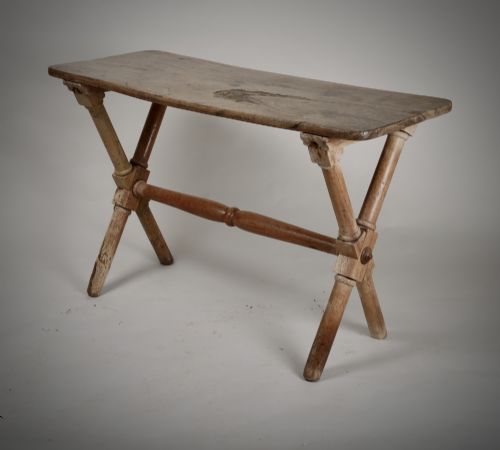
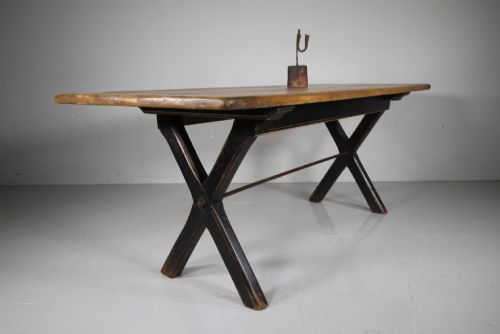
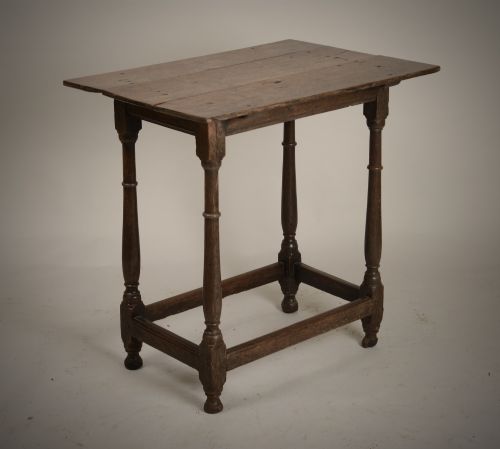
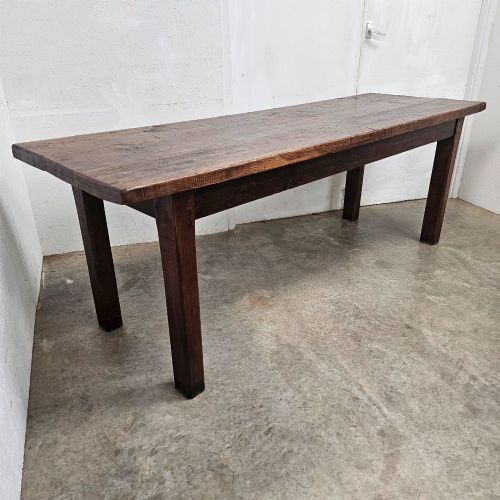


Rustic Oak Pub Table
A rustic oak pub table brings immediate honest character to a room, built from sturdy timbers that carry the marks of centuries of heavy daily use.
Rustic Oak Pub Table
A rustic oak pub table serves as a sturdy focal point for casual dining and gathering, drawing on traditions of English, Welsh, and French country interiors. When you search for a rustic oak pub table, you encounter practical furniture designed for taverns and rural homes rather than formal drawing rooms.
The pieces listed on this page span several key periods, reaching back to the 17th century through the Georgian era and into the 19th century. You are most likely to meet 19th-century tavern tables and oak dining variants alongside occasional elm or mahogany examples.
Forms vary from classic side tables and tavern tables to dining tables and coffee tables, often accompanied by related items such as cricket tables and stools. Each piece reflects the functional needs of past spaces, constructed to withstand constant use.
How they were made
Makers relied on durable woods like oak and elm, sometimes pairing timber tops with iron structural elements or pine frames. Thick tops provided the necessary resistance to daily knocks and spills in busy public houses.
Joinery techniques matched the utilitarian purpose of these tables, prioritising stability over decorative flourishes. Surfaces developed their character naturally through decades of use and application of simple finishes.
Listings on this page include pieces from the 17th, 18th, and 19th centuries, alongside Georgian and 1900s items.
What varies in quality
Quality in these tables rests primarily in the depth of colour and the presence of a rich, honest patina earned through long service. Timber selection also matters, with thick, well-figured oak tops commanding greater appreciation than standard secondary woods.
Proportion and structural integrity separate utilitarian survivors from lesser examples. The balance between the top and the supporting legs determines the overall visual weight and authenticity of the piece.
The Rustic Oak Pub Table Glossary
- Tavern Table
- A sturdy, practical table traditionally used in public houses for drinking and dining. These pieces typically feature robust timber construction designed for heavy daily use.
- Cricket Table
- A small, light three-legged table originating from the English countryside. The tripod design ensured stability on uneven flagstone floors.
- Patina
- The deep sheen and surface texture developed by wood over centuries of handling, cleaning, and exposure to light. It serves as a visual indicator of age and genuine use.
- Centre Table
- A freestanding table finished on all sides to stand in the middle of a room rather than against a wall. They frequently served multiple domestic purposes.
Rustic Oak Pub Table: Frequently Asked Questions
What is a rustic oak pub table?
A rustic oak pub table is a sturdy, practical piece of furniture originally built for use in commercial taverns or rural homes. These tables prioritise solid timber construction and durability over delicate ornamentation.
They appear in various forms across this page, including tavern tables, dining tables, and coffee tables dating from the 17th century through the 19th century.
How were these pub tables used?
These tables served as central surfaces for eating, drinking, and social gathering in public houses and country dwellings. Their robust build allowed them to withstand constant daily use by patrons and families.
Today, they function well as kitchen dining tables, side tables, or focal points in living spaces.
How do I date a pub table?
Dating relies on observing construction methods, joinery, timber types, and the natural wear accumulated over time. Pieces from the 17th century often display simpler, heavier framing compared to later Georgian or 19th-century iterations.
Comparing the specific characteristics listed across different periods helps establish the chronological context of each piece.
What woods were used for pub tables?
Makers primarily utilised native hardwoods such as oak and elm for their strength and longevity. Iron components and pine also appear in certain regional variations like bistro tables.
The choice of material typically reflected what was locally available to the country carpenter or workshop.