


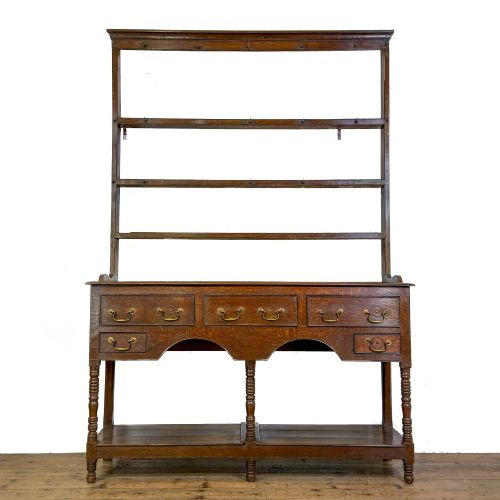
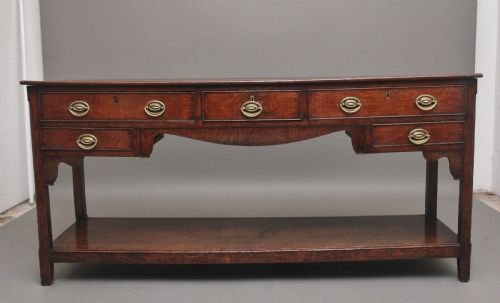
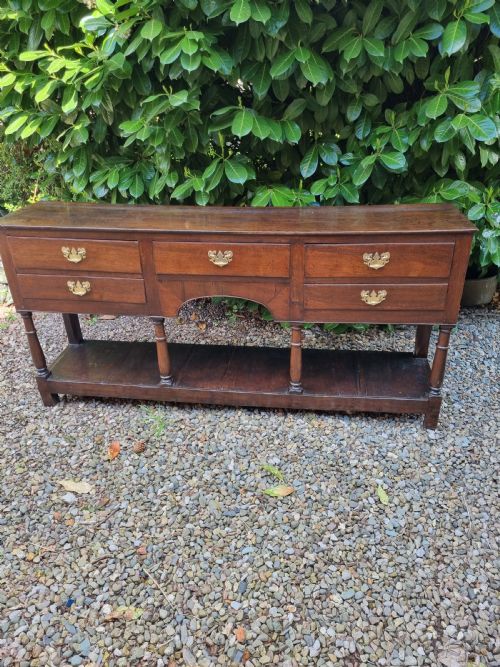
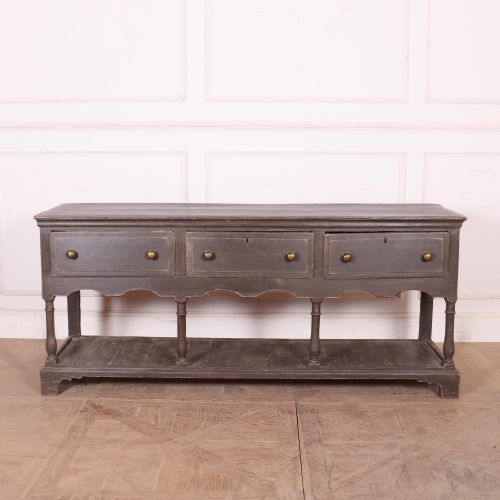


Rustic Oak Potboard Dresser
A rustic oak potboard dresser brings practical country storage and timeless utility into a home.
Rustic Oak Potboard Dresser
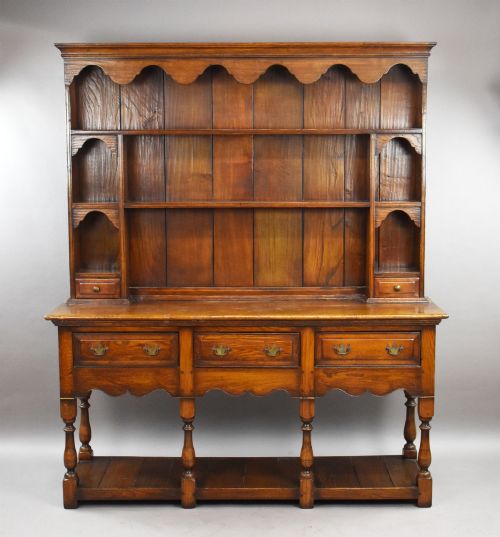
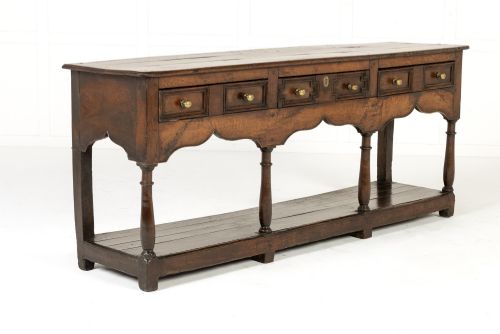
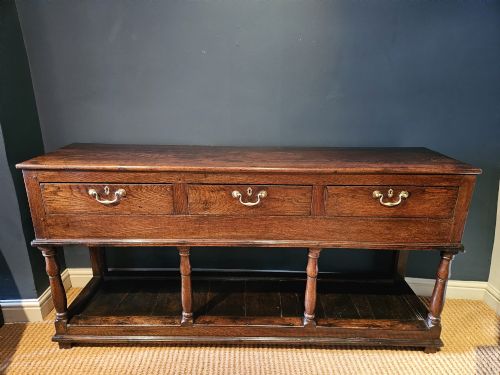
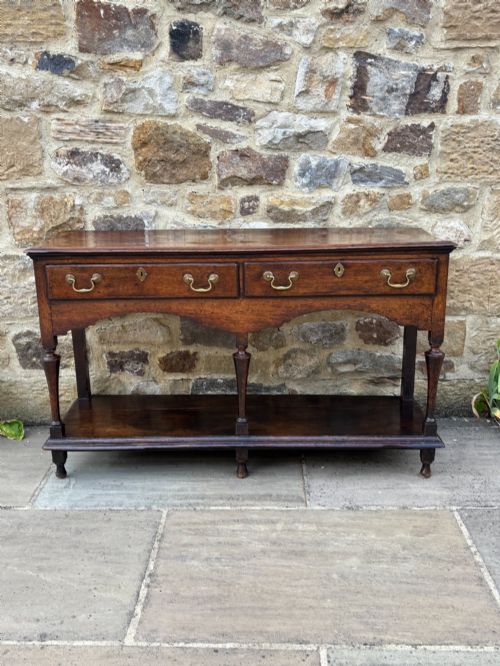
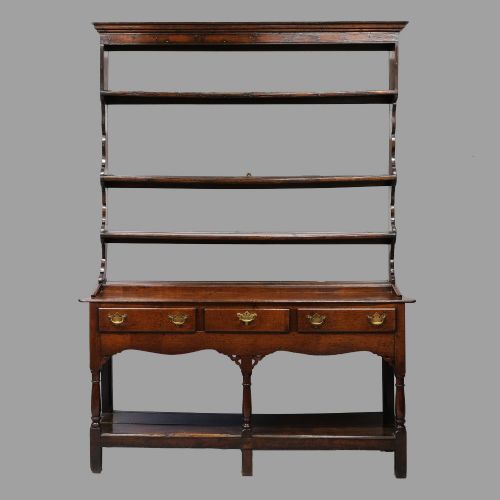
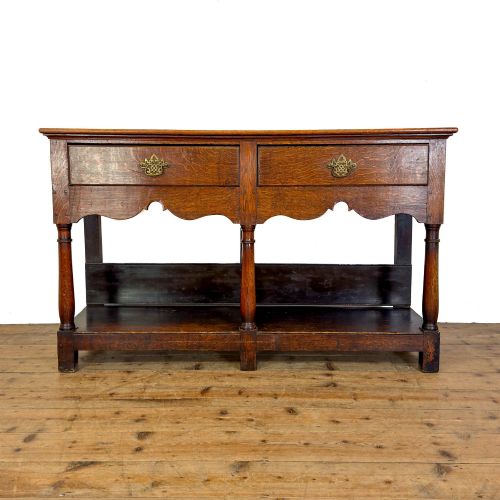
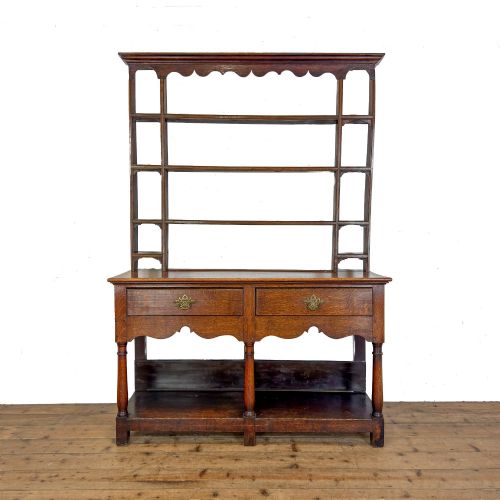
A rustic oak potboard dresser is a substantial storage piece featuring an open lower shelf known as a potboard beneath working drawers or display racks. These pieces originate primarily from regional traditions across England and Wales during the eighteenth and nineteenth centuries.
Buyers encountering this page will frequently see oak dresser bases and full Welsh dressers dating from the seventeen-fifties through the Victorian era. Regional examples often carry distinct characteristics associated with areas such as Glamorgan, Carmarthenshire, and mid-Wales.
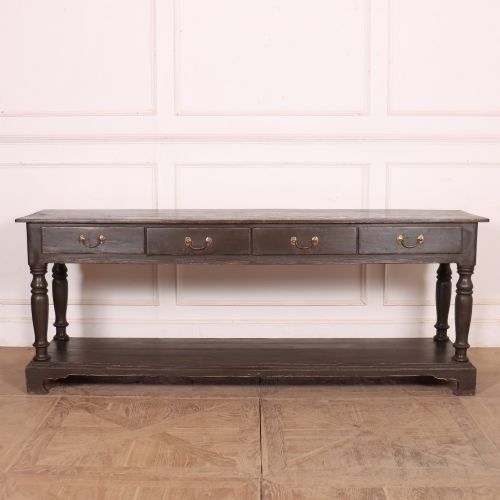
Forms vary between open dresser bases with potboards, multi-drawer configurations, and pieces accompanied by plate racks. Native timbers shape the character of each piece, anchored heavily by solid oak construction alongside secondary woods.
How they were made
Cabinetmakers built these dressers using solid native timber, principally oak, supported by secondary woods like elm and pine in structural or concealed areas. Surfaces frequently display visible grain, hand-planed boards, and traditional joinery methods suited to heavy domestic use.
Hardware details incorporate brass and iron handles or escutcheons, while select examples feature painted finishes or bleached surfaces applied during later periods. Construction methods rely on pegged joints and dovetailed drawer construction rather than modern fasteners.
Rustic Oak Potboard Dresser Retail Price Guide 2026
Typical asking prices for rustic oak potboard dresser among the pieces listed under this phrase on Sellingantiques today, from the lower quarter to the upper quarter. They describe what is for sale here now, not the wider market.
Materials recorded on this page include oak, elm, pine, iron, brass, and painted timber finishes.
What varies in quality
Quality in a rustic oak potboard dresser rests upon the integrity of the timber, regional character, and the preservation of original surfaces. Pieces retaining their native patination and untouched construction details command distinct attention from collectors.
Proportion and scale also dictate distinction, particularly in smaller country examples or those retaining uncommon drawer layouts. The integration of the lower potboard with sturdy uprights reflects the builder's local vernacular tradition and structural skill.
The Rustic Oak Potboard Dresser Glossary
- Potboard
- The low open shelf positioned near the floor beneath the main drawers of a dresser. It was historically utilised for storing heavy pots and pans.
- Dresser base
- The lower section of a dresser comprising a flat top, working drawers, and supporting legs or a potboard, without an upper plate rack.
- Vernacular
- Regional furniture styles built by local country cabinetmakers using available native materials rather than following metropolitan fashion.
- Rack
- The upper shelving superstructure mounted to a dresser base designed for displaying plates and ceramics.
Rustic Oak Potboard Dresser: Frequently Asked Questions
What is a potboard dresser?
A potboard dresser is a traditional storage unit featuring an open lower platform beneath the working surface or drawers. This lower shelf provided practical storage for heavy kitchen utensils in country homes.
These pieces combine display surfaces with robust timber construction. They reflect regional cabinetmaking traditions primarily from the eighteenth and nineteenth centuries.
Where were these dressers made?
These dressers were made across various English and Welsh regions by local craftsmen. Specific pieces often link to distinct areas like Carmarthenshire, Glamorgan, or mid-Wales.
Makers utilised native timbers available in their locality. This regional variation creates diverse styles within country furniture.
Are all potboard dressers oak?
Most potboard dressers utilise solid oak as the primary timber, reflecting the durability required for daily domestic use. However, makers also incorporated elm, pine, and painted timber finishes.
Secondary woods frequently appear in internal drawer components or backing boards. Native timber choices vary depending on the workshop's regional location.