
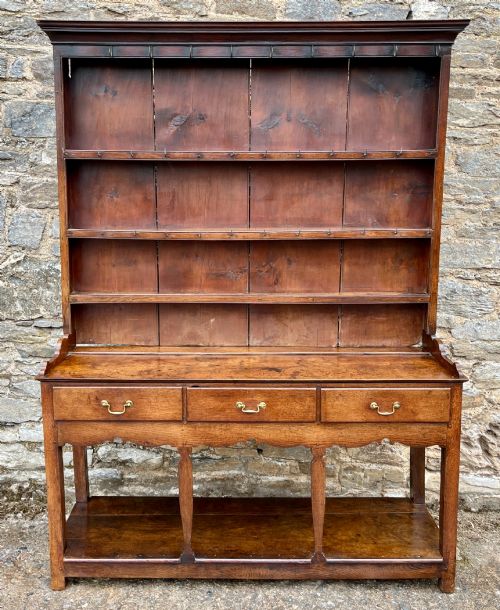
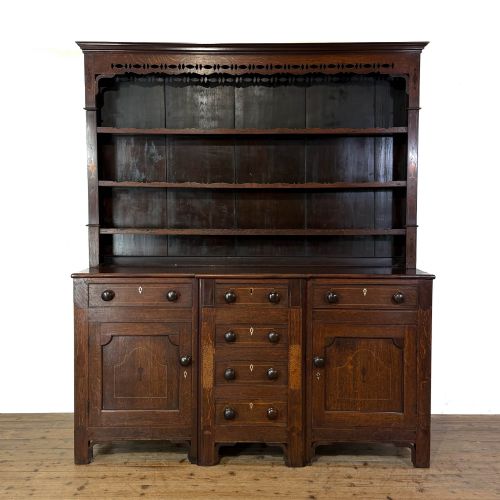


Open Rack Oak Sideboard
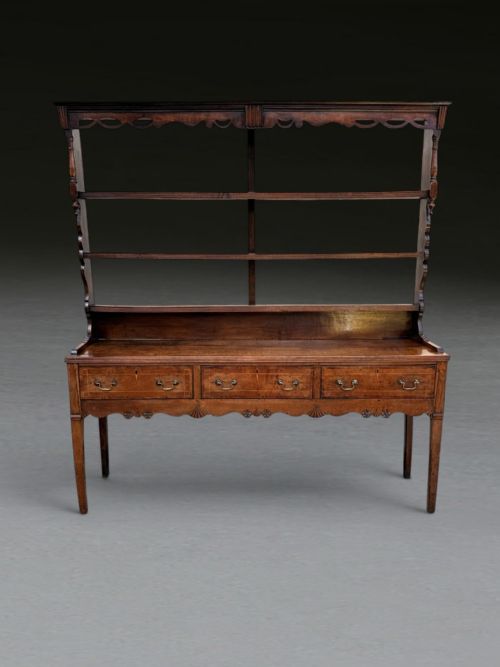
An open rack oak sideboard brings centuries of rural craftsmanship and display space into a home through sturdy timbers and plate-holding shelves.
Open Rack Oak Sideboard
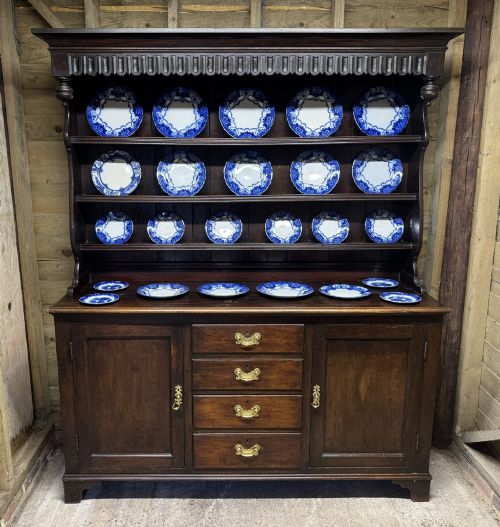
An open rack oak sideboard combines a base cabinet for storage with a stepped superstructure of shelves for displaying ceramics and pewter.
Most examples found here hail from Welsh and English country workshops, spanning the eighteenth and nineteenth centuries.
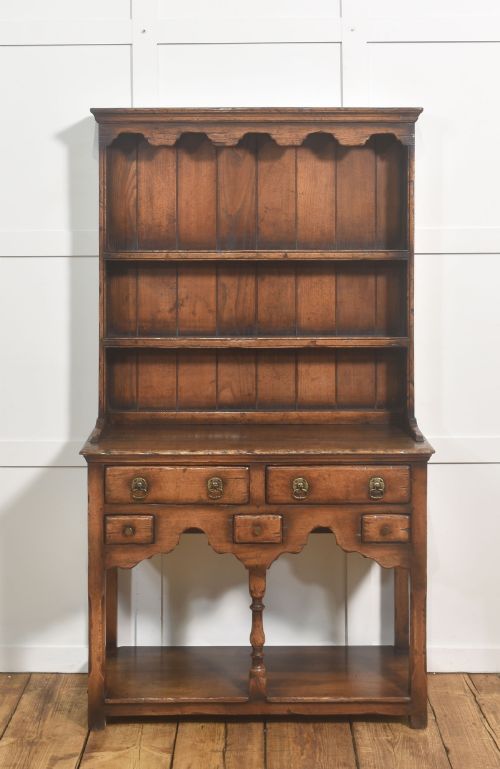
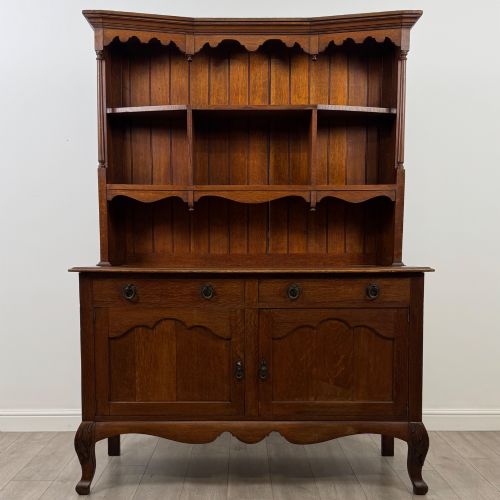
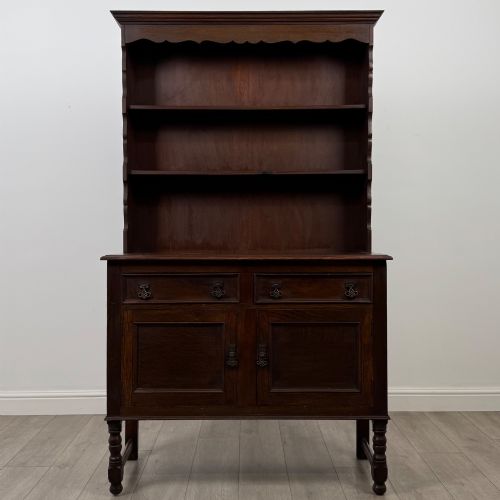
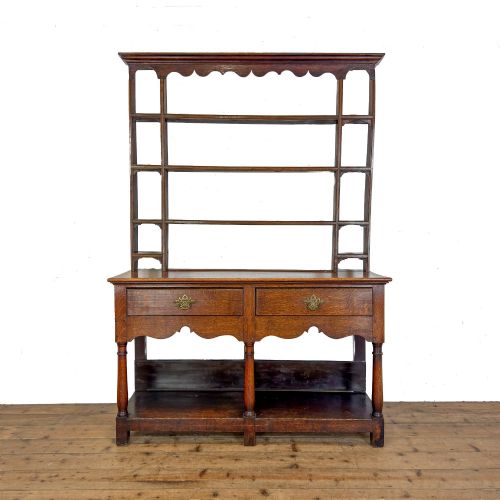
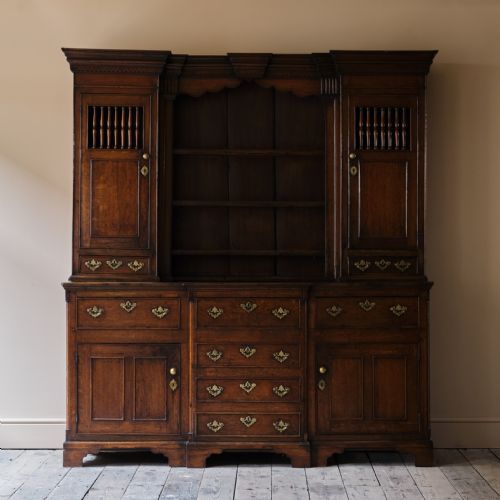
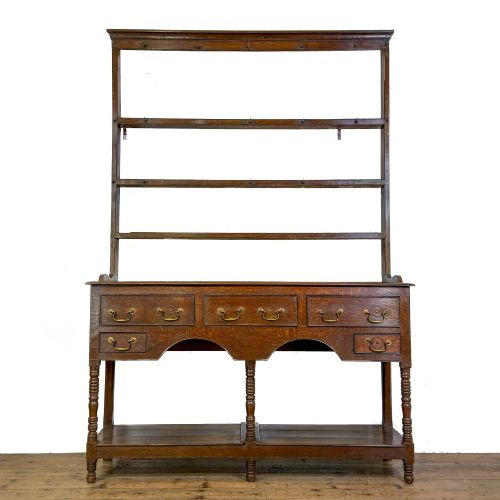
Regional variations appear in the base construction, ranging from traditional potboards to enclosed cupboards and breakfront drawer arrangements.
How they were made
Joiners built these pieces primarily from native oak, often incorporating secondary timbers like elm, pine, and mahogany in hidden structural areas.
Hardware typically includes brass pulls and iron hinges, whilst occasional details utilise bone or ceramic inserts.
Framework relied on traditional pegged mortise and tenon joints designed to withstand heavy daily domestic use.
Listings span the eighteenth, nineteenth, and early twentieth centuries, featuring Georgian, Victorian, and Edwardian periods.
What varies in quality
The degree of patination and surface colour separates untouched vernacular timber from pieces that have suffered heavy modern restoration.
Proportions dictate desirability, with smaller proportions and regional peculiarities such as potboard bases commanding greater interest.
The retention of an original open plate rack attached to the base significantly elevates the integrity of the piece.
The Open Rack Oak Sideboard Glossary
- Potboard
- An open lower shelf built close to the floor for storing pots and pans. This feature defines many traditional country dressers.
- Plate rack
- The upper framework fixed to the back of the dresser, featuring grooved shelves to display plates upright. Open versions expose the wall behind the crockery.
- Belly rack
- A regional variation in rack construction where the central section swells outward. It provides distinct aesthetic movement to the display tiers.
- Bread and cheese dresser
- A specialised vernacular form featuring pierced ventilation panels in the upper doors. These panels kept dairy and dry goods cool in farmhouse kitchens.
- Vernacular
- Architecture or furniture built by local craftsmen using traditional regional methods rather than academic design styles. These pieces reflect the specific social and domestic needs of their locality.
Open Rack Oak Sideboard: Frequently Asked Questions
What is an open rack oak sideboard?
An open rack oak sideboard is a heavy country storage piece featuring a lower cabinet or potboard base and an upper set of shelves for plates.
Craftsmen built these units to hold kitchen crockery and food supplies in everyday rural homes.
How do I date an old oak dresser?
Dating relies on examining the timber colour, tool marks, construction joints, and regional stylistic traits.
Eighteenth-century examples often display hand-planed surfaces and pegged construction, whereas later nineteenth-century pieces show more standardised mechanical sawing.
Where were these dressers originally made?
Makers constructed these pieces across rural England and Wales, with prominent regional styles emerging from Snowdonia, Llanrwst, and Glamorgan.
Local timber availability and distinct domestic storage habits shaped these regional variations.
How do I style a dresser in a modern room?
Use the open shelves to display everyday ceramic collections, vintage books, or glassware.
The sturdy oak base provides a strong horizontal surface for lamps, bowls, or seasonal arrangements.