


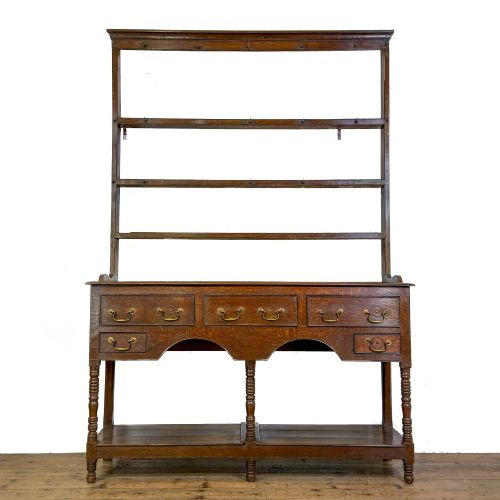
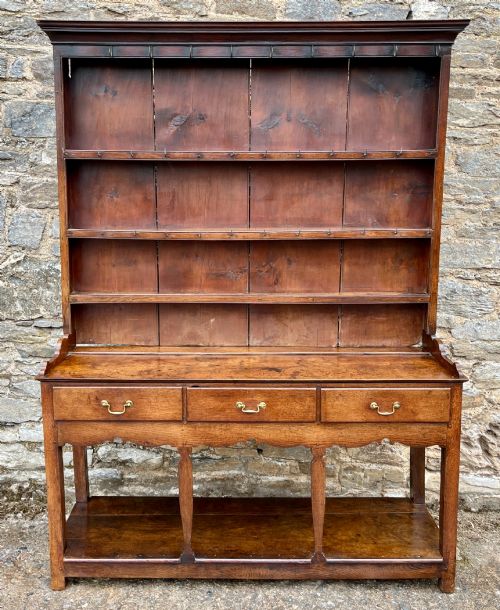


Traditional Welsh Potboard Dresser
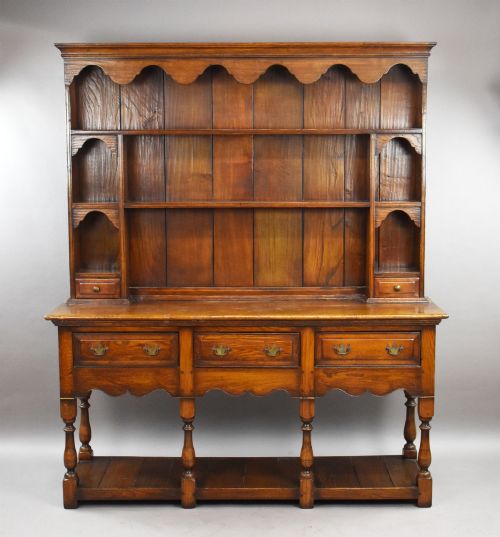
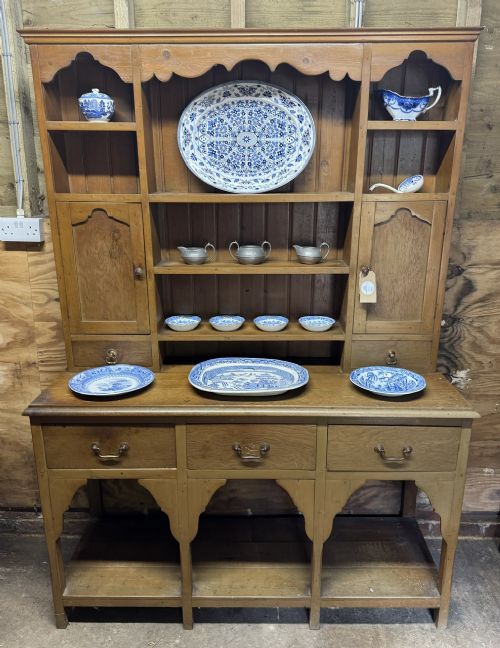
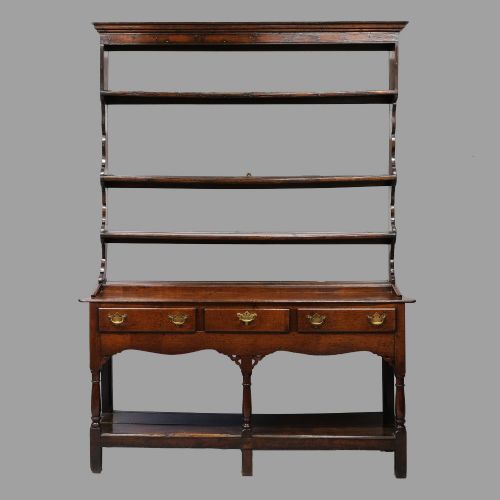
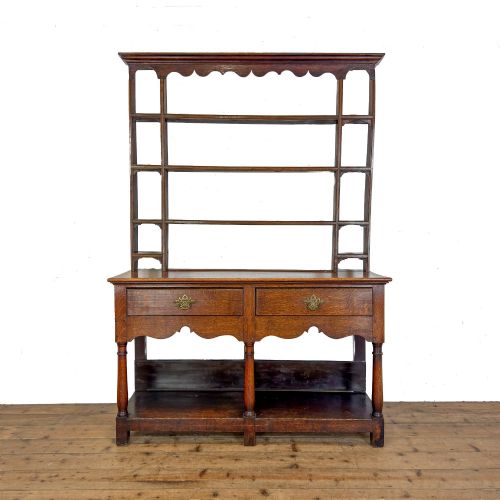
A traditional welsh potboard dresser is a sturdy timber storage piece featuring a low slatted shelf, built to anchor farmhouse kitchens since the eighteenth century.
Materials and Construction
Makers relied heavily on solid native oak and pine, supplemented by elm and burr walnut for specific panels or decorative accents. These timbers were hand-planed and joined using traditional methods suited to rural workshops.
Hardware such as drop handles and escutcheons were typically cast in brass or forged in iron, fastening drawers and cupboard doors securely. Painted finishes appear on certain pine examples, showing layers built up over generations.
The defining potboard structure consists of parallel wooden slats fixed low between the legs, originally intended for airing pots and heavy kitchen utensils.
Distinctions in Quality
The superiority of one traditional welsh potboard dresser over another lies in the integrity of its timber and the retention of its original surface patination. Pieces that retain their early peg construction and untouched boards command greater appreciation.
Proportion and regional character heavily influence the appeal, with smaller cottage models or distinct local styles showing more refined vernacular artistry. Altered heights or replaced racks alter the historical harmony of the piece.
Traditional Welsh Potboard Dresser Retail Price Guide 2026
Typical asking prices for traditional welsh potboard dresser among the pieces listed under this phrase on Sellingantiques today, from the lower quarter to the upper quarter. They describe what is for sale here now, not the wider market.
Kitchen dressers often double as impromptu wine cellars when the potboard proves the exact right height for sideways bottles.
The Traditional Welsh Potboard Dresser Glossary
- Potboard
- The lower open shelf fixed between the legs of a dresser base, traditionally used for storing pots and pans. This platform distinguishes potboard dressers from standard boarded cupboards.
- Plate rack
- The open shelving superstructure mounted on top of the dresser base to display ceramic plates and platters. Many surviving pieces retain their original matching racks.
- Vernacular
- Regional furniture built by local country joiners using traditional methods and native timbers rather than following strict metropolitan fashion. This style defines much of Welsh country furniture.
- Patina
- The surface sheen and texture developed on timber through decades of handling, polishing, and natural oxidation. Original patina indicates minimal modern intervention.
- Peg construction
- The traditional method of joining wooden framing members using cylindrical wooden dowels rather than modern steel fasteners. This technique allows timber to expand and contract naturally.
Traditional Welsh Potboard Dresser: Frequently Asked Questions
What is a potboard base?
A potboard base is the lower cabinet section of a dresser featuring a flat slatted shelf positioned near the floor between the legs. It provided practical storage space in busy country kitchens.
This open lower shelf allowed heavy cookware and earthenware to air and dry properly after washing.
Are all these dressers from Wales?
While many examples originate from Welsh counties like Carmarthenshire or Snowdonia, the category also encompasses English country equivalents. Regional traits often emerge in the moulding profiles and drawer arrangements.
Local timber choices, such as native oak and pine, further help identify the geographic roots of each piece.
Did these dressers always have plate racks?
Many dressers were constructed as single units with integrated plate racks, though base units were also built alone. Surviving examples that retain their original matching racks are particularly prized by collectors.
Over time, racks and bases were occasionally separated or paired with different partners during house moves.
How do I care for an oak dresser?
Maintain the timber by applying natural beeswax sparingly and buffing with a soft cloth to protect the surface. Avoid placing antique furniture near direct heat sources or strong sunlight.
Keeping room humidity stable prevents the ancient oak boards from splitting or warping.