

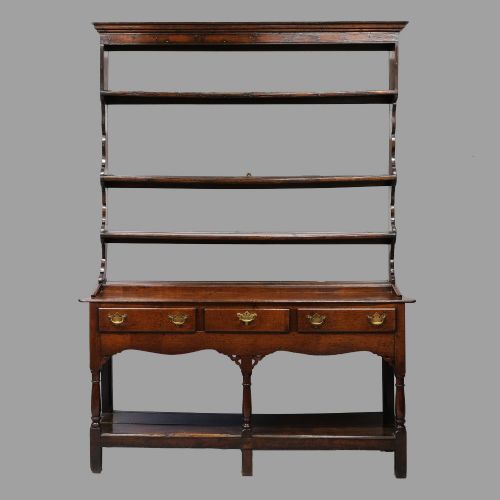
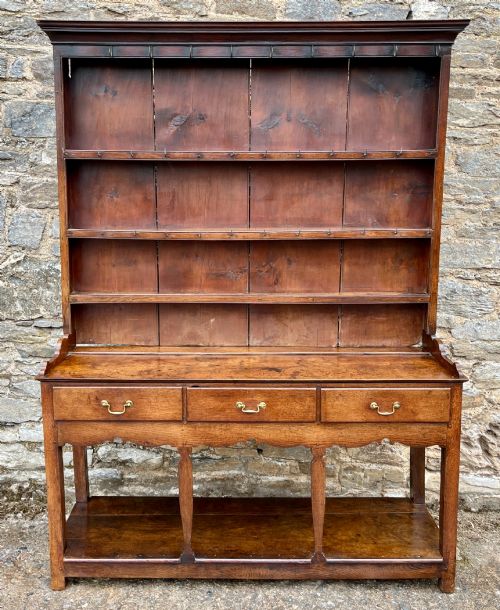


Potboard Dresser and Rack
A potboard dresser and rack brings centuries of utilitarian craftsmanship into modern rooms.
Potboard Dresser and Rack
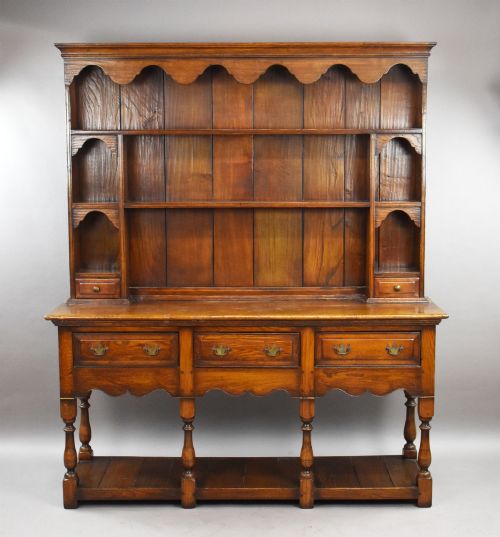
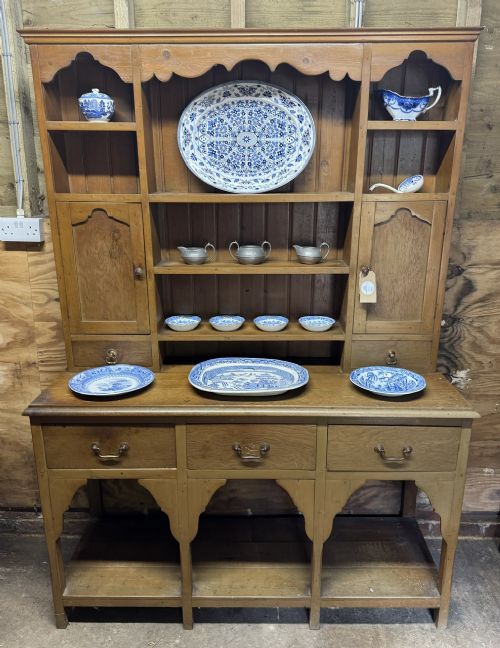
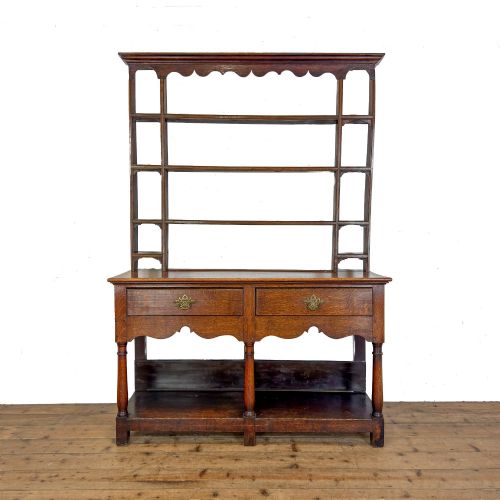
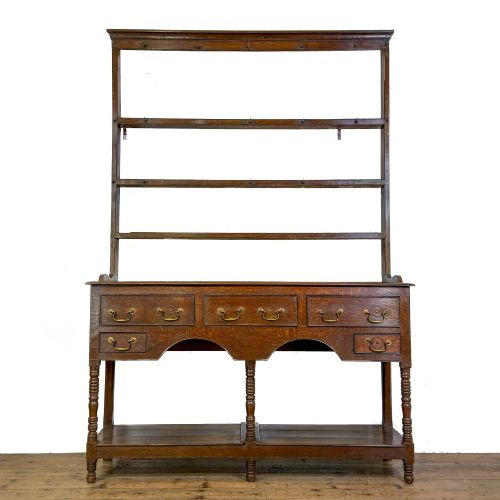
A potboard dresser and rack combines a heavy lower base with an open plate shelf superstructure above. These domestic storage items appear across eighteenth and nineteenth century vernacular furniture traditions, particularly in Welsh and English country workshops.
The lower section provides a surface for food preparation alongside the characteristic low potboard shelf situated just above the floor. This open lower tier originally held heavy earthenware vessels, separating the ground from perishable stores.
Surviving examples span Georgian and Victorian periods, with native timbers forming the core of regional output. Buyers encounter both single piece constructions and two part formats where the rack lifts away from the base.
Materials and Construction
Makers relied primarily on native timbers, selecting solid oak for framing and structural boards, alongside pine, elm, and burr walnut in specific regional pieces. Carpenters joined structural members using pegged mortise and tenon joints designed to withstand heavy domestic workloads.
Surfaces received hand planning and scraping rather than mechanical sanding, leaving undulating tool marks across table tops and drawer fronts. Iron hinges and brass hardware secured doors and drawers, while painted finishes appeared on softer pine variants.
Potboard Dresser and Rack Retail Price Guide 2026
Typical asking prices for potboard dresser and rack among the pieces listed under this phrase on Sellingantiques today, from the lower quarter to the upper quarter. They describe what is for sale here now, not the wider market.
Listings feature eighteenth and nineteenth century periods, with oak, pine, elm, and burr walnut as the primary materials.
Evaluating the Pieces
Quality rests in the proportion of the proportions and the integrity of the timber surfaces over centuries of use. Proportion dictates visual success, with smaller country examples and regional variants from Carmarthenshire or Snowdonia commanding particular attention for their scale.
The survival of original surface patination and matching upper racks distinguishes the finest examples from altered items. Replacements to potboards, feet, or cornices alter the historical coherence of the piece.
The Potboard Dresser and Rack Glossary
- Potboard
- The lower shelf situated close to the floor between the legs of a dresser base. This open platform provided storage for pots and heavy kitchen utensils.
- Plate Rack
- The upper wooden framework featuring shelves and plate rails designed to display ceramic dishes vertically against a wall. This superstructure attaches directly to the dresser base or hangs independently.
- Vernacular
- Furniture made by local country craftsmen following regional traditions rather than metropolitan academic designs. These pieces utilise local timbers and practical construction methods.
- Patina
- The surface sheen and colour acquired by wood through decades of handling, polishing, and oxidation. Original patination indicates minimal chemical stripping or overzealous restoration.
- George III
- The stylistic period spanning the reign of George the Third from seventeen sixty to eighteen twenty. Furniture from this era often displays refined bracket feet and cockbeaded drawer framing.
Potboard Dresser and Rack: Frequently Asked Questions
What is a potboard dresser and rack?
A potboard dresser and rack is a traditional kitchen storage unit featuring a wooden base with an open lower shelf and an integrated plate rack above. These items served as the central storage and display fixture in country houses and farmhouses.
The lower surface provided space for culinary preparation, while the rack displayed ceramic plates and platters for everyday dining.
How were these dressers used historically?
Families used the lower surface for preparing meals and the open potboard shelf for storing heavy ceramic pots and metal vessels away from damp stone floors. The upper shelves kept plates accessible and dry.
Over generations, these functional items transitioned from working kitchens into principal living spaces as household habits changed.
How do I date an antique oak dresser?
Dating relies on examining construction techniques, timber choice, and hardware styles across the piece. Eighteenth century examples often show hand-planed surfaces, pegged joints, and native oak construction.
Later Victorian versions frequently incorporate pine or machine-sawn elements alongside different drawer linings and backboards.
Are the plate racks original to the bases?
Many racks survived alongside their original bases, though some upper sections were matched together during later periods. Matching timber grain, wear patterns, and regional construction traits help confirm authenticity.
Inspect the joinery where the rack meets the base to check for consistency in age and material.
How should I care for an antique wood surface?
Maintain antique wood surfaces by applying natural beeswax sparingly and buffing with a soft cloth to protect the historic patina. Avoid placing pieces near direct heat sources or strong sunlight.
Keep indoor humidity stable to prevent timber shrinkage and movement in the historic joints.