





Traditional Oak Potboard Dresser
A traditional oak potboard dresser grounds a room with generous storage and centuries of working history.
Traditional Oak Potboard Dresser
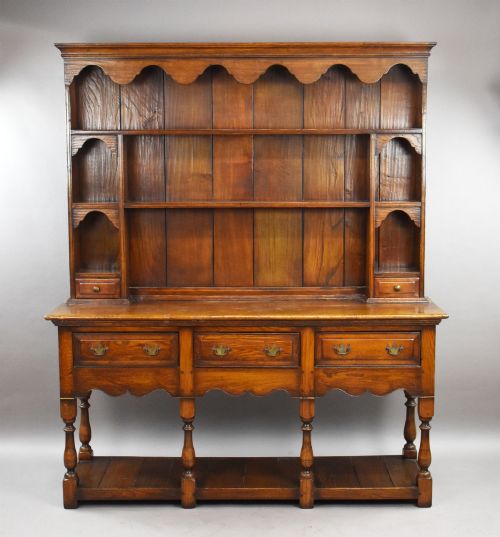
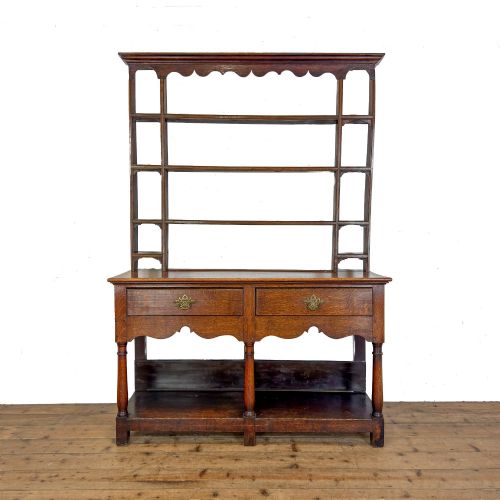
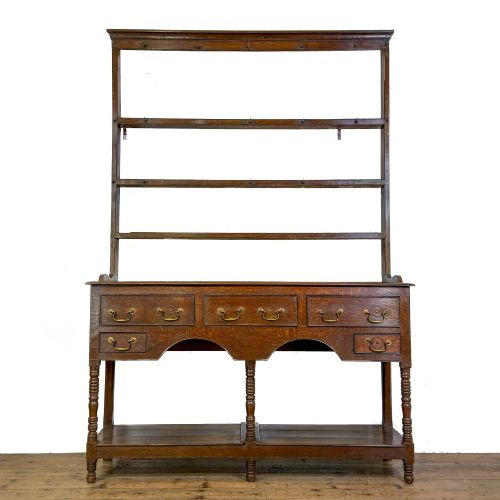
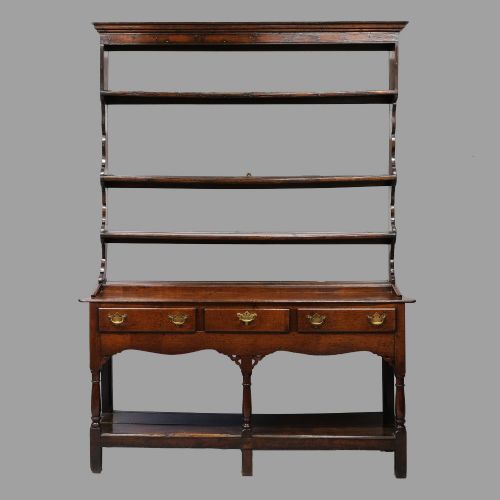
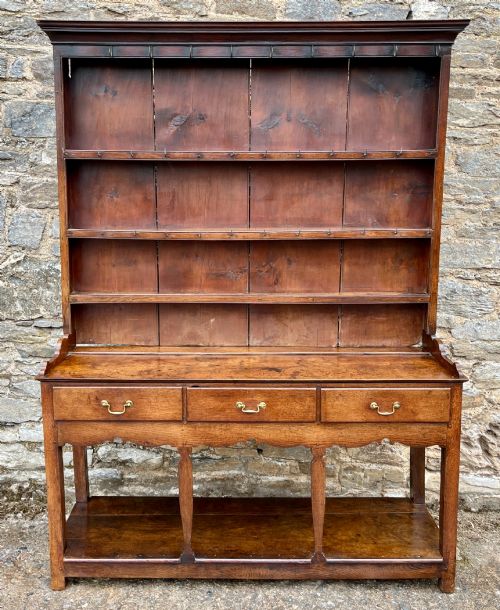
A traditional oak potboard dresser brings together a heavy timber base with an open lower shelf and often an upper plate rack. Buyers seeking this phrase encounter sturdy proportions forged in English and Welsh country workshops during the eighteenth and nineteenth centuries.
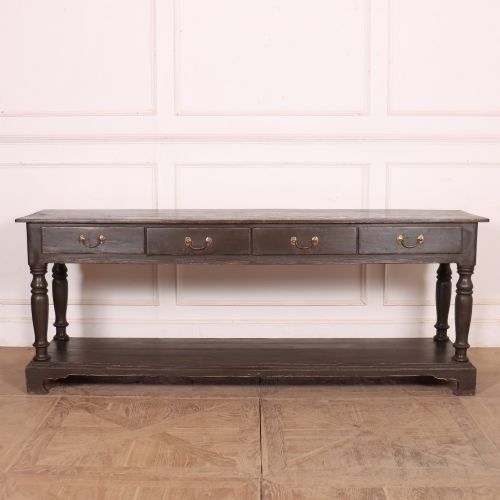
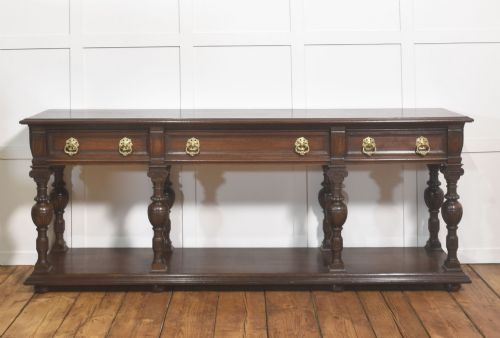
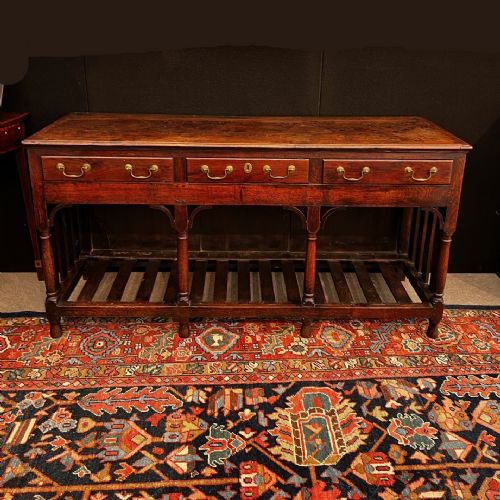
The version most commonly met on this page is the dresser base, featuring banks of drawers above the signature potboard shelf. These sturdy pieces reflect Georgian and Victorian vernacular traditions designed for everyday domestic utility.
Regional variations span from English country workshops to Welsh valleys, including examples with integrated plate racks and compact cottage proportions. Each piece demonstrates the practical furniture forms developed for rural homes.
How traditional oak potboard dressers were made
Local cabinet makers constructed these items primarily from solid oak, frequently incorporating elm or pine for secondary framing and internal drawer components. Timber selection relied on native hardwoods capable of withstanding heavy daily use in busy farmhouse kitchens.
Construction techniques combined traditional pegged joints with hand-planed boards and brass or iron hardware. Surfaces often display the natural grain of native oak alongside occasional painted finishes or burr walnut accents.
Traditional Oak Potboard Dresser Retail Price Guide 2026
Typical asking prices for traditional oak potboard dresser among the pieces listed under this phrase on Sellingantiques today, from the lower quarter to the upper quarter. They describe what is for sale here now, not the wider market.
Many historic potboard shelves bear faint crescent-shaped scars left by generations of round ceramic mixing bowls sliding across the grain.
What varies in quality
Proportion and scale dictate much of the distinction among these items, particularly when smaller cottage dimensions or rarer early Georgian periods are involved. Original surfaces and retained upper racks elevate examples well beyond later revival pieces.
The integrity of timber framing, drawer construction, and the preservation of the lower potboard shelf define the structural caliber of each piece. Maker choices in hardware and secondary woods further distinguish regional country workshops.
The Traditional Oak Potboard Dresser Glossary
- Potboard
- The lower open shelf built close to the floor between the legs of a dresser. This shelf originally held heavy pots, pans, and ceramics.
- Dresser base
- The lower section of a dresser comprising a flat top, drawers, and cupboards. It stands alone as a sideboard or serves as the foundation for an upper plate rack.
- Plate rack
- The wooden shelving unit mounted on top of a dresser base. It displays plates and platters upright against vertical slats.
- Vernacular furniture
- Domestic items made by local craftspeople using regional styles and native timbers rather than mengikuti metropolitan academic fashions.
- Elm
- A tough, interlocking hardwood frequently used for drawer linings and secondary panels. It resists splitting under heavy stress.
Traditional Oak Potboard Dresser: Frequently Asked Questions
What is a potboard dresser?
A potboard dresser is a heavy storage unit featuring a distinct low shelf running between the legs beneath the main drawers.
This open lower level provided practical storage for heavy kitchen cookware in rural homes.
How do I date an oak dresser?
Dating relies on examining construction methods, timber patination, drawer dovetailing, and regional design traits.
Eighteenth-century examples typically show hand-sawn boards and pegged joinery distinct from later Victorian manufacturing.
Did all dressers have plate racks?
Many dressers included upper plate racks, though numerous examples survive today simply as base sideboards.
Original integrated racks substantially alter the height and functional presence of the furniture.
Where were these dressers made?
Country workshops across England and Wales produced these utility items using locally sourced native timbers.
Welsh vernacular pieces frequently display distinct regional proportions and drawer layouts.