
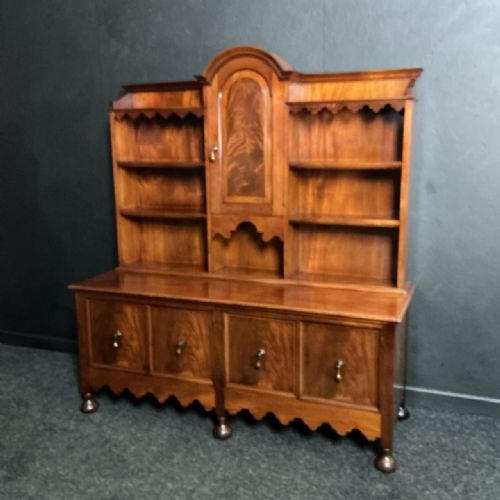
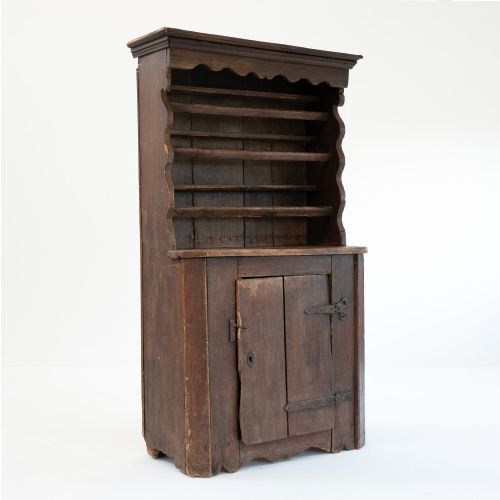
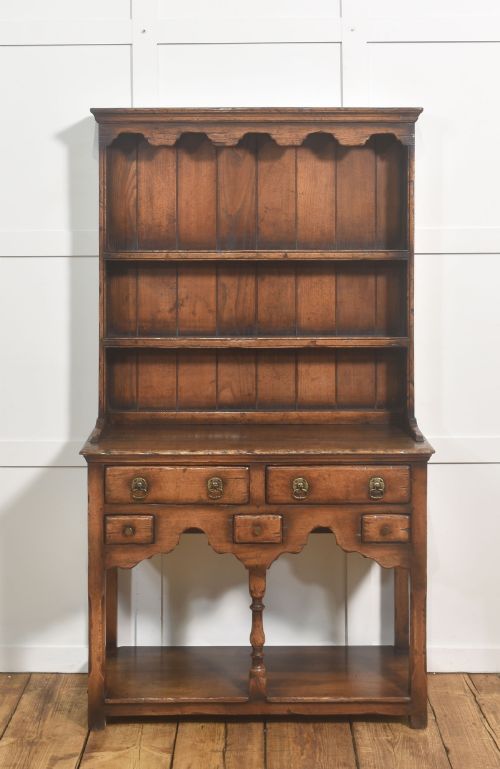
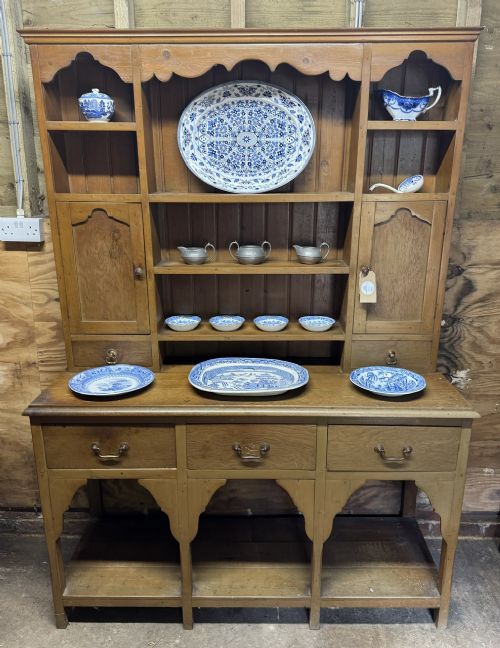
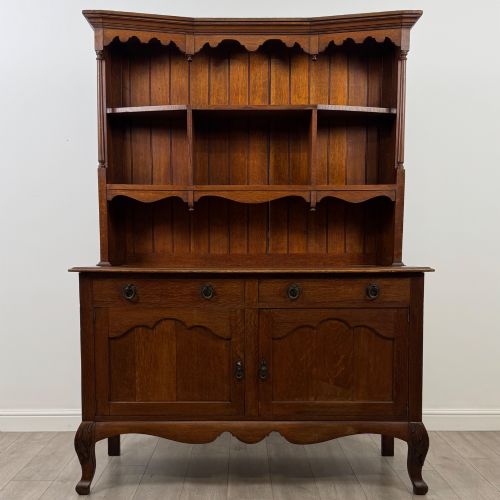
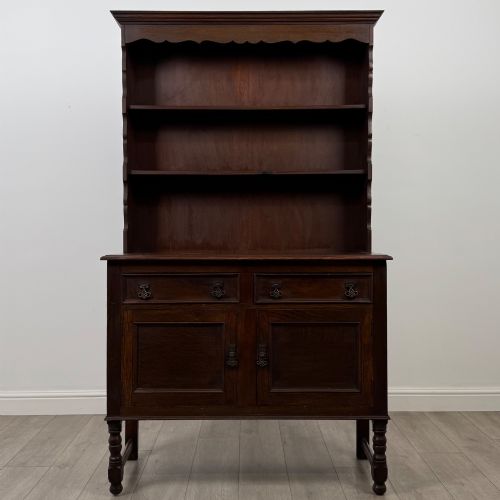
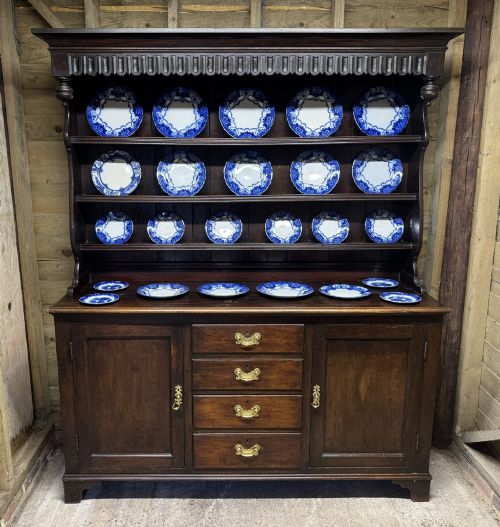
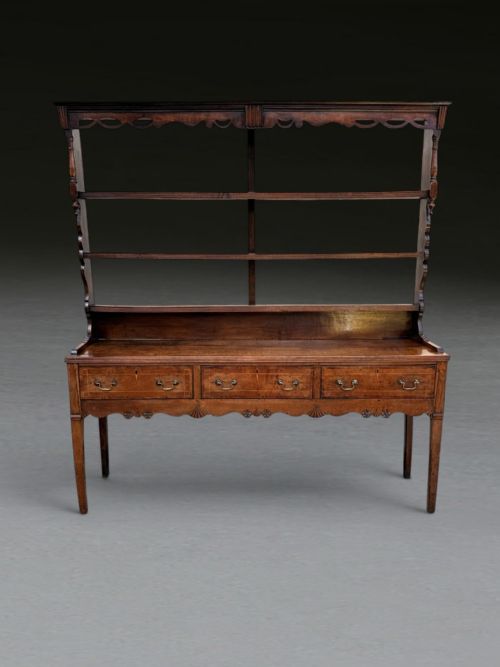
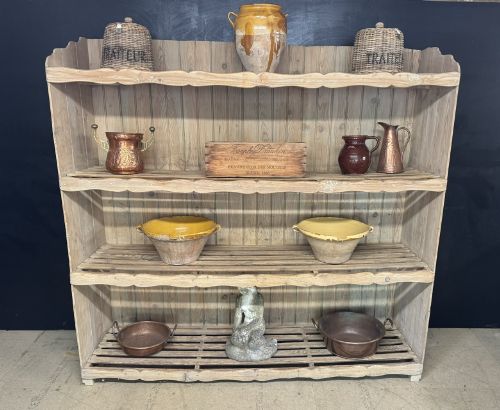
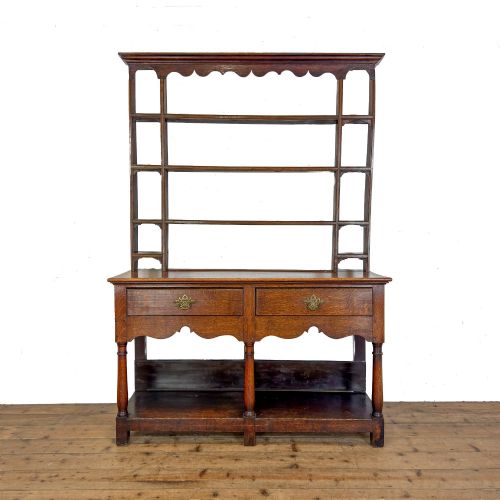
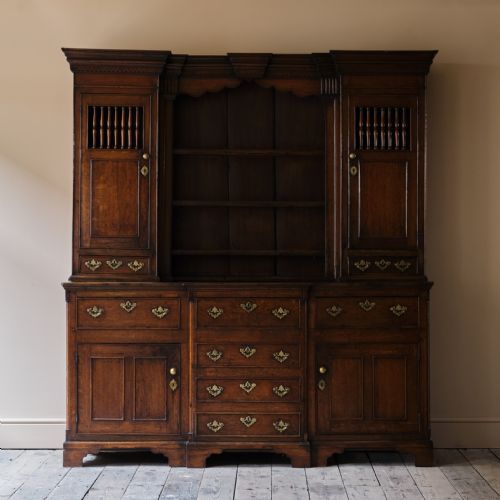
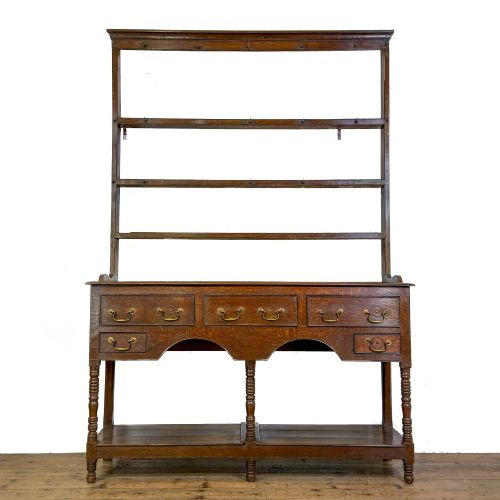
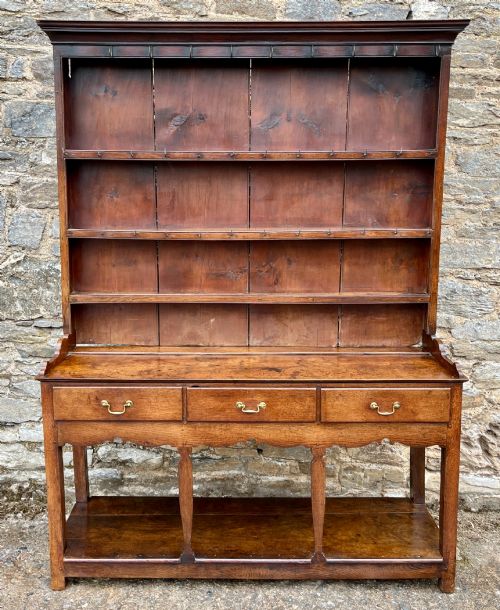
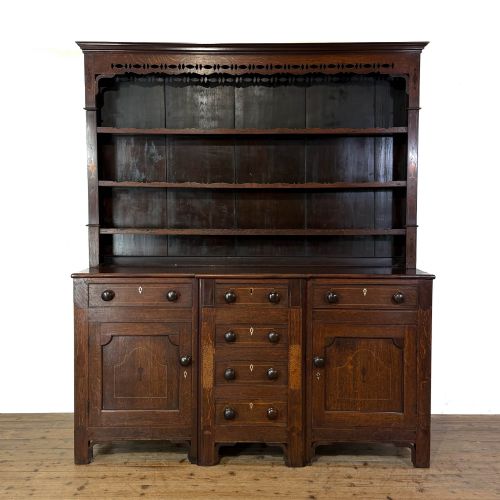

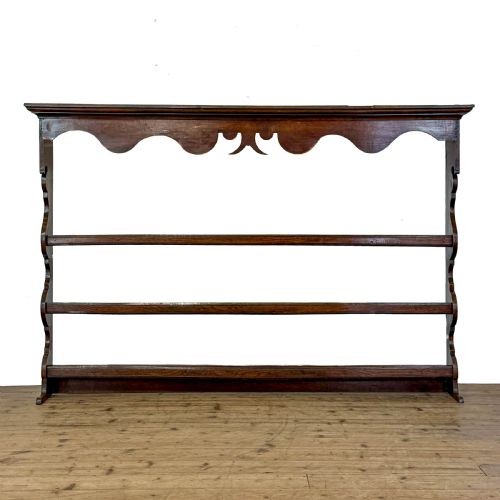
Open Rack Kitchen Dresser
An open rack kitchen dresser provides substantial storage for everyday china while anchoring a dining space with period character.
How they were made
Cabinet makers utilised native timbers such as oak, elm, and pine, selecting woods for local availability and structural strength. Potboard bases and breakfront drawer arrangements demonstrate traditional joinery techniques developed to support heavy domestic wares.
Surfaces frequently display original paint finishes, patinated wax, or stripped pine treatments that record decades of use. Iron and brass hardware secure doors and drawers, while open plate racks are integrated directly into the upper superstructure.
What varies in quality
The distinction between standard utility furniture and exceptional examples lies in the integrity of the timber and the preservation of original surfaces. Pieces retaining their untouched patinated finish or original racks command greater interest than heavily restored alternatives.
Proportion and regional detailing separate provincial workshop output from finer country house commissions. Finer examples exhibit considered timber selection, such as burr walnut or figured oak, alongside well-proportioned potboard bases and cornices.
One recorded piece retains documentation of its previous life residing inside a cafe near Snowdon.
The Open Rack Kitchen Dresser Glossary
- Potboard
- A lower open shelf positioned near the floor of a dresser, traditionally used for storing pots and pans. This feature distinguishes many Georgian and country pieces.
- Plate rack
- The upper shelving unit attached to the back of a dresser, designed with grooves to hold plates upright. Open versions display tableware directly.
- Belly rack
- An upper plate rack featuring a bowed or curved central section, often found on regional Welsh dressers. This configuration adds decorative presence to the display area.
- Bread and cheese cupboard
- A ventilated storage section incorporated into regional furniture, designed with pierced panels to keep dairy and baked goods fresh. These compartments appear on specific eighteenth-century Welsh examples.
- Patina
- The surface sheen and colour acquired by wood through age, handling, and waxing. Original patination is valued by collectors for recording the history of the piece.
Open Rack Kitchen Dresser: Frequently Asked Questions
What is an open rack kitchen dresser?
An open rack kitchen dresser is a traditional storage item featuring a base of drawers and cupboards topped by open shelves for displaying plates.
These pieces served as central storage units in country kitchens and dining spaces across Britain.
How do I date an antique dresser?
Dating relies on timber selection, construction methods, and hardware styles. Eighteenth-century pieces often utilise solid oak with hand-carved details, while Victorian and Edwardian examples introduce pine and machine-sawn elements.
Regional traits and tool marks observed during inspection further clarify the period of manufacture.
Where were Welsh dressers made?
Welsh dressers originated in rural workshops across Wales, with distinct regional styles emerging from areas such as Snowdonia and Llanrwst. Local cabinet makers utilised native timbers like oak and elm.
These local variations resulted in unique configurations including potboards and specialised cupboard spaces.
How should I care for an oak dresser?
Maintain antique oak by keeping the timber away from direct heat sources and sudden humidity changes. Apply natural beeswax sparingly to nourish the wood and preserve the surface patina.
Avoid commercial polishes that can build up and dull the historic finish over time.