



Rustic Oak Hutch
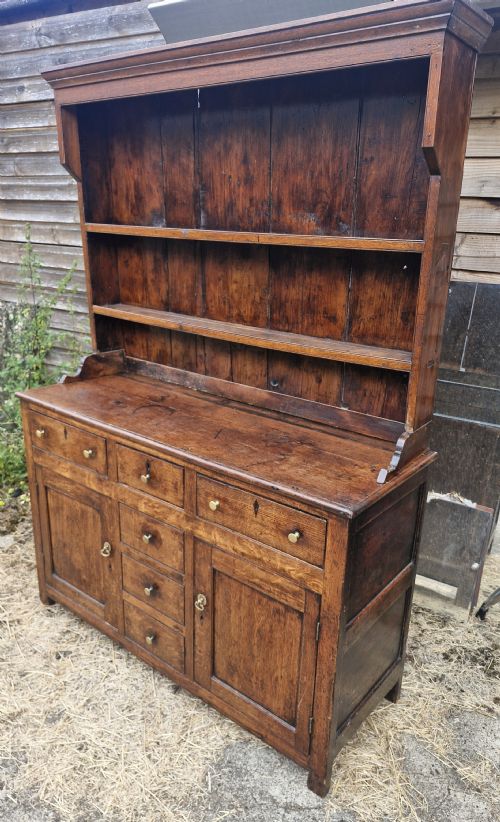
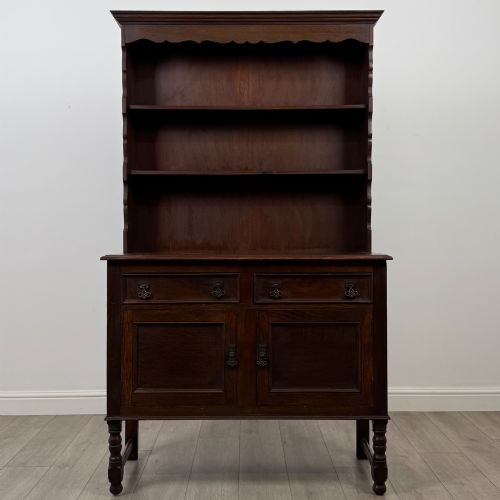
A rustic oak hutch brings honest timber and utility to a room, offering open plate racks and deep storage built for daily country life.
Rustic Oak Hutch
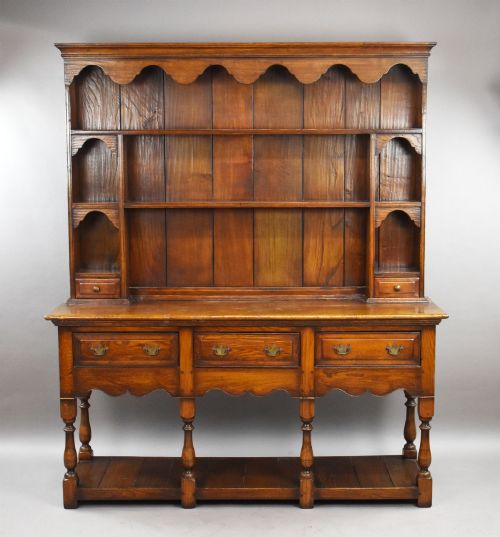
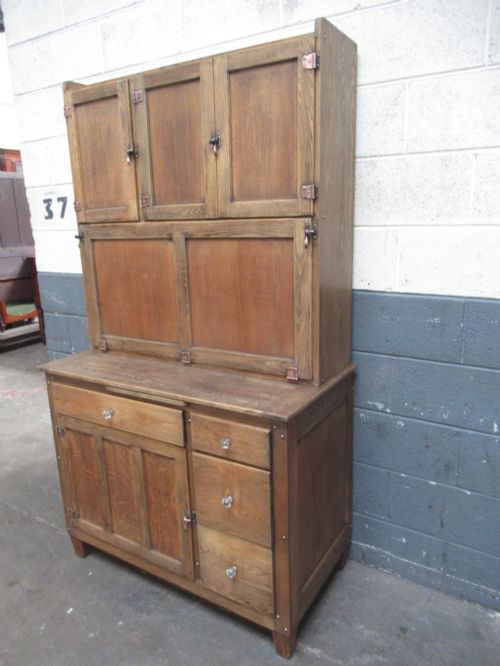
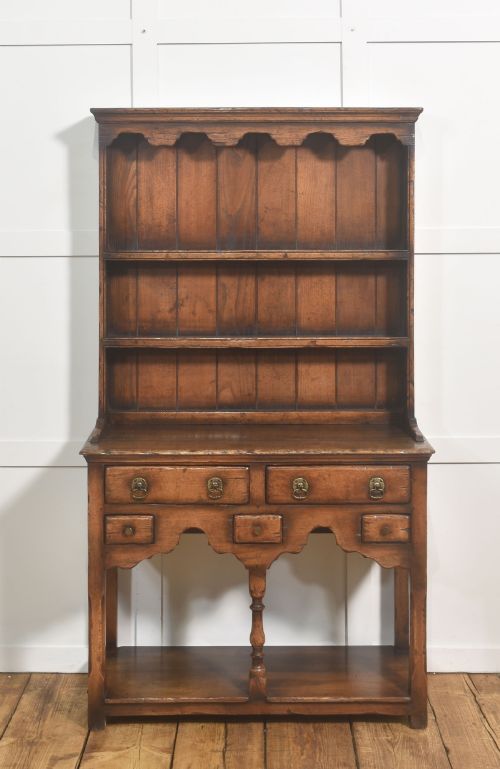
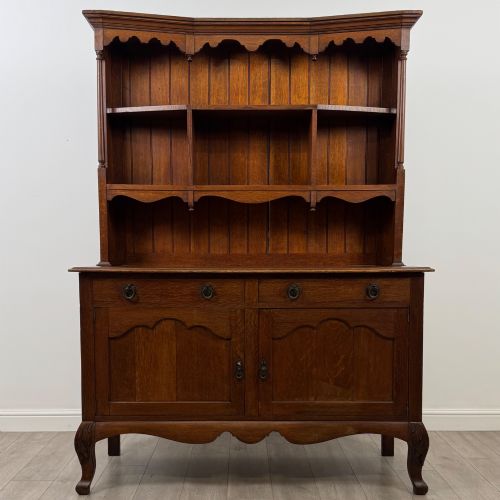
When you search for a rustic oak hutch, you meet regional dressers, cottage cupboards, and plate racks spanning from the seventeenth century through the Edwardian period. These pieces originate primarily from English and Welsh country workshops, designed for domestic storage and display.
The most common forms on this page are two-part Welsh dressers and open rack dressers in solid oak. They combine base cupboards or drawers with upper plate shelves, reflecting vernacular traditions.
What varies in quality
The distinction between pieces often rests on proportion and regional vernacular. Early joined examples from the seventeenth and eighteenth centuries display heavier timber framing and hand-carved details compared to lighter Edwardian interpretations.
Integrity of timber and originality of hardware separate regional examples. Surviving plate racks matched to their original bases hold greater interest than married pieces assembled from different periods.
Rustic Oak Hutch Retail Price Guide 2026
Typical asking prices for rustic oak hutch among the pieces listed under this phrase on Sellingantiques today, from the lower quarter to the upper quarter. They describe what is for sale here now, not the wider market.
The Rustic Oak Hutch Glossary
- Welsh dresser
- A traditional kitchen storage unit featuring a lower base of drawers or cupboards surmounted by an open plate rack. These pieces formed the central utility furniture in country houses.
- Plate rack
- The upper shelving section of a dresser designed to display ceramic plates and platters upright. Vertical slats or grooves hold the tableware securely in place.
- Vernacular furniture
- Domestic pieces built by local country joiners using regional styles and readily available local timbers rather than following London fashion. This tradition defines much country oak furniture.
- Joined oak
- Furniture constructed using mortise and tenon joints secured with wooden pegs rather than nailed or glued framing. This technique provides structural strength.
Rustic Oak Hutch: Frequently Asked Questions
What is the difference between a dresser and a hutch?
A dresser typically combines a lower storage cabinet with an upper open plate rack for display. The terms are often used interchangeably to describe regional country furniture with shelving.
Traditional pieces recorded here span from seventeenth-century joined cupboards to early twentieth-century Edwardian utility furniture.
How do I date an old oak dresser?
Dating relies on construction methods, timber selection, and hardware styles. Early seventeenth and eighteenth-century examples feature hand-cut joinery, pegged framing, and deep patination on the oak.
Later nineteenth and twentieth-century pieces often show machine-sawn timber elements, standardised drawer dovetails, and lighter finishes.
Are plate racks original to the base?
Many country dressers survive with their original upper plate racks, though some pieces were paired together in later years. Examining the timber colour, grain matching, and joint construction helps determine if the top and base belong together.
Proportions and wear patterns also offer clues to whether the two sections share a common history.
How do I care for rustic oak furniture?
Solid oak benefits from occasional applications of natural beeswax to nourish the timber and protect the surface. Avoid placing wooden furniture near direct heat sources or in damp environments to prevent splitting.
Gentle dusting with a dry cloth preserves the historic patina developed over centuries of domestic use.