





Oak Storage Cupboard Hutch
An oak storage cupboard hutch is a robust domestic container built to hold provisions or tableware, offering honest utility and enduring timber character.
Oak Storage Cupboard Hutch
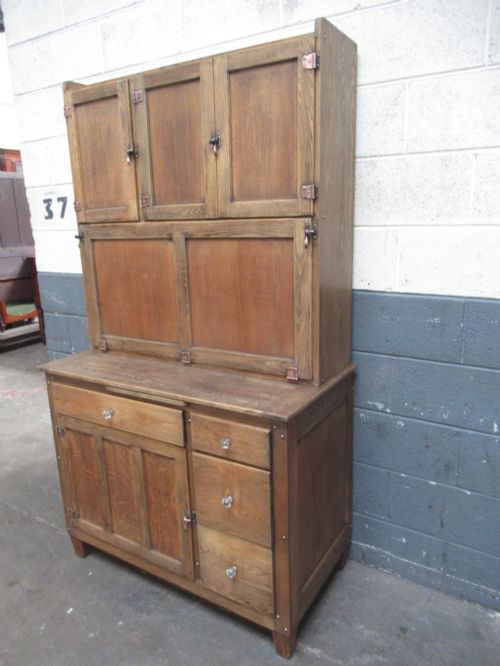
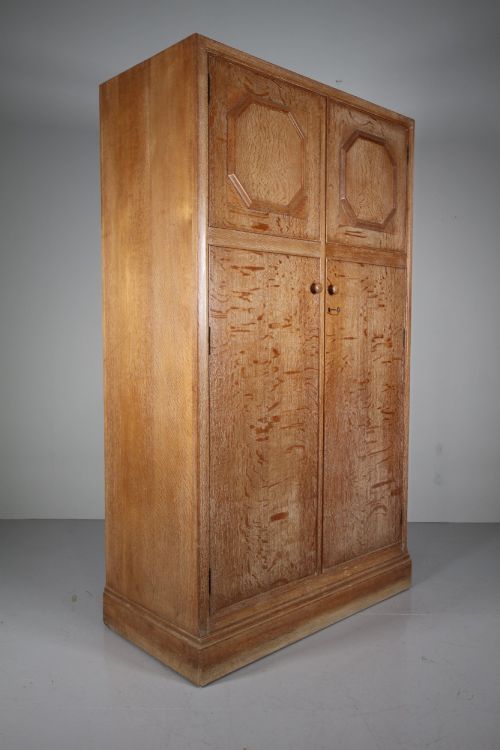
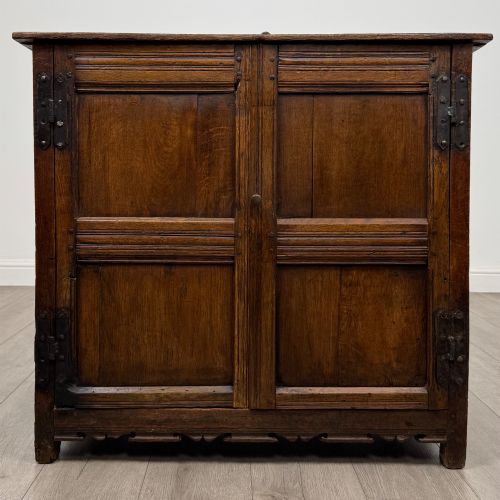
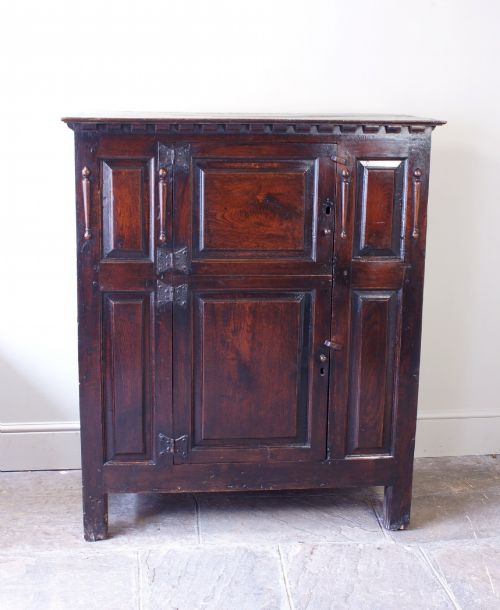
An oak storage cupboard hutch comprises sturdy timber furniture designed for domestic storage, spanning distinct periods from the seventeenth century through to the twentieth century. These pieces encompass dressers, plate racks, livery cabinets, and fitted cupboards reflecting English country, Jacobean, Arts and Crafts, and Edwardian styles.
Buyers are most likely to meet oak dressers and hutches originating from the eighteenth century and the 1920s on this page. Such forms often integrate open plate racks, breakfront drawers, or carved panels into their foundational oak construction.
How they were made
Makers built these pieces primarily using solid oak timbers, often supplemented with secondary woods such as pine, walnut, or mahogany where appropriate. Construction relied heavily on traditional joinery methods suited to heavy hardwoods.
Metal components such as brass, iron, and wrought iron provided functional hardware, hinges, and structural reinforcement. Carved ornamentation and panel moulding frequently enriched the primary oak surfaces.
Oak Storage Cupboard Hutch Retail Price Guide 2026
Typical asking prices for oak storage cupboard hutch among the pieces listed under this phrase on Sellingantiques today, from the lower quarter to the upper quarter. They describe what is for sale here now, not the wider market.
One seventeenth-century piece is recorded as a dug-out metamorphic cupboard, showing how a single log could be hollowed and transformed.
What varies in quality
Quality rests upon the integrity of the timber selection and the depth of period construction. Earlier pieces display hand-tooled surfaces and vernacular joinery that contrast with later revival interpretations.
The sophistication of carved detailing, such as figurative elements or geometric mouldings, distinguishes standard utility furniture from more ambitious workshop productions.
The Oak Storage Cupboard Hutch Glossary
- Hutch
- A cabinet or storage structure often featuring enclosed lower cupboards and upper shelving. It serves as a traditional repository for household provisions or display ceramics.
- Dresser
- A kitchen or dining room furniture form incorporating drawers and frequently surmounted by a plate rack. This term covers both Welsh dresser variations and simpler provincial formats.
- Livery Cabinet
- A tall storage piece traditionally utilised for storing rations, clothing, or household goods. These cabinets exhibit robust panelled doors and substantial timber framing.
- Jacobean Revival
- A nineteenth or twentieth-century design style emulating seventeenth-century motifs. It is characterised by dark oak finishes, turned legs, and deep geometric carvings.
Oak Storage Cupboard Hutch: Frequently Asked Questions
What is an oak storage cupboard hutch used for?
These pieces served historically to store and display household provisions, ceramics, and daily utensils. Their combination of enclosed cupboards and open shelving made them central to kitchen and dining room organisation.
Today, they function similarly in modern interiors as practical storage units that showcase tableware or dry goods while anchoring a room with timber warmth.
How do I distinguish seventeenth-century pieces from later revivals?
Early pieces from the seventeenth century display authentic hand-tool marks, pegged mortise and tenon joints, and timber shrinkage consistent with age. Their construction methods reflect the vernacular practices of rural carpenters.
Revival pieces from periods like the 1920s often utilise machine-sawn timber, standardised fixings, and stylized decorative carving that imitates earlier aesthetics without the corresponding structural wear.
Where were these cupboards traditionally placed?
Kitchens, pantries, and great halls served as the primary locations for these storage units in historical homes. They provided accessible storage for the household's working tableware.
In contemporary spaces, they sit comfortably in dining rooms, large kitchens, or living areas where their shelving and cupboard capacity remains fully functional.
What timber types besides oak appear in these listings?
While oak forms the predominant material, listings occasionally incorporate walnut, mahogany, and pine. These secondary timbers appear in drawer linings, panel construction, or alternative provincial regional pieces.
Hardware elements similarly introduce contrasting materials, utilising brass, iron, and wrought iron for hinges, handles, and structural supports.