




Dark Oak Kitchen Cabinet
A dark oak kitchen cabinet anchors a room with its rich grain, offering sturdy storage for daily provisions and display.
Dark Oak Kitchen Cabinet
When you search for a dark oak kitchen cabinet, you meet a range of substantial storage furniture built for domestic use. These pieces include dressers, wall cupboards, food cupboards, and housekeeper's cupboards designed to hold provisions and tableware.
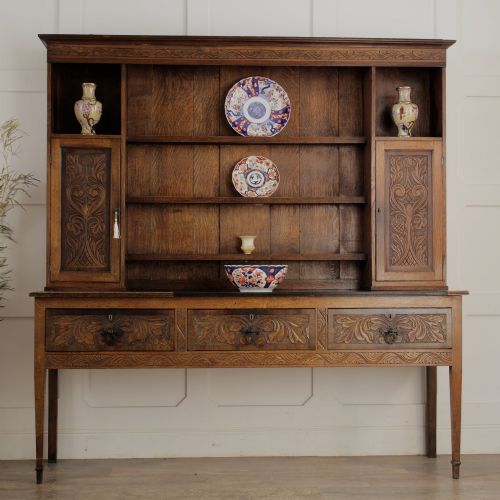
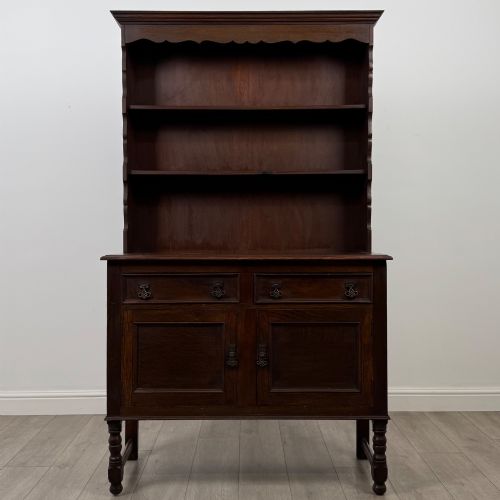
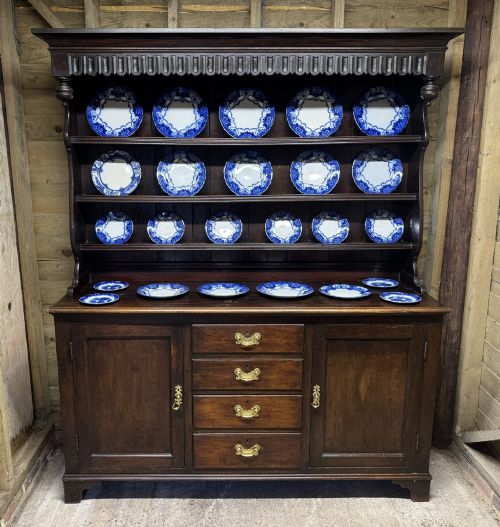
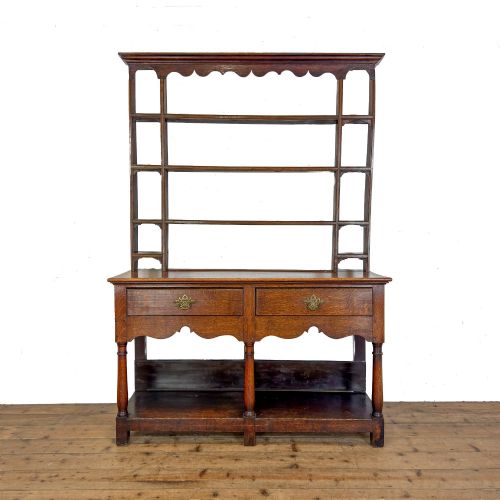
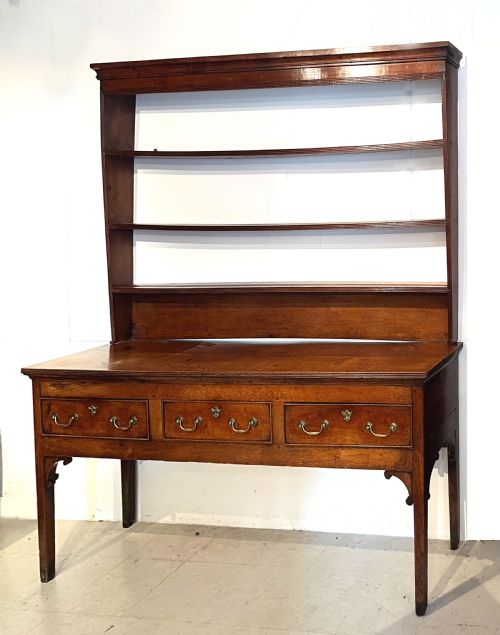
The versions most common here span from the 18th century through to the Edwardian period and the 1930s. You will find country dressers with plate racks, bowfront bases, and hanging spice boxes originating from English, Welsh, and French provincial workshops.
Makers constructed these items to handle heavy daily use in busy domestic spaces, resulting in practical layouts featuring drawers, open racks, and panelled doors. Their dark patination comes from centuries of age, wax, and natural oak darkening.
Judging the standard of manufacture
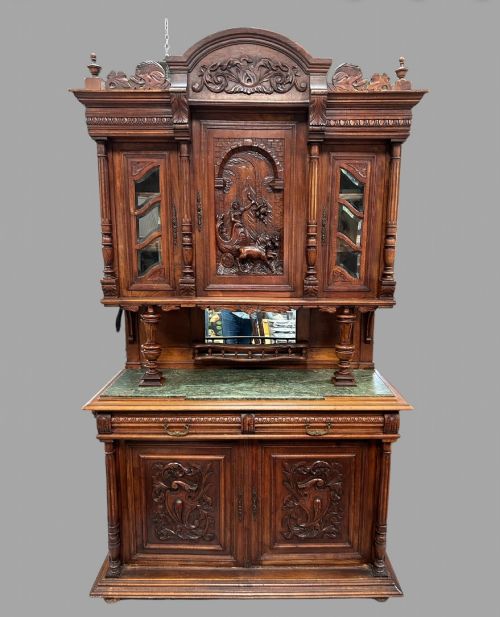
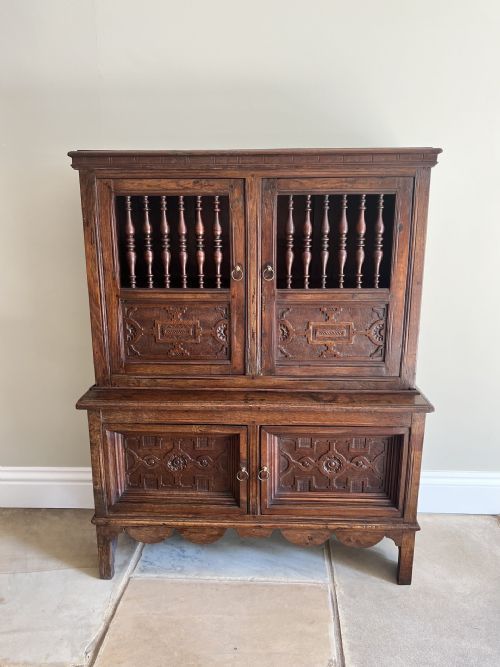
Quality rests in the selection of the timber and the crispness of any carving, such as the intricate Green Man motifs or fielded panels found on better examples. Thick oak boards used for top surfaces and drawer construction indicate a superior commission.
Proportion and original hardware distinguish finer pieces from standard utility items. Well-balanced proportions in two-part dressers and surviving period brassware elevate a cabinet's standing among collectors.
Some Victorian oak cabinets proudly display carved Green Man faces hiding amongst the foliage to ward off mischievous spirits.
The Dark Oak Kitchen Cabinet Glossary
- Dresser base
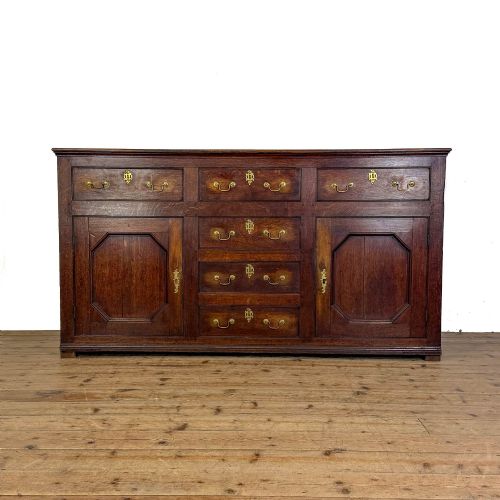
- The lower section of a Welsh dresser, featuring cupboards and drawers without the upper plate rack. These often function well as sideboards in modern kitchens.
- Panetiere
- A traditional French food cabinet or bread safe featuring spindle-turned panels for ventilation. They were traditionally used to store and protect loaves of bread from household pests.
- Housekeeper's cupboard
- A large, tall storage cupboard utilised in large homes for linen, dry goods, or tableware. They usually feature multiple panelled doors enclosing deep shelving.
- Breakfront
- A piece of furniture where the central section projects forward from the flanking outer sections. This architectural feature creates depth and shadow on larger cabinet bases.
- Plate rack
- The upper shelving unit of a dresser designed with grooves to hold dinner plates upright. It allows everyday ceramics to dry and display simultaneously.
Dark Oak Kitchen Cabinet: Frequently Asked Questions
How do I date a dark oak cabinet?
Examine the construction methods, such as hand-cut dovetails and pegged joints, alongside the overall style and period indicators like Georgian proportions or Victorian carvings.
Secondary woods inside drawers and the natural depth of the oak patina also help establish the age of the piece.
Were these cabinets originally used in kitchens?
Many served in domestic kitchens, pantries, and dining rooms to store dry goods, cutlery, and everyday ceramics. Housekeeper's cupboards and food safes were essential functional items for storing provisions.
Over time, surviving pieces migrated to living spaces as decorative and practical storage furniture.
How do I care for antique oak?
Maintain the wood by applying a quality beeswax periodically to nourish the dry grain and preserve the rich dark finish. Avoid placing timber furniture near direct heat sources or strong sunlight to prevent warping and fading.
Dust regularly with a soft, dry cloth to protect the historic surface.
What is the difference between a dresser and a cupboard?
A dresser typically combines a lower storage base of drawers and cupboards with an upper open plate rack for display. A cupboard focuses entirely on enclosed storage behind panelled or glazed doors.
Both forms served crucial roles in historic domestic interiors.