


Rustic Oak Hall Cupboard
A rustic oak hall cupboard brings sturdy storage and regional character to an entranceway, spanning centuries of practical cabinet-making.
Rustic Oak Hall Cupboard
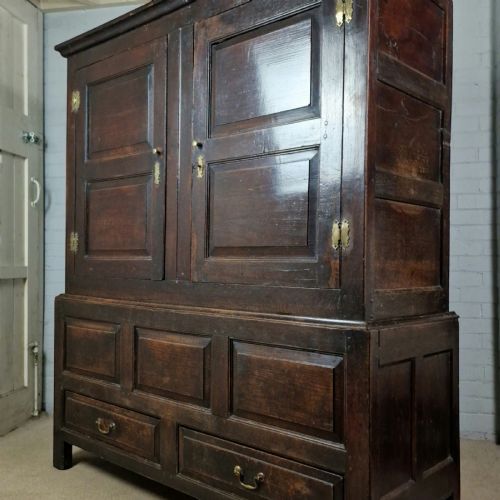
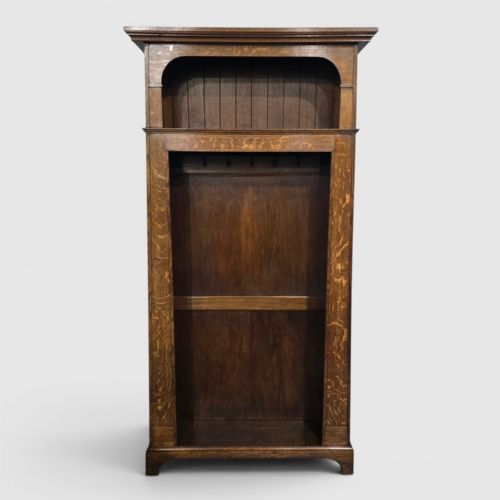
A rustic oak hall cupboard covers a broad family of storage furniture designed for entryways and passages, appearing in forms ranging from early court cupboards to later hall wardrobes and hanging robes. Buyers seeking a rustic oak hall cupboard encounter pieces spanning the seventeenth, eighteenth, and nineteenth centuries, along with select items from the early twentieth century.
The selection includes regional variations such as Hungarian painted pine and oak wardrobes, West Country bacon settles, and Georgian livery cupboards. These items served distinct domestic purposes, from storing provisions and linens to holding outerwear and walking sticks in the entrance.
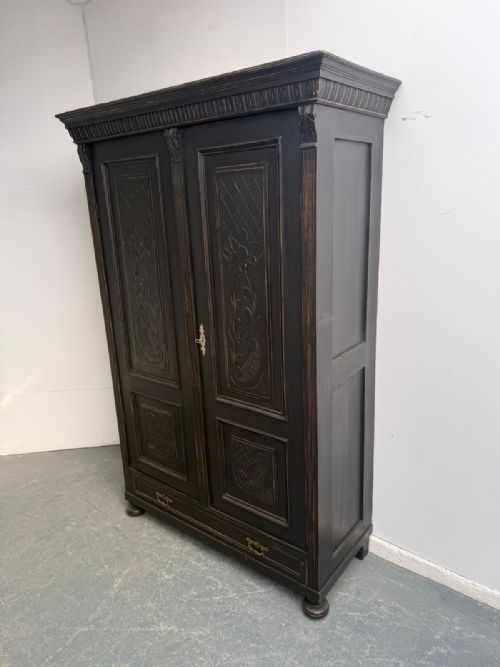
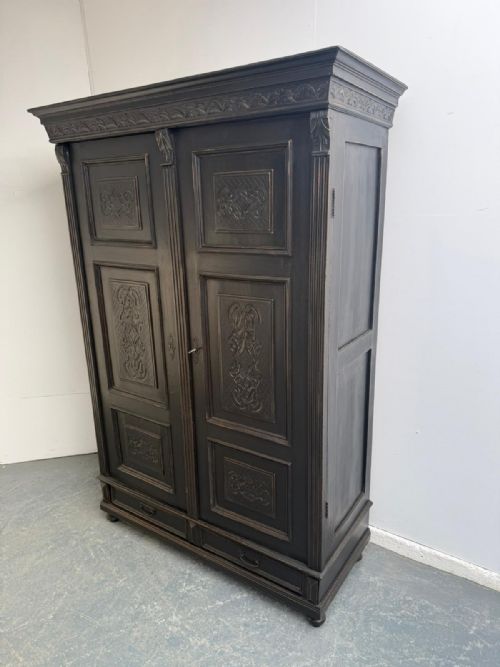
Construction spans multiple styles, incorporating Georgian country designs, continental country pieces, European folk art, and Victorian Jacobean revival interpretations. Solid oak forms the primary structural material, frequently paired with pine, iron, brass, and painted finishes.
Materials and construction methods
Makers utilised solid oak for its durability and resilience, often combining it with secondary woods like pine in regional European folk pieces. Blacksmith locks and wrought iron hinges provided essential mechanical security and structural articulation on early examples.
Surfaces display various treatments, from polished natural grain and early dark patination to original black paint applied on continental country wardrobes. Joinery techniques relied on traditional pegging and panel construction appropriate to each period, from seventeenth-century court cupboards to Georgian press cupboards.
Listings feature oak, pine, iron, and paint across periods spanning the seventeenth century to nineteen-twenty.
Markers of distinction and build
Quality rests upon the integrity of the timber, the retention of original surface treatments such as early paint or polished patination, and the survival of period hardware like blacksmith locks and hinges. Pieces retaining their structural authenticity without heavy timber replacement occupy the upper tier of the range.
Proportion and regional character also dictate distinction, where vernacular folk art details or clean Georgian proportions display greater visual harmony than later revival adaptations. The relationship between primary oak components and secondary woods reveals the care taken by the original maker.
The Rustic Oak Hall Cupboard Glossary
- Livery cupboard
- A traditional storage cabinet originally used for keeping food and provisions, often featuring ventilation slats or turned spindles. These pieces evolved into general household storage by the eighteenth century.
- Court cupboard
- An early form of enclosed storage, typically featuring a recessed upper section supported by heavy pillars or turned posts. They date primarily to the seventeenth century and display substantial oak construction.
- Bacon settle
- A high-backed wooden bench incorporating a storage compartment or cupboard within the upper back panel, traditionally utilised for curing and storing meat in rural homes. Examples are found in West Country workshops.
- Press cupboard
- A large storage unit comprising a lower section of drawers or cupboards beneath an upper wardrobe space, frequently constructed in oak during the Georgian period.
- Folk art
- Decorative and utilitarian objects created within a regional tradition, often displaying hand-painted finishes and vernacular construction methods distinct from formal court styles.
Rustic Oak Hall Cupboard: Frequently Asked Questions
What is a rustic oak hall cupboard?
A rustic oak hall cupboard is a heavy storage piece built for entranceways, utilising solid oak and regional designs to store coats, hats, and household items.
These cabinets span multiple centuries and include folk art painted pieces, Georgian livery cupboards, and Victorian hall wardrobes.
How do I date an oak cupboard?
Dating relies on construction methods, hardware such as blacksmith hinges and locks, and the overall style of the timber framing.
Earlier pieces from the seventeenth century feature heavy pegged joinery and court cupboard formats, while eighteenth-century examples show refined Georgian country lines.
Are these cupboards made of solid oak?
Primary structures and visible panels generally utilise solid oak, though regional continental pieces frequently incorporate pine for secondary elements.
Painted finishes appear on specific folk art wardrobes from Hungary, combining pine bodies with oak framing.
How do I care for antique oak furniture?
Maintenance involves keeping pieces away from direct heat sources and fluctuating humidity to prevent timber splitting.
Occasional application of suitable wax helps preserve polished surfaces and maintains the historic patination of the wood.