


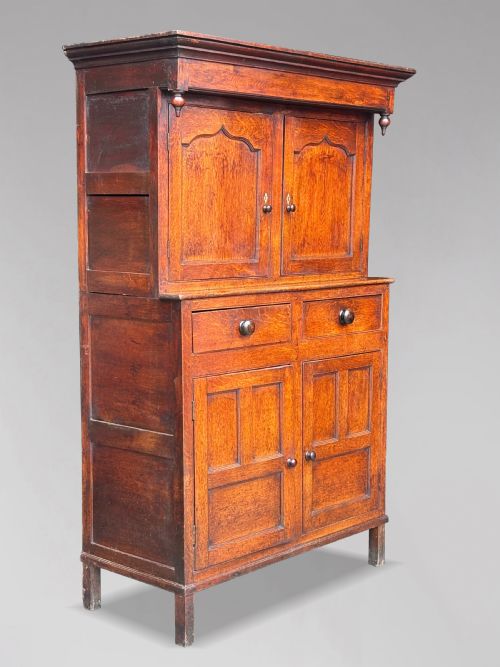


Georgian Oak Livery Cupboard
A Georgian oak livery cupboard brings robust country craftsmanship and generous storage into a room, offering authentic historical character for modern living.
Georgian Oak Livery Cupboard
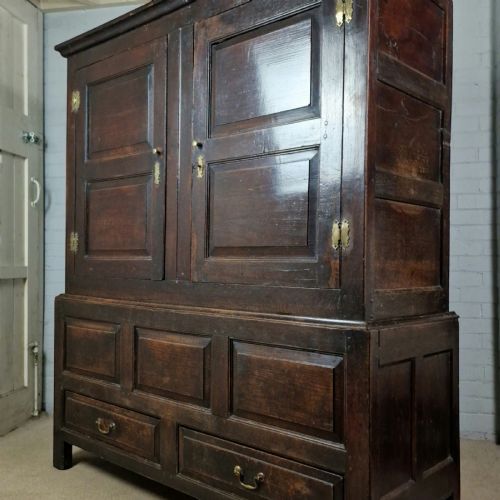
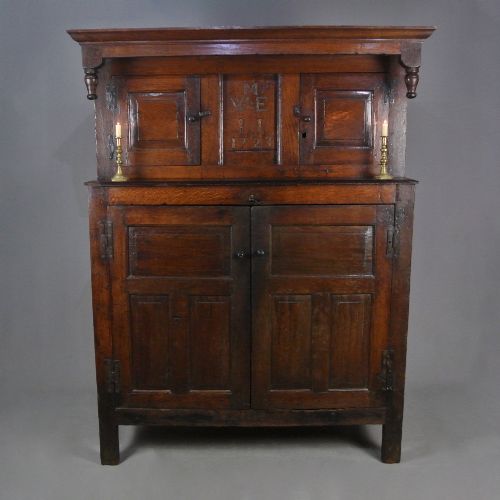
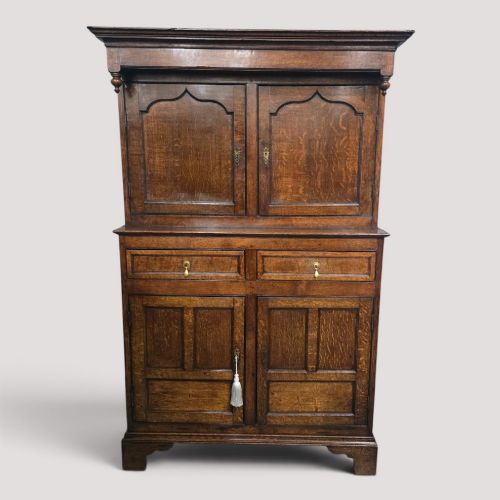
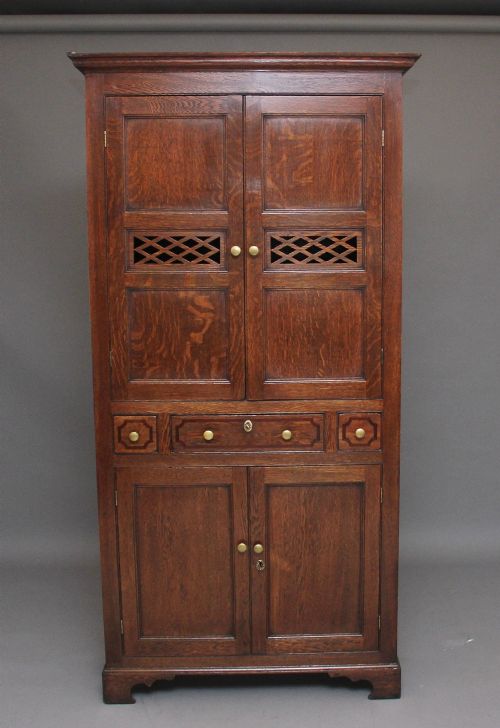
A georgian oak livery cupboard stands as a substantial piece of vernacular furniture designed primarily for storing garments, household linens, and provisions. These imposing pieces often appear in regional country variants such as Welsh vernacular styles, including traditional deuddarn forms and court cupboards.
Most examples date from the eighteenth century, spanning the Georgian period and featuring sturdy construction intended for daily domestic utility. Buyers frequently encounter regional presses and hanging cupboards that combine deep storage capacities with distinctive panelled doors.
Materials and construction
Local timber forms the foundational structure of these cabinets, utilising solid oak alongside occasional secondary woods like elm. Craftsmen shaped these sturdy materials using traditional pegged joints and hand-planed panels.
Metal fittings consist principally of iron hinges and brass handles or escutcheons, which secure the heavy doors and drawers. Surface finishes rely on natural wax applications that develop a deep, rich colour over generations of use.
Judging the quality
The standard of a piece rests on the crispness of its hand-carved details, the integrity of its timber, and the balance of its proportions. Superior examples retain their original brassware and display a warm, untouched surface patina developed through long-term care.
The Georgian Oak Livery Cupboard Glossary
- Livery cupboard
- A traditional storage cabinet originally used for keeping food, candles, or garments in domestic settings. These pieces evolved into larger clothes presses and wardrobes by the Georgian period.
- Court cupboard
- A heavy, multi-tiered wooden cabinet featuring enclosed lower sections and open or recessed upper stages. They represent earlier vernacular furniture traditions before the standardisation of the wardrobe.
- Deuddarn
- A traditional Welsh two-piece cupboard featuring recessed upper compartments supported by turned wooden posts. This regional form frequently incorporates panelled doors and carved detailing.
- Patina
- The deep, lustrous surface sheen developed on old timber over decades of polishing and handling. This visual characteristic distinguishes genuine period pieces from modern reproductions.
Georgian Oak Livery Cupboard: Frequently Asked Questions
Where were these cupboards placed in a home?
These large storage cabinets stood principally in principal bedchambers, hallways, or large farmhouse kitchens where households required secure storage for textiles and provisions.
Their substantial proportions meant they anchored the room, serving both a functional purpose and a display of domestic standing.
How do I care for a historic oak surface?
Maintain the timber by applying traditional beeswax sparingly and buffing gently with a soft cloth to preserve the natural surface sheen.
Keep the cabinet away from direct heat sources and rapid humidity shifts to prevent the solid timber panels from splitting.
Can these accommodate modern clothes hangers?
Many historical livery presses and hanging cupboards provide deep internal spaces, though earlier interiors often relied on shelves or simple pegs rather than modern hanging rails.
Buyers should check internal dimensions carefully if intending to store modern garments on contemporary hangers.
What distinguishes Welsh country pieces from English examples?
Welsh regional items frequently incorporate distinct local forms such as the deuddarn or court cupboard, alongside particular geometric panelling and vernacular carving styles.
English country variants tend toward standard press configurations with fielded panels and straightforward cornice mouldings.