





Rustic French Storage Pot
These rustic french storage pot selections are earthy utilitarian vessels built for rural European life, offering buyers authentic texture and time-worn character for modern interiors.
Rustic French Storage Pot
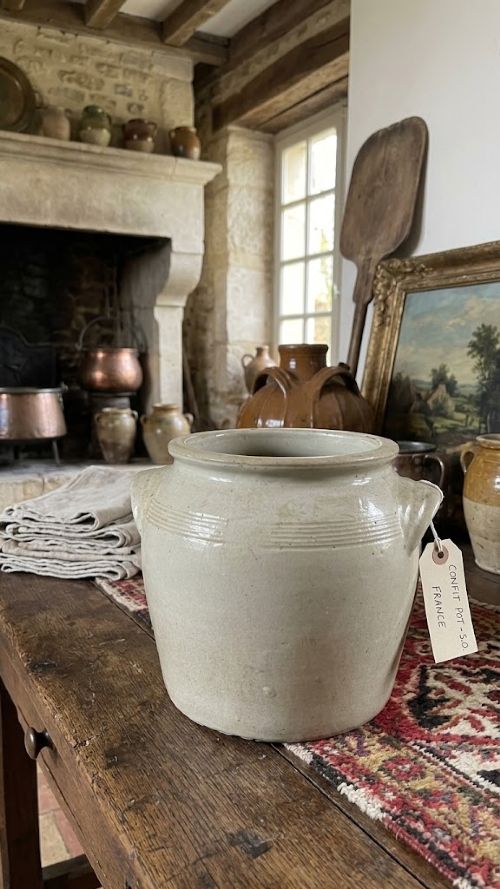
When you search for a rustic french storage pot, you encounter traditional earthenware and terracotta vessels originating from provincial French workshops during the eighteenth and nineteenth centuries. These utilitarian objects served practical purposes in rural households and agricultural settings before finding favour in contemporary interior design.
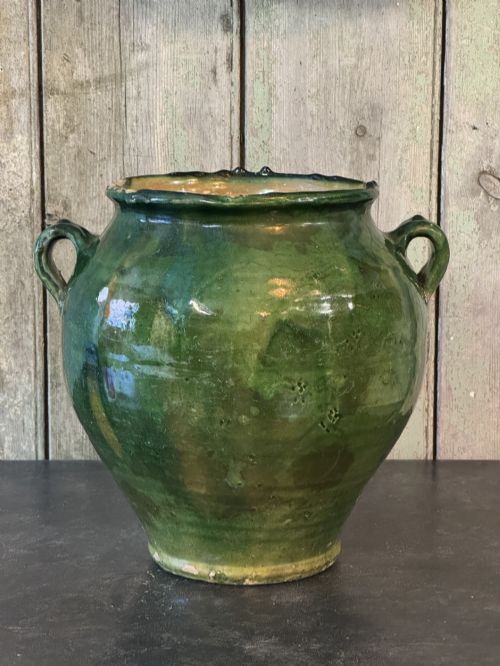
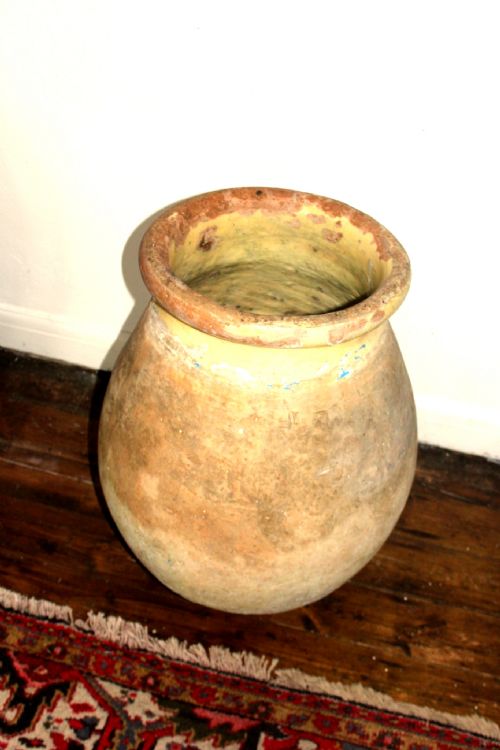
The pieces you are most likely to meet on this page span the 18th century to the early 20th century, encompassing confit pots, olive jars, and walnut oil containers. They typically present in earthy tones of green, grey, and natural terracotta, reflecting the functional needs of French country life.
How they were made
Potters shaped local clay by hand, utilising traditional terracotta and earthenware techniques suited for heavy agricultural storage. These vessels were fired in regional kilns to achieve durable bodies capable of containing oils, preserves, and dry goods.
Many examples received a partial or full glaze, particularly in green or grey hues, to seal the porous earthenware surfaces. Iron fittings, such as wrought iron stands or handles, occasionally accompanied larger garden urns and planters.
Rustic French Storage Pot Retail Price Guide 2026
Typical asking prices for rustic french storage pot among the pieces listed under this phrase on Sellingantiques today, from the lower quarter to the upper quarter. They describe what is for sale here now, not the wider market.
Materials recorded across current items include clay, paint, wrought iron, and traditional glazes.
What varies in quality
The distinction between standard utilitarian ware and superior examples lies in the integrity of the glaze and the harmony of the vessel's proportions. Rich, even glazing and pleasing surface patination elevate the visual weight of an earthenware jar.
Preservation of the original clay surface and authentic signs of age, such as historic wear to the terracotta, separate distinguished specimens from later reproductions or heavily compromised vessels.
The Rustic French Storage Pot Glossary
- Confit pot
- A traditional French earthenware jar featuring handles, originally utilised for storing preserved meats. These pots often display characteristic lead glazing on the upper half.
- Terracotta
- Fired unglazed or porous clay varying in colour from orange-red to brown. This material forms the primary body for many provincial French garden and storage vessels.
- Earthenware
- Porous pottery fired at lower temperatures than stoneware, requiring a glaze to become completely watertight. It represents the standard medium for nineteenth-century rural utility pots.
- Patina
- The surface sheen and textural alteration acquired through decades of handling, weathering, and use. It serves as a primary visual indicator of genuine age in rustic pottery.
- Glaze
- A vitreous coating applied to pottery and fired to form a non-porous surface. In French country pottery, glazes frequently exhibit subtle variations in colour and coverage.
Rustic French Storage Pot: Frequently Asked Questions
What were rustic french storage pots used for?
These vessels served essential domestic and agricultural functions in rural French communities. They stored staple goods such as olive oil, walnuts, and confit meats.
Larger jars also functioned as garden planters or water containers around the farmhouse courtyard.
How do I date a rustic french storage pot?
Dating relies on observing the characteristics of the clay, the consistency of the glaze, and the manufacturing marks. Eighteenth-century and nineteenth-century pieces display hand-thrown irregularities absent in later industrial production.
Examining the natural patination and wear patterns provides further clues regarding the age of the terracotta.
How should I display these pots at home?
Rustic earthenware jars suit both interior living spaces and garden settings as standalone decorative objects. Placing them on iron stands or grouping them by colour highlights their sculptural forms.
Avoid placing unglazed earthenware directly on moisture-sensitive indoor surfaces without a protective saucer.
Are these pots waterproof?
Most antique earthenware and terracotta pots remain slightly porous due to the low-firing techniques used by historical potters. Fully glazed examples hold water better, but caution is still required for indoor display.
Utilising a modern inner vessel prevents moisture from damaging surfaces when using these pots for fresh foliage.