

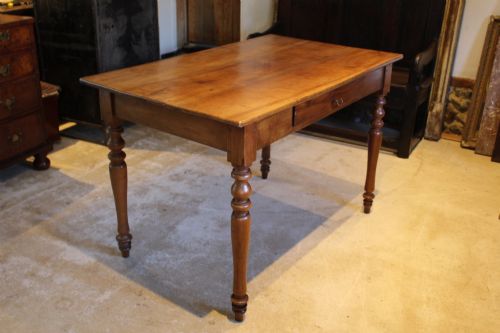
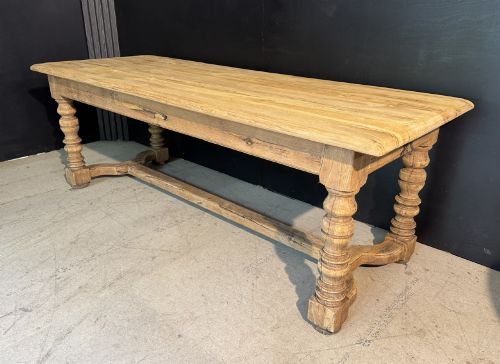
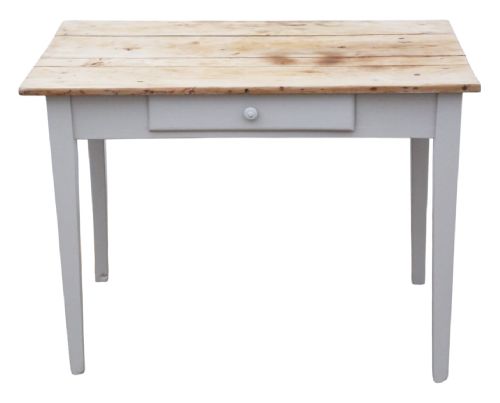


Rustic French Provincial Desk
A rustic french provincial desk offers sturdy utility and regional character, shaped by centuries of domestic French craft.
Rustic French Provincial Desk
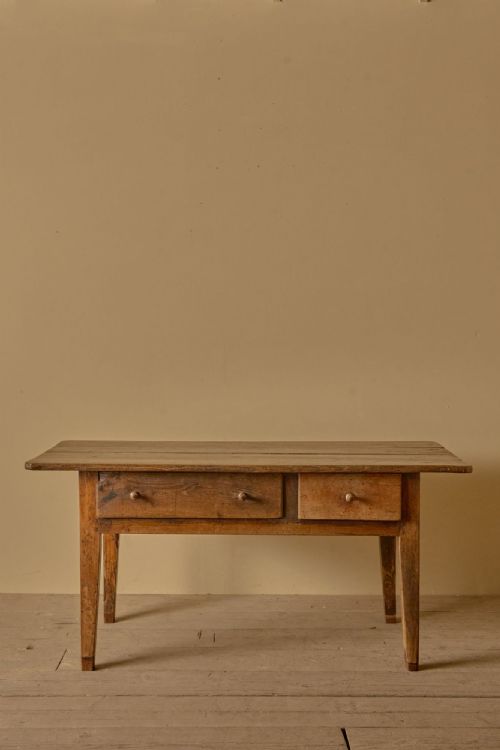
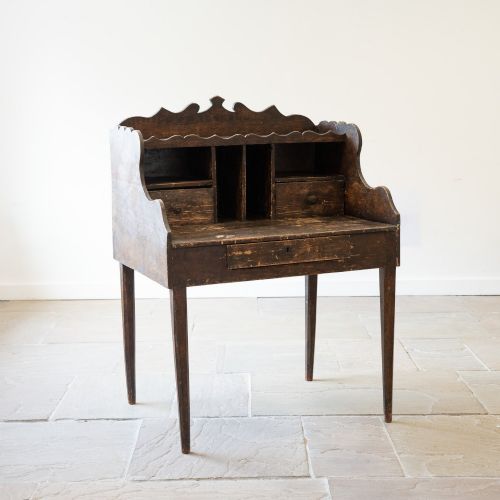
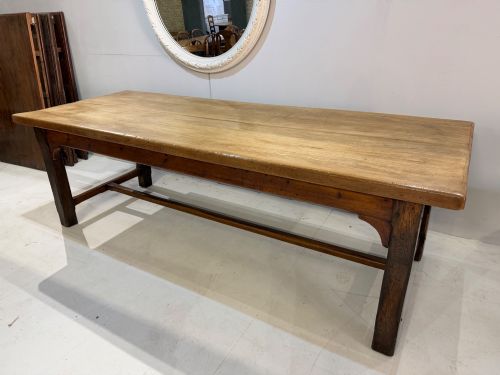
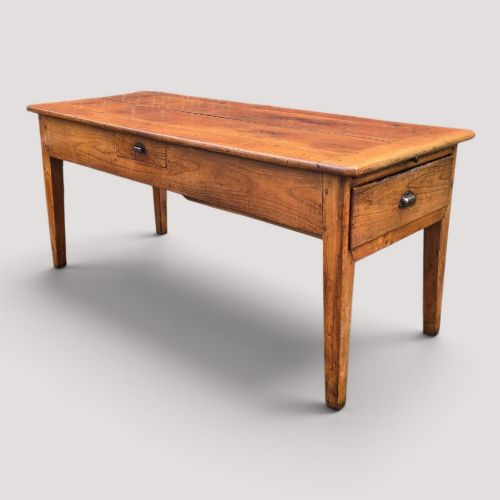
When you search for a rustic french provincial desk, you enter a category defined primarily by utilitarian wooden tables, side tables, and dressing tables originating from regional France. The listings here span the eighteenth, nineteenth, and early twentieth centuries, capturing a period when furniture served demanding domestic and work functions rather than purely decorative ones.
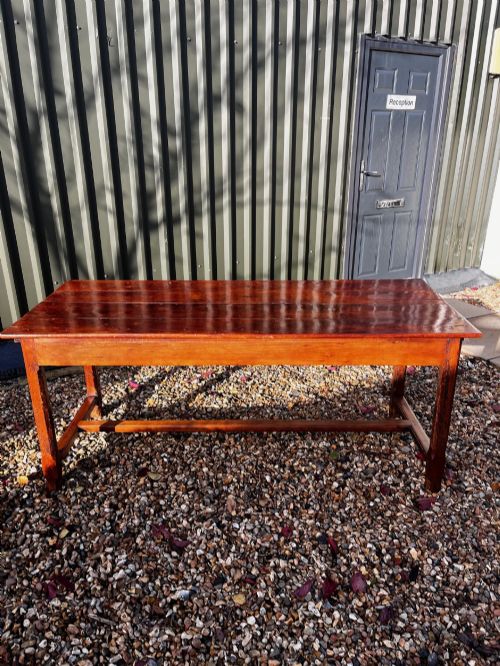
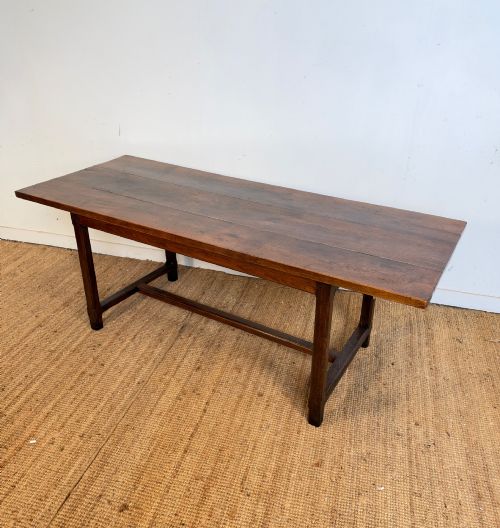
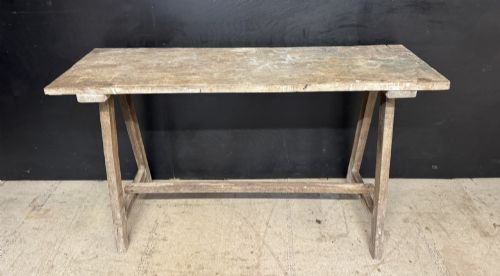
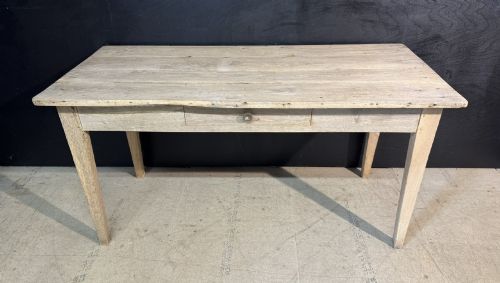
The objects available range from substantial refectory and farmhouse tables down to smaller side tables, serving tables, and specialised forms like drapers tables and cobblers benches. While formal desks appear infrequently, the broader inventory of tables and benches provides the sturdy work surfaces typical of provincial French workshops.
Makers remain largely anonymous, as these pieces were built by regional joiners and carpenters for everyday use rather than royal patronage. The regional styles incorporate French Provincial, French Country, and Rustic Country aesthetics, reflecting local materials and practical domestic requirements.
Materials and construction methods
Makers relied heavily on solid regional timbers such as oak, pine, fruitwood, cherry wood, walnut, sycamore, and elm, often selecting woods based on local availability. These domestic hardwoods and softwoods were worked into sturdy frames, scrub-tops, and trestle bases designed to withstand heavy daily use.
Construction techniques prioritized structural integrity and straightforward joinery over ostentatious ornamentation. Metal and iron components occasionally reinforced joints or provided hardware for drawers, while finishes ranged from natural scrubbed surfaces to historical painted applications.
Rustic French Provincial Desk Retail Price Guide 2026
Typical asking prices for rustic french provincial desk among the pieces listed under this phrase on Sellingantiques today, from the lower quarter to the upper quarter. They describe what is for sale here now, not the wider market.
Object forms span dining tables, trestle tables, side tables, serving tables, armchairs, and cobblers benches.
Quality variations in provincial furniture
Proportion and scale distinguish finer regional items from standard workshop output. Smaller, well-balanced dimensions and restrained detailing indicate careful initial commission, whereas bulkier execution points to purely utilitarian service.
The Rustic French Provincial Desk Glossary
- Scrub-top
- A wooden tabletop designed to be scrubbed clean with water and sand after heavy kitchen or work use. This process creates a pale, weathered surface texture over generations.
- Trestle table
- A table construction where the top rests on two or more supporting frames connected by a horizontal beam. This design maximises legroom and stability.
- Fruitwood
- Timber sourced from fruit-bearing trees such as cherry, pear, or apple, prized for its fine grain and warm tone. Cabinetmakers utilised these local woods extensively in regional French workshops.
- Refectory table
- A long, narrow dining table traditionally built for communal dining halls. Provincial versions adapt this substantial format for domestic farmhouse use.
- Patination
- The surface sheen and colour acquired by wood through age, handling, and polishing. Collectors value this natural darkening and softening of the material.
Rustic French Provincial Desk: Frequently Asked Questions
What is a rustic french provincial desk?
A rustic french provincial desk encompasses traditional wooden tables and work surfaces originating from regional French provinces during the eighteenth and nineteenth centuries.
These pieces were constructed by local carpenters using native timbers like oak, fruitwood, and pine to serve practical household or workspace functions.
How were these tables used?
Regional tables served multiple domestic purposes, acting as kitchen preparation spaces, dining surfaces, serving areas, and functional workspace tables.
Specialised forms also accommodated specific trades, ranging from drapery handling to cobbler work within rural French households.
How do I identify the period?
Dating relies on examining construction techniques, joinery methods, and the natural wear accumulated on the timber over centuries of use.
Earlier eighteenth-century pieces often feature walnut or fruitwood with hand-carved elements, while nineteenth-century examples frequently employ pine, oak, or cherry in simpler utility formats.
How do I live with these pieces?
Integrating provincial furniture into modern interiors involves pairing their warm timber patination and simple lines with contemporary or traditional surroundings.
Regular maintenance requires minimal intervention, usually limited to gentle dusting and conditioning to preserve the historical surface finish.