




Natural Oak Side Tables
Natural oak side tables bring honest timber and utilitarian form straight into a room, offering sturdy surfaces shaped by regional craft.
Natural Oak Side Tables
Natural oak side tables encompass a practical range of nineteenth-century and early twentieth-century domestic furnishings designed for everyday use. Buyers searching for natural oak side tables encounter varied vernacular forms, including occasional tables, bedside cabinets, and console tables.
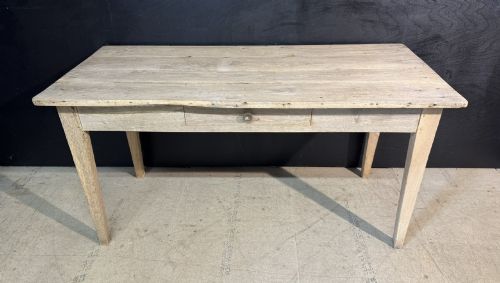
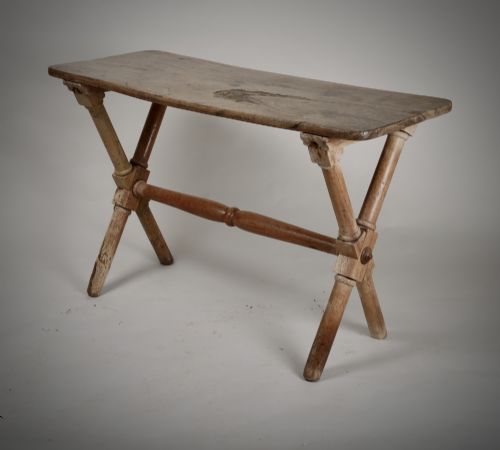
The selection leans heavily toward rustic interpretations such as Welsh cricket tables, tavern tables, and French side tables. These pieces utilise untreated, bleached, or painted oak surfaces alongside supporting woods like beech and pine.
Regional variations span British, French, and Spanish workshops, reflecting distinct local joinery traditions and functional demands. Pieces range from simple three-legged designs to larger tables fitted with side drawers.
Materials and construction
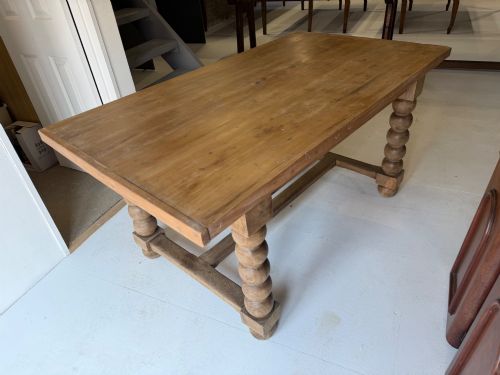
Construction relies primarily on solid oak and timber frames, frequently augmented with beech for turned components like bobbin legs. Carpenters utilised traditional joinery methods to build robust tables capable of withstanding heavy daily labour.
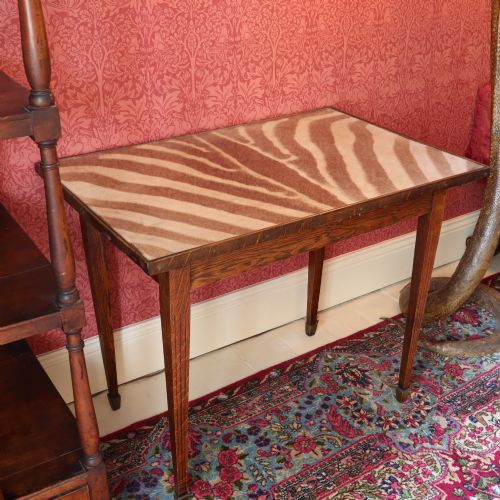
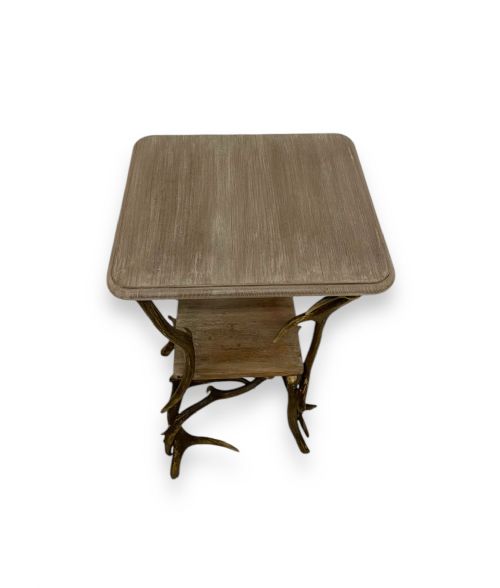
Surface treatments vary from straightforward bleaching and plain timber finishes to painted applications on nineteenth-century occasional pieces. Some specialist examples incorporate unexpected natural elements such as zebra hide or deer antler alongside brass fittings.
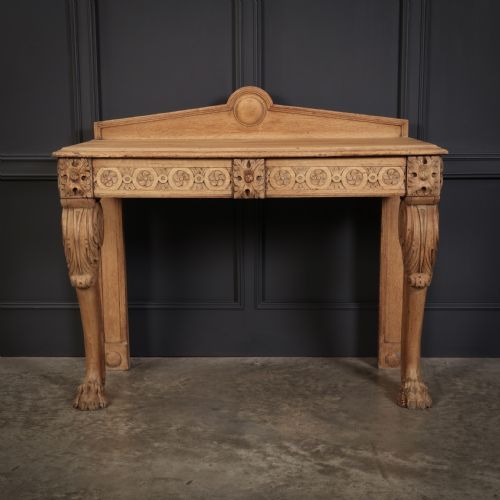
Current listings feature nineteenth-century and 1920s oak, pine, and beech tables spanning French provincial, rustic vernacular, and neoclassical revival styles.
Assessing quality and character
Quality rests in the integrity of the timber and the honesty of the regional construction rather than uniform factory finish. Tables displaying untouched patination and original structural members hold greater interest than heavily altered examples.
The nuance of vernacular design distinguishes standard utility items from distinct regional forms like cricket tables or tavern tables. Proportion, timber selection, and the restraint of decorative carving dictate the standing of each piece.
Rowland Ward of London
The Natural Oak Side Tables Glossary
- Cricket table
- A small, lightweight occasional table traditionally featuring three splayed legs and a circular top. This vernacular form provided stability on uneven flagstone floors.
- Bobbin leg
- A turned furniture leg shaped to resemble a series of bobbins or spools strung together. This decorative turning technique appears frequently on nineteenth-century seating and tables.
- Bleached oak
- Timber treated to lighten its natural tone, exposing the grain while removing darker historic finishes. This process gained popularity in twentieth-century interior schemes.
- Vernacular furniture
- Domestic objects built by local craftspeople using regional traditions and readily available materials. These pieces prioritise utility and local style over academic design.
Natural Oak Side Tables: Frequently Asked Questions
What is a cricket table?
A cricket table is a traditional three-legged occasional table with a round top. The three-legged design ensured the table remained stable on uneven cottage floors.
These pieces were utilised for various household tasks and remain popular for their compact footprint.
How do I date an oak table?
Dating relies on examining the tool marks, construction joints, timber preparation, and overall wear patterns. Nineteenth-century examples often display hand-sawn timber and traditional pegged joints.
Comparing the style against documented regional vernacular forms helps narrow the period of origin.
Are these tables suitable for modern rooms?
Natural oak side tables fit easily into contemporary interiors due to their simple lines and honest materials. Their neutral timber tones complement both minimalist and traditional design schemes.
They function effectively as bedside cabinets, lamp tables, or small display surfaces in hallways.
What does bleached oak mean?
Bleached oak refers to timber that has undergone a chemical or physical lightening process. This treatment subdues the yellow or dark brown tones native to mature oak.
The resulting surface highlights the natural grain while offering a lighter aesthetic suited to twentieth-century and modern spaces.