





Rustic Farmyard Oil Painting
A rustic farmyard oil painting brings the quiet rhythm of the countryside into a room, capturing livestock, barns and daily agricultural life in rich pigments.
Rustic Farmyard Oil Painting
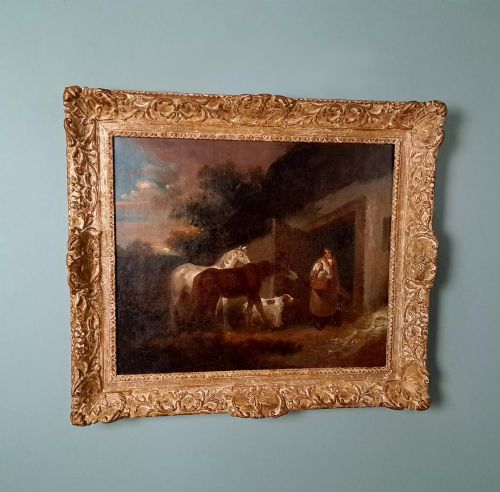
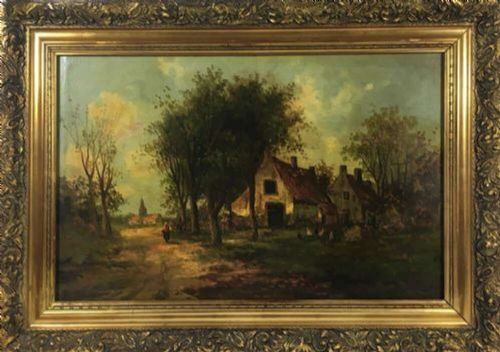
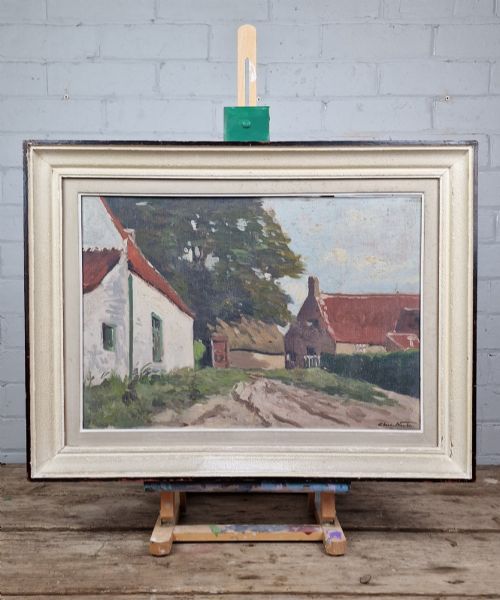
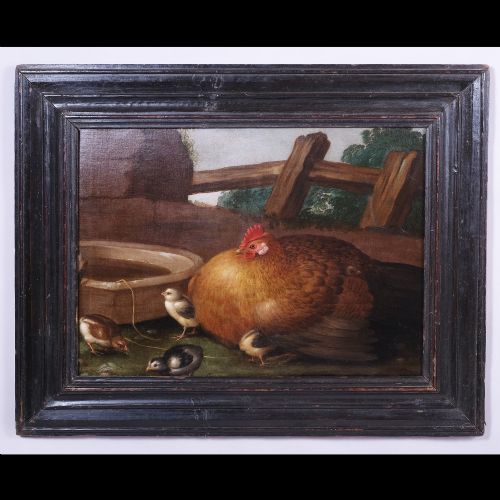
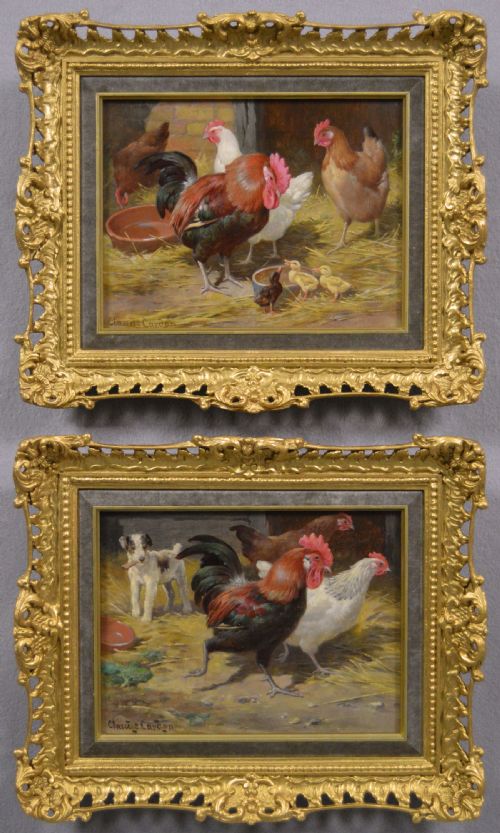
A rustic farmyard oil painting depicts rural scenes featuring animals such as chickens, pigs, horses and cattle alongside barns and cottages. These artworks span several periods, with nineteenth-century Victorian works and early twentieth-century examples appearing most frequently on this page.
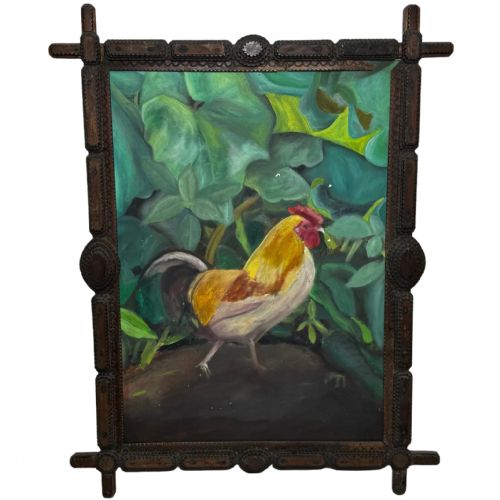
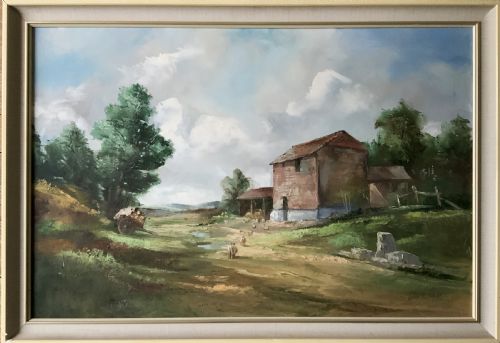
The compositions range from detailed realism showing poultry scratching in the dirt to broader impressionistic landscapes of rural yards and farm carts. Buyers encounter both signed works by known artists and unsigned naïve or folk art pieces originating from Britain and continental Europe.
Materials and Techniques
Artists painted these works primarily using oil paint applied to stretched canvas, wooden board or wood panels. Pigments were built up in layers to capture the textures of animal feathers, fur, weathered timber and stone walls.
Many surviving works retain their original wood or giltwood frames, which complement the traditional pastoral subjects and protect the edges of the canvas or board.
Listings feature works executed in oil on canvas and oil on board across the Victorian, Edwardian and early twentieth-century periods.
Factors Determining Quality
Quality in these paintings rests upon the artist's ability to render animal anatomy accurately and create a convincing sense of light and atmosphere within the farmyard. Superior works display confident brushwork and harmonious colour palettes that bring depth to the rural setting.
Condition also plays a part, as works that retain their original unlined canvas, stable paint layers and period framing command greater attention from collectors than heavily restored examples.
William Joseph Shayer Senior·Edgar Hunt·Claude Cardon·John Frederick Herring·Owen Bowen
The Rustic Farmyard Oil Painting Glossary
- Oil on canvas
- Pigment suspended in a drying oil, most commonly linseed, applied to a woven fabric support stretched over a wooden frame. This combination allows for rich blending and textured brushwork.
- Oil on board
- Pigment applied directly to a rigid wooden or composition panel rather than flexible fabric. This substrate provides a firm surface often favoured for smaller landscape and animal studies.
- Giltwood
- Wood carved and coated with a thin layer of gold leaf or metallic powder, commonly used to finish picture frames from the Victorian and Edwardian periods.
- Barbizon School
- A nineteenth-century art movement focused on tonal realism, direct observation of nature and pastoral scenery. Painters associated with this group influenced later depictions of rural landscapes.
- Naïve art
- Artwork created by an individual without formal academic training, characterised by a flat perspective and straightforward rendering of subjects. These pieces offer an honest, direct view of country life.
Rustic Farmyard Oil Painting: Frequently Asked Questions
What subjects appear in these paintings?
These artworks focus primarily on agricultural settings, featuring domestic animals such as chickens, pigs, horses and cattle gathered around barns, cottages and farm carts.
Alongside animal studies, compositions often incorporate rural landscapes, working figures and old farm buildings under various lighting conditions.
How do I date a farmyard painting?
Dating relies on stylistic clues, framing, canvas preparation and occasionally signatures or inscriptions left by the artist on the reverse of the board or canvas.
Victorian and early twentieth-century works often show distinct shifts in colour palette and brushwork, moving from tight academic realism towards looser impressionistic interpretations.
Are these paintings usually framed?
Many works retain their period frames, which are often made of wood or giltwood and match the era in which the canvas was painted.
Frames range from ornate moulded designs to simpler wooden mouldings that suit the rustic subject matter of the farmyard.
Where were these artists from?
The creators of these works include British painters as well as continental European artists from Belgium, France and Spain.
Regional styles vary, with some artists focusing on precise Victorian realism and others adopting the looser techniques of the Barbizon School or Post-Impressionism.