



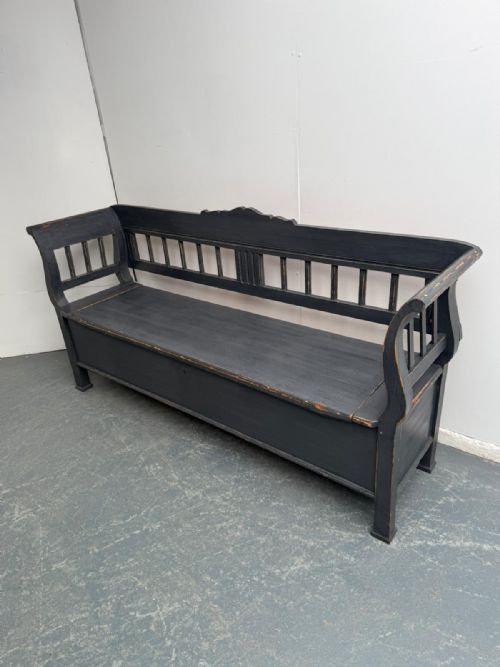
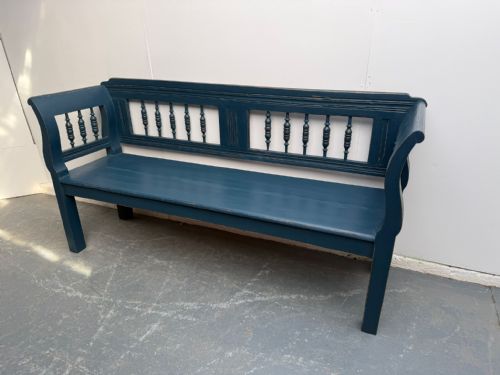

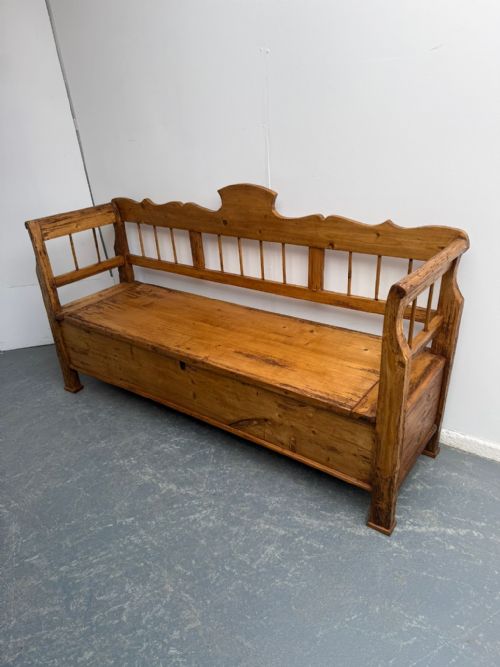


Rustic Entry Bench
A rustic entry bench brings immediate character to a hallway, offering practical seating paired with centuries of regional woodworking traditions.
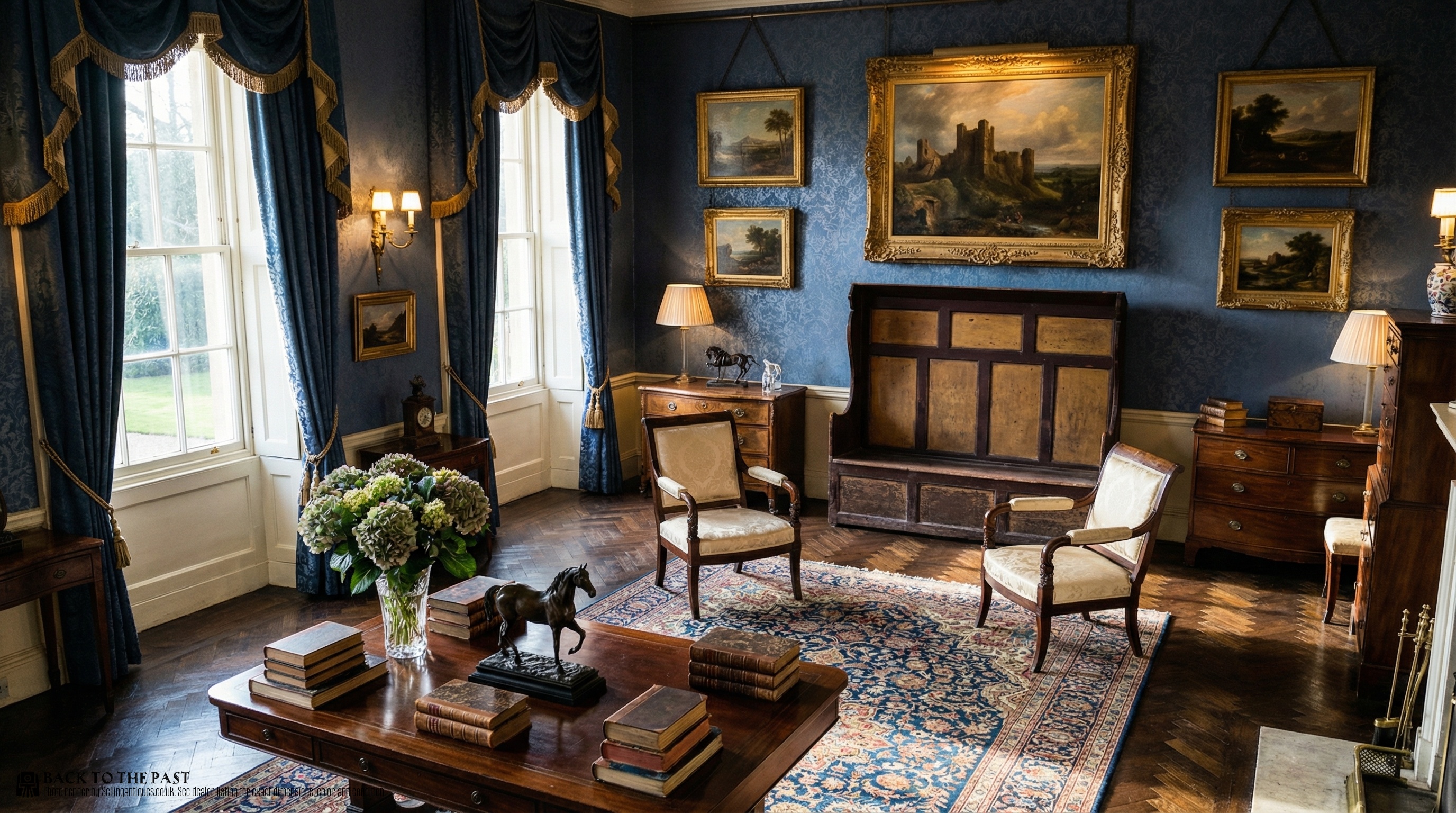
Rustic Entry Bench
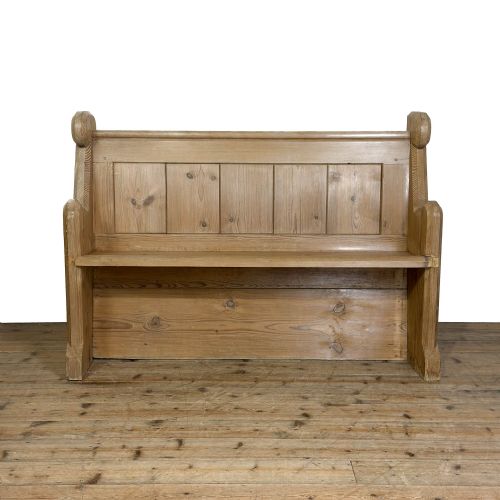
A rustic entry bench encompasses a variety of traditional seating forms designed for hallways and boot rooms, including settle benches, hall seats, and church pews. These pieces emerge from different regional traditions across Britain and continental Europe, spanning several centuries from the sixteenth to the early twentieth century.
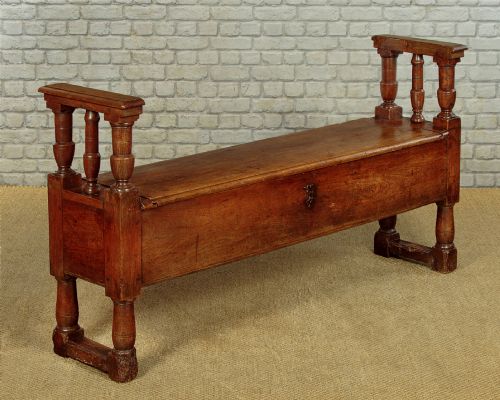
The version most commonly encountered in this selection is the pine box settle or hall bench, often originating from Hungarian or Welsh workshops. These functional items frequently incorporate storage compartments beneath the seat, making them practical for modern hallways.
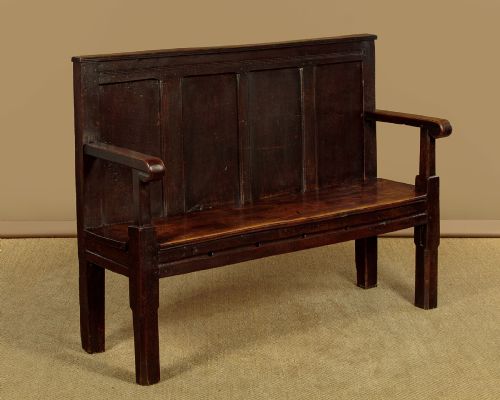
Alongside standard benches, the selection includes related forms such as oak stick and hat stands, tavern benches, and panelled hall seats. Each piece reflects the domestic requirements of its period, prioritising robust construction and everyday utility.
Materials and Construction
Makers utilised solid timbers readily available in their local regions, predominantly pine, oak, elm, and cherrywood. These woods were chosen for their durability and structural strength, essential for furniture subjected to daily use in busy entryways.
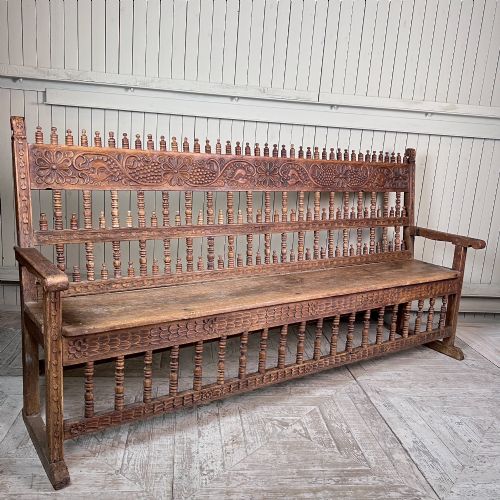
Construction techniques rely on traditional joinery, including panelled construction and pegged joints, often combined with wrought iron hardware. Many pieces retain their original painted finishes, applied in muted greys, blues, creams, or greens over the bare timber.
Rustic Entry Bench Retail Price Guide 2026
Typical asking prices for rustic entry bench among the pieces listed under this phrase on Sellingantiques today, from the lower quarter to the upper quarter. They describe what is for sale here now, not the wider market.
Among the functional seating, a carved Black Forest bear hall seat stands guard with surprising domestic utility.
Evaluating the Pieces
Quality in a rustic entry bench depends upon the integrity of the original timber and the survival of early painted surfaces. Pieces that retain their genuine historic finish carry greater character than those stripped or repainted in later periods.
Proportion and structural balance also distinguish finer examples. Settles and benches with well-proportioned panelled backs and original box storage demonstrate superior regional craftsmanship compared to heavily altered or assembled items.
The Rustic Entry Bench Glossary
- Settle
- A wooden bench with a high back, solid arms, and often a box compartment beneath the seat for storage. This form kept draughts away from the sitter in older hallways and kitchens.
- Box settle
- A variation of the settle featuring a hinged seat that lifts to reveal a large storage chest. It served a dual purpose as seating and a repository for household blankets or boots.
- Church pew
- A long wooden bench historically used for seating congregations in places of worship. In domestic settings, these provide long, linear seating with simple panelled backs.
- Tavarn bench
- A sturdy, utilitarian wooden bench built for public houses and alehouses. These pieces are characterised by heavy timber construction designed to withstand commercial use.
- Trestle
- A structural support consisting of a horizontal beam fixed to two flared legs. This form appears on related table designs within the selection.
Rustic Entry Bench: Frequently Asked Questions
Where should I place a rustic entry bench?
These benches fit naturally into hallways, boot rooms, and porches where practical seating is required. Their narrow profiles suit transitional spaces without obstructing movement.
Box settles also provide hidden storage inside the base for shoes, scarves, and daily clutter.
How do I care for an old painted finish?
Original painted surfaces require gentle cleaning with a soft, dry cloth to remove dust. Avoid harsh chemical cleaners and excessive moisture, which can lift historic pigment.
Wax can be applied sparingly to unpainted timber sections, but painted areas generally need only light dusting.
Are these benches comfortable for daily use?
Most historic benches feature upright wooden backs and solid seats designed for utility rather than lounging. Adding a custom linen or wool cushion softens the seat for everyday hallway use.
The sturdy construction ensures they easily support frequent sitting when putting on shoes.
How can I tell the age of a pine bench?
Age is determined by the construction methods, tool marks left on the timber, and the type of fixings used in the assembly. Hand-cut peg joints and older fastener types indicate earlier production periods.
Wear patterns around the footrests and seat edges also point to long periods of domestic use.