

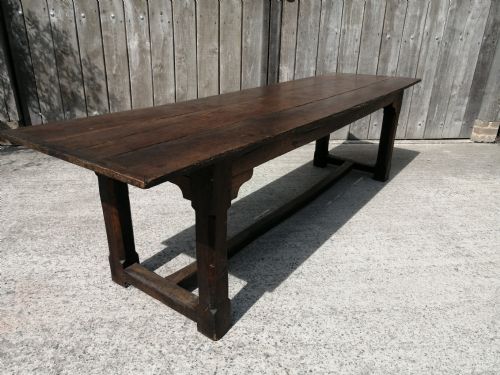
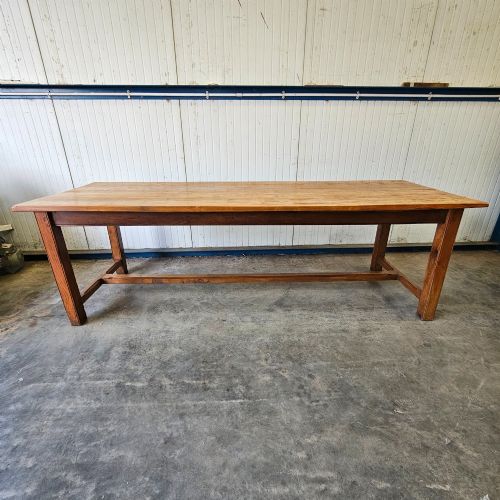
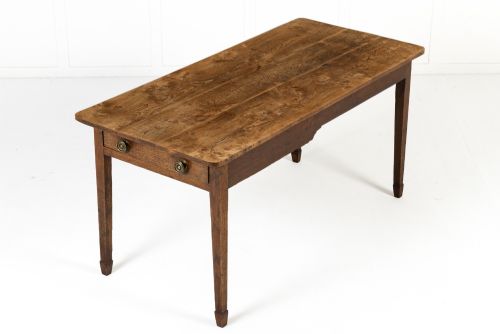
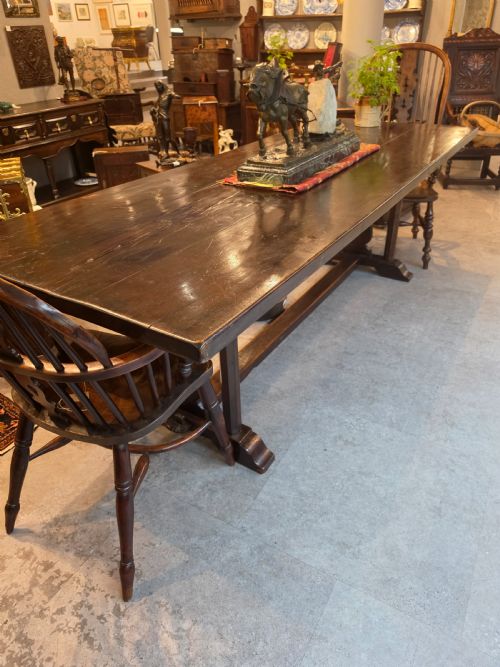
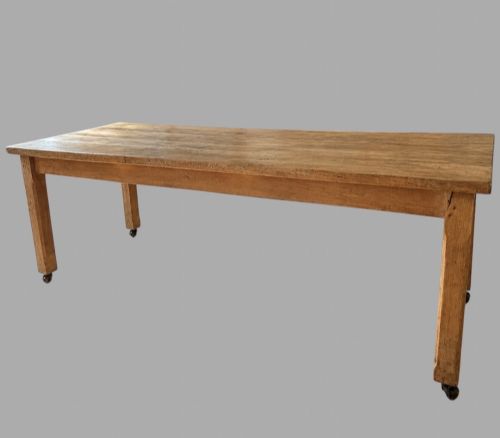
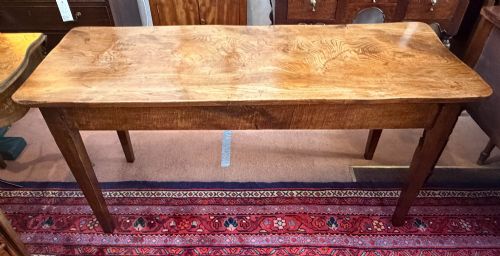
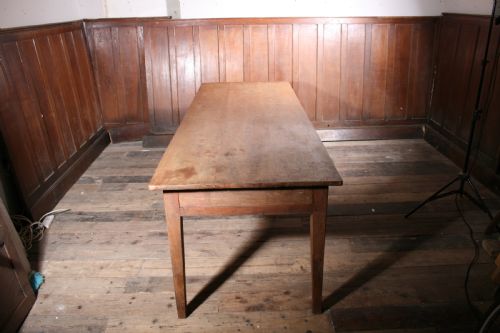
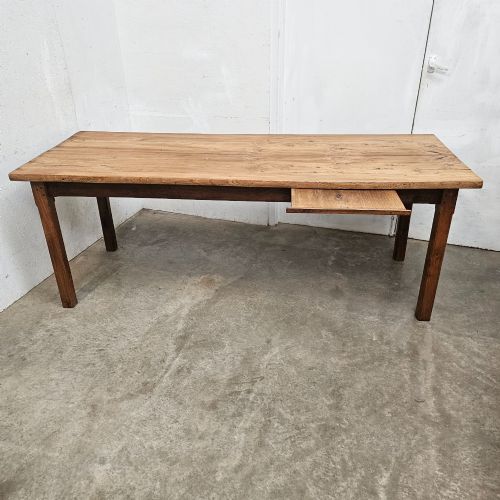
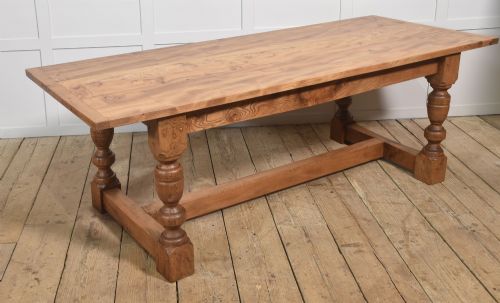


Rustic Elm Dining Table
A rustic elm dining table brings honest, tactile grain and enduring character to any room, offering a sturdy surface shaped by generations of practical use.
Rustic Elm Dining Table
A rustic elm dining table is a functional domestic centrepiece originating primarily from country houses, farmhouses, and provincial kitchens across Britain, France, and Spain. These tables span several centuries, appearing in Georgian, Victorian, and earlier vernacular traditions as well as French provincial designs.
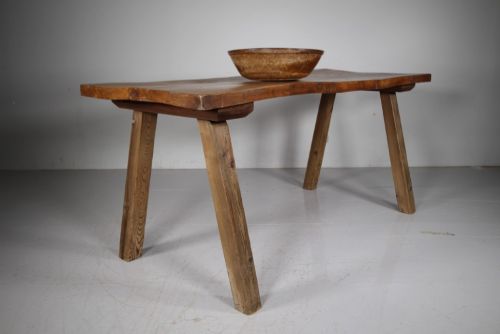
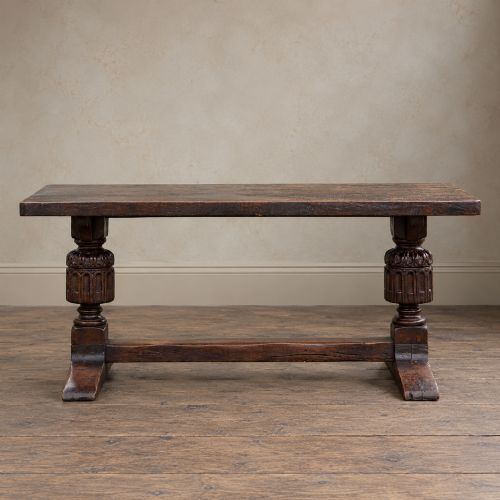
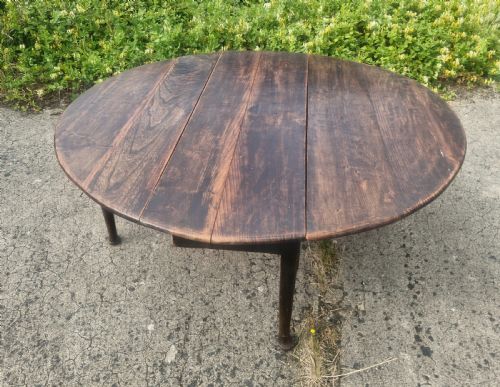
The most common formats on this page are farmhouse tables, refectory tables, and trestle tables, often featuring generous proportions designed to seat large families or accommodate busy kitchens. Examples range from simple two-board tops and drop-leaf formats to long harvest tables and tavern tables.
Makers working within these regional traditions prioritized utility, resulting in sturdy structures built from local timber. Buyers encounter surfaces showing decades of wear, reflecting their history as daily working areas for food preparation and communal dining.
How they were made
Makers constructed these tables using native hardwoods, predominantly elm for its tough, interlocking grain, often paired with oak, pine, sycamore, or pear wood for framing and structural support. This choice of timber provided the necessary resistance to splitting under heavy domestic use.
Joinery techniques relied on traditional methods such as pegged mortise and tenon joints, sometimes reinforced with iron brackets or supported by turned legs, trestle bases, and single plank or multi-board tops.
Rustic Elm Dining Table Retail Price Guide 2026
Typical asking prices for rustic elm dining table among the pieces listed under this phrase on Sellingantiques today, from the lower quarter to the upper quarter. They describe what is for sale here now, not the wider market.
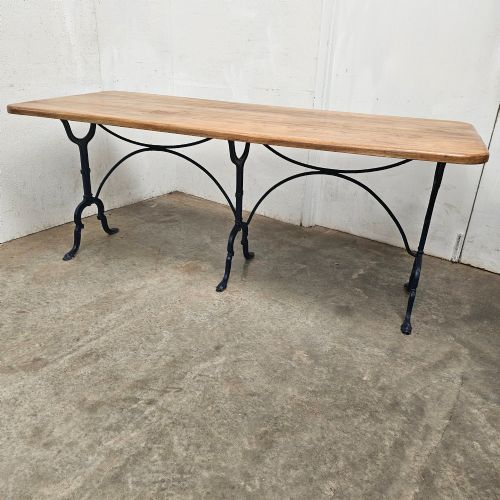
Table formats range from standard dining and kitchen tables to drop-leaf, tavern, refectory, and trestle designs.
What varies in quality
Quality in a rustic elm dining table depends on the integrity of the timber and the honesty of its wear, where deep, natural patination and sound structural framing distinguish superior pieces from lesser examples. Tables retain higher appeal when their original tops and bases remain united without excessive modern intervention.
The Rustic Elm Dining Table Glossary
- Refectory table
- A long dining table historically used in monastic or communal dining halls. These examples often feature stretcher bases for added stability.
- Trestle table
- A table consisting of two or more support frames connected by a horizontal beam. This design maximises legroom along the length of the surface.
- Drop leaf table
- A table with hinged flaps on either side that can be folded down to save space. They offer flexible sizing for smaller rooms.
- Patina
- The surface sheen and colour developed through years of handling, polishing, and natural ageing. It indicates genuine age and use.
- Vernacular
- Architecture or furniture built by local craftsmen using traditional methods and regional materials. These pieces prioritize function over formal academic styles.
Rustic Elm Dining Table: Frequently Asked Questions
How do I clean a rustic elm dining table?
Wipe the surface with a damp cloth and mild soap, avoiding harsh chemical sprays that can strip the historic finish. Regular light waxing helps nourish the dry timber.
Keep the table away from direct heat sources and severe moisture fluctuations to prevent the wood from warping or splitting over time.
Are these tables suitable for daily family use?
These tables were originally built for hard domestic service, making them exceptionally durable for everyday meals and gatherings. Their robust construction handles daily wear with ease.
Existing marks and historical scars on the timber mean new daily use simply adds to the ongoing story of the piece.
How can I tell the age of an elm table?
Examine the underside and joints for hand-cut fixings, timber shrinkage patterns, and traditional joinery marks like wooden pegs. Tool marks left by early saws provide strong clues to manufacturing periods.
Compare the overall style, leg turnings, and board construction against dated regional examples from Georgian or earlier vernacular traditions.
What is a single plank elm top?
A single plank top uses one exceptionally wide board of elm cut from the full diameter of a mature tree. This feature is prized for its uninterrupted grain pattern.
Because wide elm boards are scarce, tables featuring single planks command particular interest from collectors of country furniture.