





Rust Red Persian Carpet
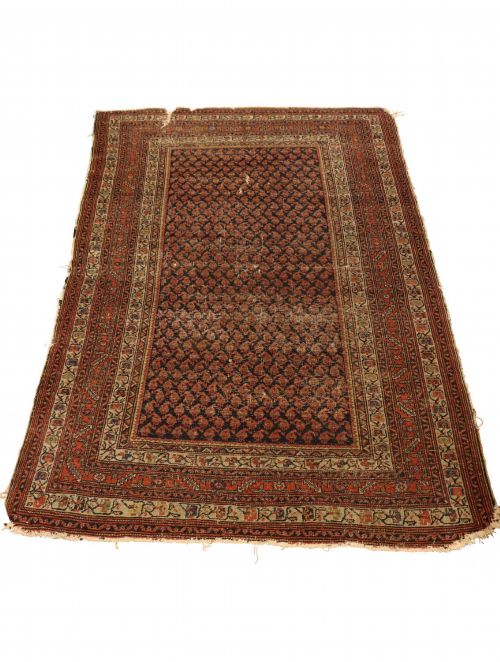
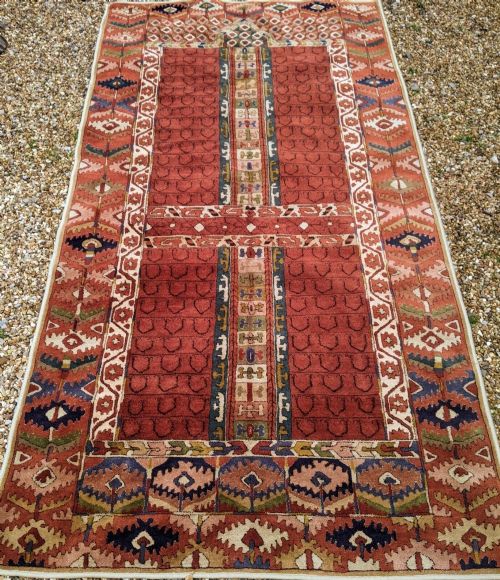
A rust red persian carpet brings deep madder tones and intricate village or town weaving into a room.
Rust Red Persian Carpet
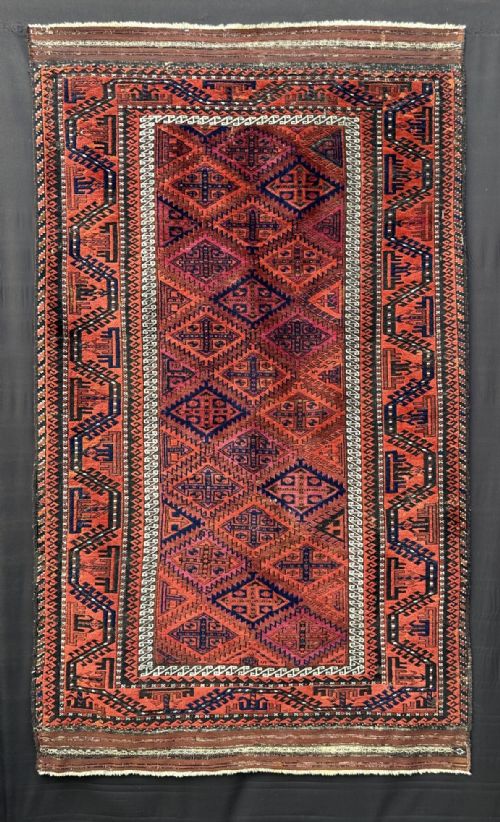
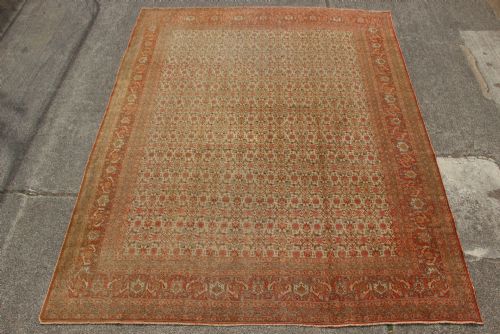
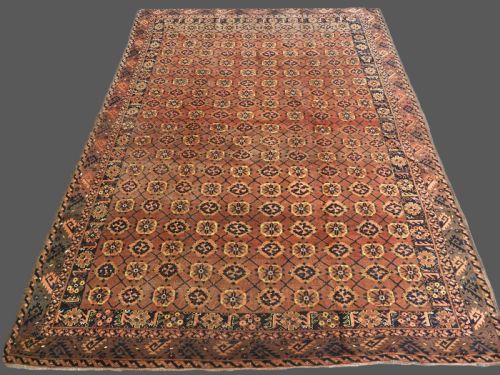
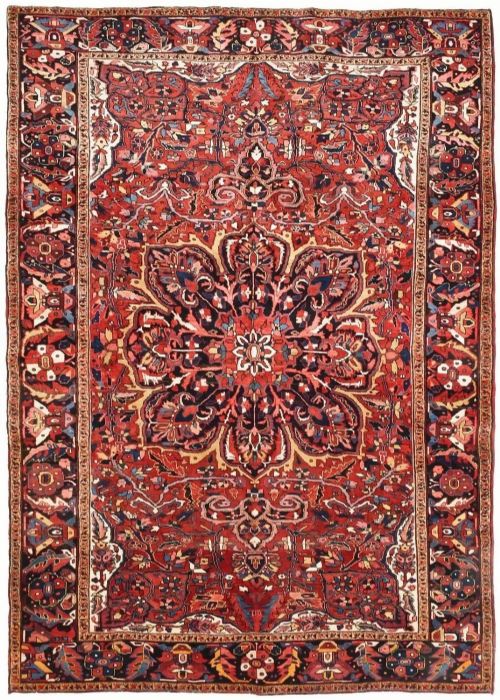
When searching for a rust red persian carpet, you encounter hand-knotted room-size carpets, smaller area rugs, and long narrow runners produced across Persian workshops and tribal regions. The selection spans the nineteenth and early twentieth centuries, featuring geometric village designs and curvilinear town patterns alike.
Heriz and Tabriz carpets dominate the larger formats on this page, while Baluch, Afshar, and Kurdish pieces supply more compact tribal formats. Dating ranges from the mid-nineteenth century up to the 1930s, encompassing both grand country house proportions and intimate fireside rugs.
How they were made
Weavers constructed these carpets using wool pile knotted onto cotton or wool foundations, occasionally incorporating goat hair for added structural durability along the selvedges. Natural dye traditions supplied the characteristic rust red and terracotta grounds through materials like madder root.
The hand-knotting technique allowed workshops and nomadic weavers to execute complex geometric medallions, all-over boteh motifs, and repeating lattice designs with enduring structural integrity.
Rust Red Persian Carpet Retail Price Guide 2026
Typical asking prices for rust red persian carpet among the pieces listed under this phrase on Sellingantiques today, from the lower quarter to the upper quarter. They describe what is for sale here now, not the wider market.
Listings feature carpets and rugs spanning from the 1850s to the 1930s, utilising wool, cotton, and goat hair.
What varies in quality
Knot density and wool quality set individual examples apart, influencing how crisply the geometric or floral motifs resolve across the field. Softer, more lustrous wool handled through expert dyeing achieves greater depth in the rust red backgrounds.
Structural preservation also defines the hierarchy, distinguishing pieces with intact original borders and even pile from those with significant historic reweaving or heavy wear.
Ersari Beshir·Salar Khani·Khorasan Baluch·Sauj Bulagh
The Rust Red Persian Carpet Glossary
- Heriz
- A style of carpet originating from north-west Persia known for bold, geometric central medallions and sturdy structures.
- Boteh
- A stylised almond or paisley motif frequently repeated across the field in traditional Persian weaving.
- Baluch
- A tribal weaving style produced by nomadic groups in south-east Persia, often characterised by deep tones and geometric repeat patterns.
- Madder
- A natural plant dye source traditionally utilised to achieve rust red and terracotta hues in antique wool pile.
- Gul
- A repeating octagonal medallion motif frequently found in Turkmen and Baluch tribal carpets.
Rust Red Persian Carpet: Frequently Asked Questions
How do I identify a Heriz carpet?
Heriz carpets are recognised by their bold, large-scale geometric medallions and robust structural feel. They frequently employ heavy cotton foundations and distinct corner spandrels.
The palette often relies on deep rust reds contrasted with indigo blues and ivories, differing from the finer curvilinear floral designs found in urban Tabriz weaving.
Where were Baluch rugs made?
Baluch rugs were produced by nomadic and village weavers across the borderlands of Persia, Afghanistan, and Baluchistan. They typically appear in smaller formats suited for portable floor coverings.
These pieces often feature dark wool palettes incorporating rust red, deep brown, and midnight blue, frequently arranged in repeating octagonal gul or calyx lattice designs.
Are these carpets made with natural dyes?
The nineteenth and early twentieth-century examples on this page rely predominantly on traditional natural dye sources. Madder root provided the durable rust red grounds seen across many village carpets.
Subtle abrash, or tonal shifts within a single colour field, often indicates the use of hand-dyed wool batches prepared in village or nomadic households.
How should I care for an antique rug?
Antique wool and cotton carpets require gentle regular vacuuming without rotating brush heads to protect the historic pile. Keeping them out of direct sunlight prevents the natural rust red tones from fading over time.
Professional specialist cleaning is recommended every few years to remove embedded grit from the wool foundation without compromising the hand-knotted structure.