

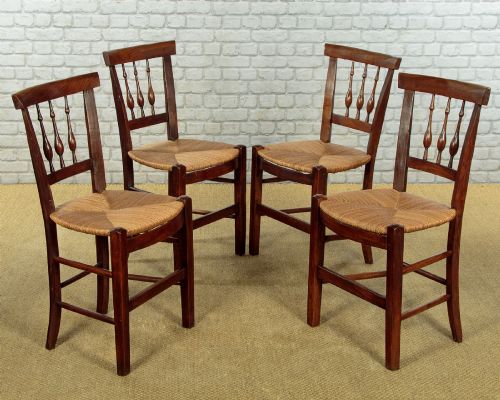
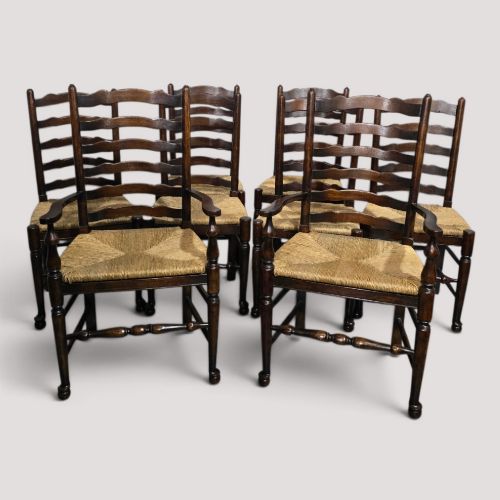
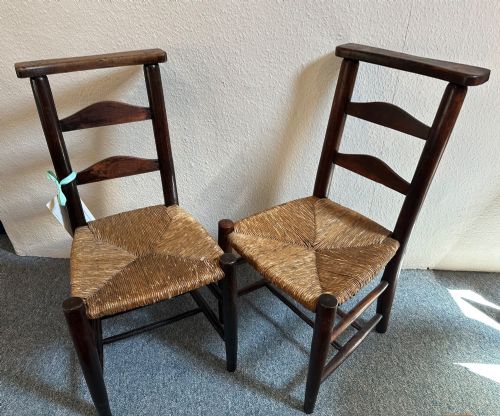
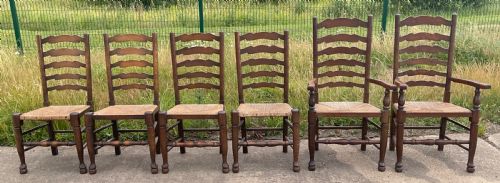
Rush Seated Side Chairs
These rush seated side chairs offer sturdy country craftsmanship and woven natural seating, built for practical daily use across centuries.
Rush Seated Side Chairs
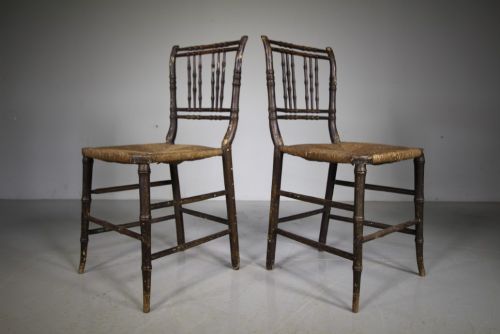
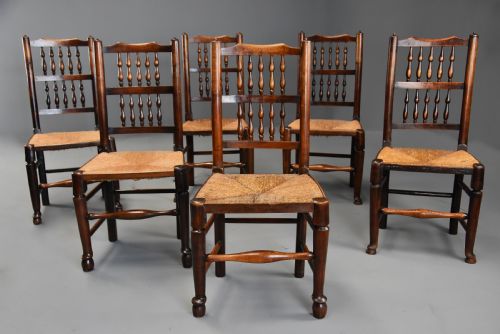
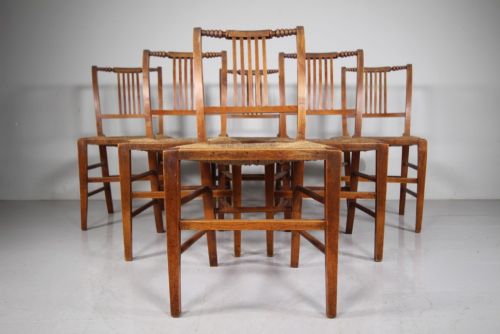
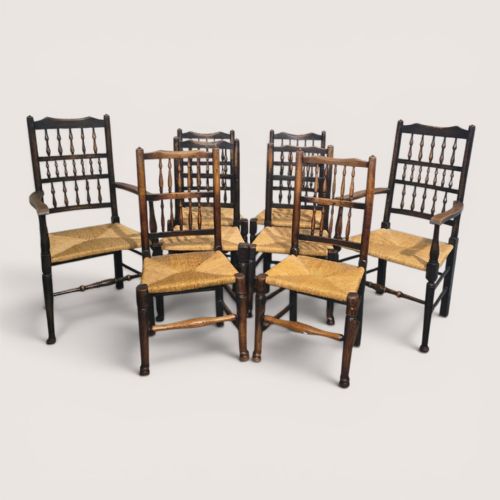
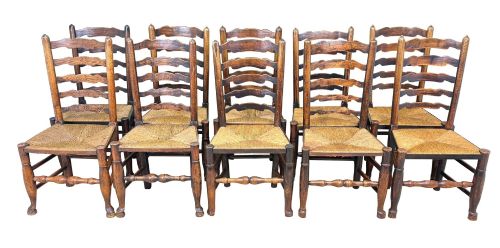
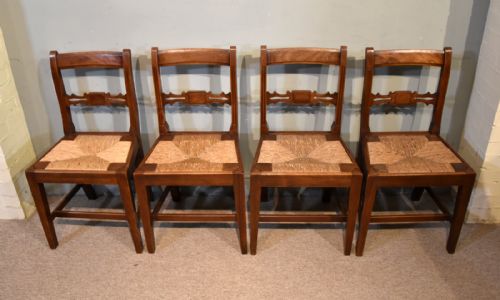
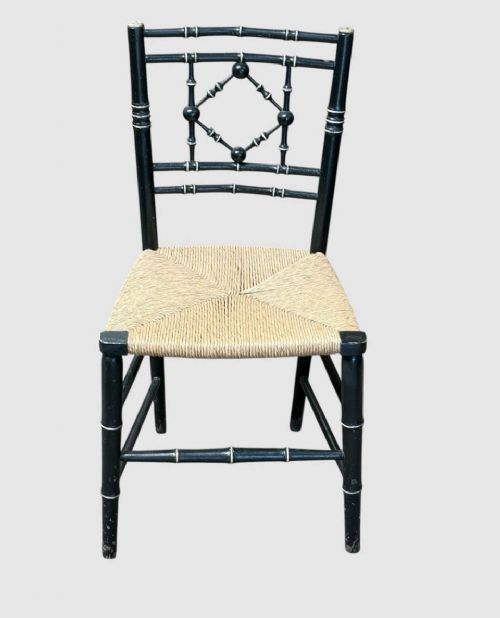
Rush seated side chairs encompass straightforward kitchen seating, ladder backs, and spindle backs originating from country workshops and domestic settings.
The selections span the eighteenth, nineteenth, and early twentieth centuries, drawing heavily from English country vernacular, Georgian farmhouse, and Arts and Crafts traditions.
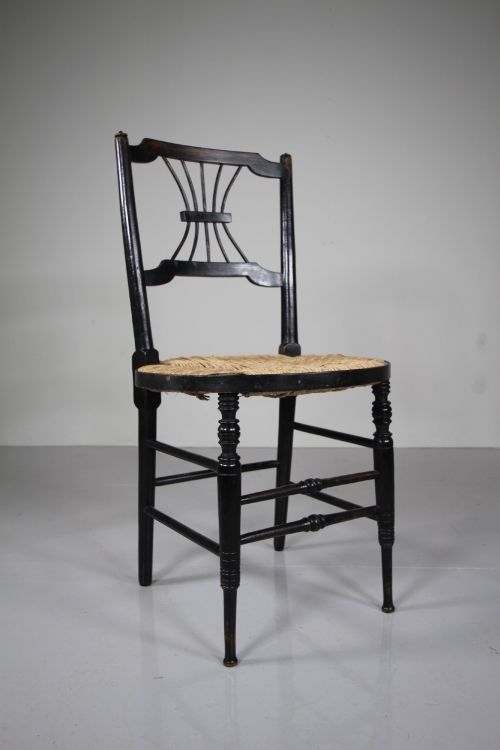
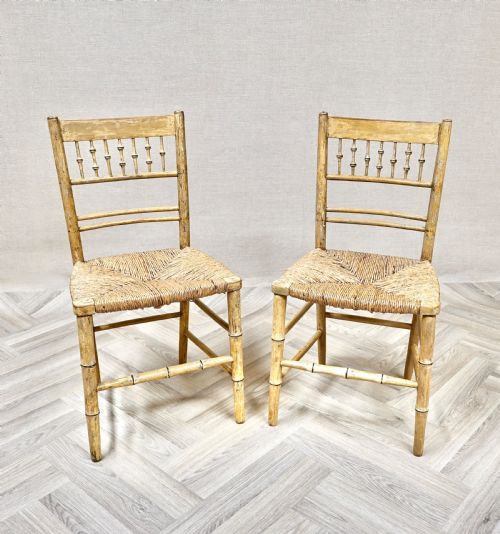
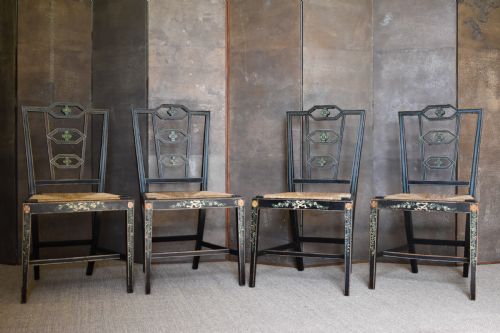
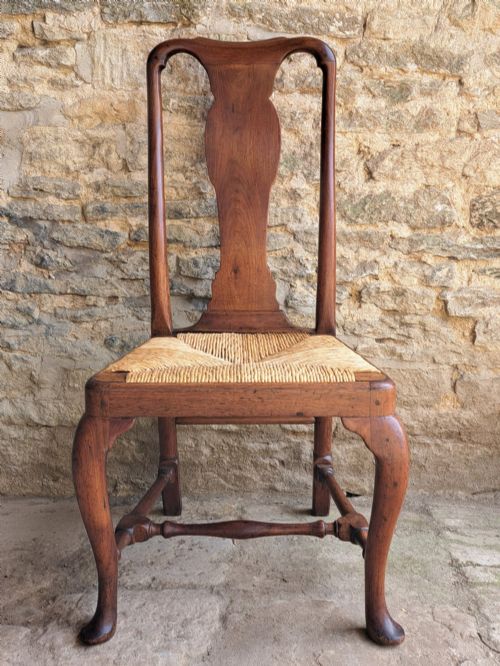
Buyers most frequently encounter robust elm, ash, and oak examples designed for dining rooms and kitchens, alongside occasional painted or ebonised decorative pieces.
Materials and Construction
Traditional makers utilised native timbers such as elm, ash, oak, and fruitwood for frames, turning spindles and shaping ladder backs with local lathes and hand tools.
Seats were hand-woven using natural rush or plaited straw, tightly wrapped around wooden rungs to create a resilient, flexible surface that supported the sitter.
Joinery relied on traditional mortise and tenon joints, often secured with wooden pegs to accommodate the natural movement of unseasoned timber.
One chair bears a direct link to St Paul's Cathedral, having stood beneath the dome before finding its way to a domestic interior.
Design and Preservation
Quality rests upon the integrity of the original timber frame, the tightness of the woven rush seat, and the proportion of the turning.
Earlier pieces display finer hand-carving and slender components, while later workshop productions focus on heavy, solid utility framing.
Surface finish - whether aged patination, original paint, or clean timber grain - distinguishes untouched examples from heavily altered pieces.
William Morris·Rossetti·Philip Webb·Lawrence Neal·Edward Gardener
The Rush Seated Side Chairs Glossary
- Rush
- Marsh grass twisted into cord and woven tightly to form a resilient, traditional seat base. It requires a skilled hand to wrap evenly around the chair rails.
- Ladder back
- A chair style featuring horizontal arched slats between the rear upright posts. This regional form dominated English country kitchens for generations.
- Spindle back
- A design incorporating multiple slender vertical turned wooden rods in the backrest. This construction provides lighter structural support than solid panels.
- Patina
- The surface sheen and colour acquired by wood through decades of handling and polishing. It serves as a visual indicator of age and careful use.
- Vernacular
- Everyday utilitarian objects made by local craftsmen using regional materials rather than following high-style academic design. These pieces reflect local building traditions.
Rush Seated Side Chairs: Frequently Asked Questions
How do I care for a rush seat?
Keep rush seated side chairs in rooms with stable humidity to prevent the natural fibre from becoming brittle or damp. Clean gently with a dry brush and avoid heavy liquid polishes that rot the cord.
Place protective pads beneath the legs if your floors are uneven, ensuring the frame bears weight evenly without straining the woven base.
Can I use these chairs daily?
Most of these chairs were constructed for heavy kitchen and dining use, making them durable enough for modern seating if the joints remain secure. Elm and ash frames offer strong support for regular meals and gatherings.
Check that the rungs and stretcher joints hold firm before placing heavy daily demands on eighteenth or nineteenth-century examples.
Are these chairs historically authentic?
The inventory includes marked workshop pieces and regional vernacular designs dating from the Georgian period through the Arts and Crafts movement. Materials align directly with the period of manufacture, utilising traditional timbers and hand-twisted cord.
Examine the turning marks on the wood and the tightness of the weave to understand the manufacturing era and regional origin.
What is a harlequin set?
A harlequin set is a group of dining chairs that match in general style, timber, or period but were not originally manufactured together as a single batch. They share common aesthetic traits like ladder backs or rush seating while displaying slight individual variations in turning.
This approach allows you to gather a complete dining set of period chairs that harmonize around a table without requiring an identical factory pair.