


Vintage Rush Dining Chairs
Vintage rush dining chairs bring tactile texture and rustic charm to a room, offering sturdy seating shaped by traditional country craftsmanship.
Vintage Rush Dining Chairs
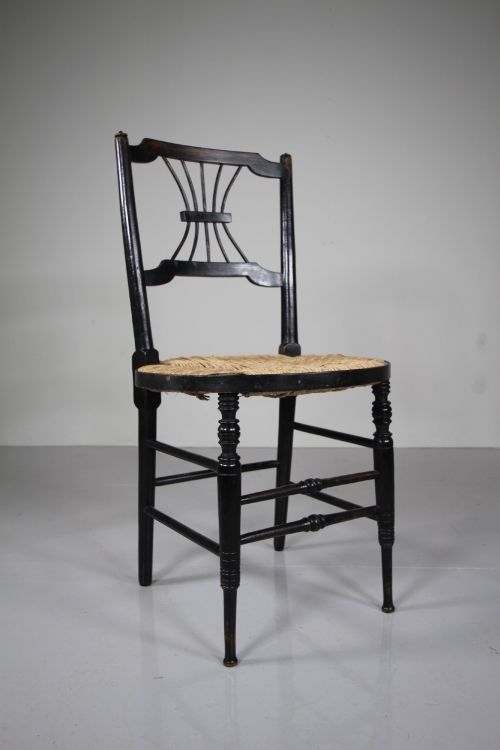
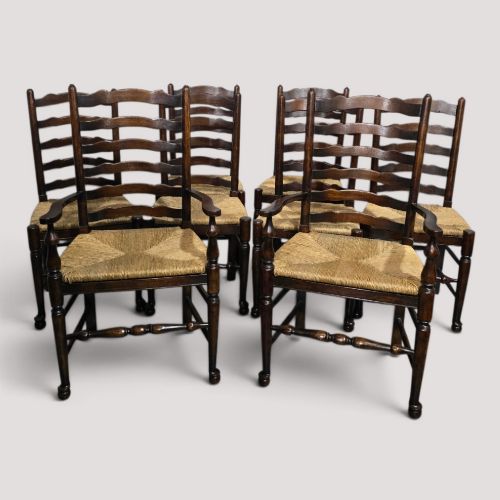
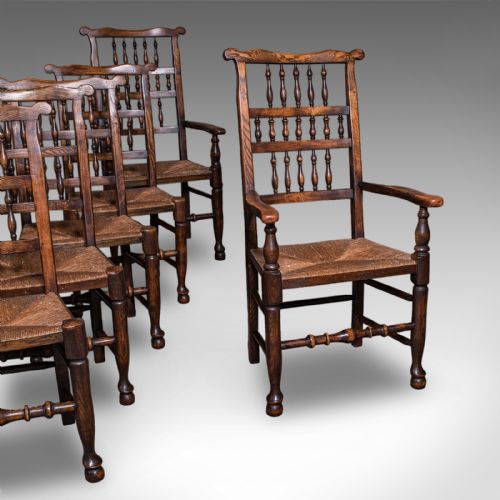
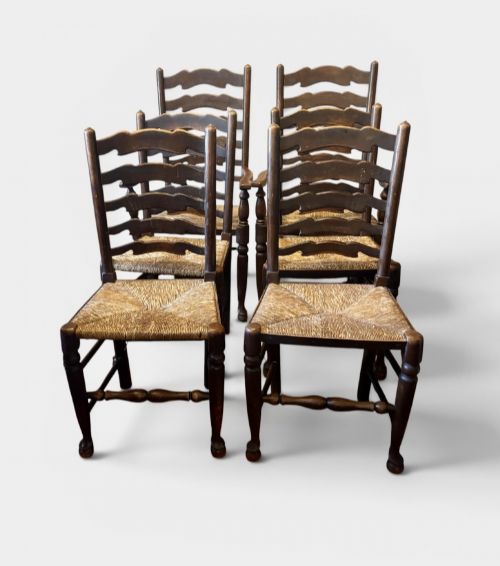
Vintage rush dining chairs encompass sturdy seating options rooted in country vernacular traditions from the eighteenth century through the early twentieth century. You will encounter various regional interpretations here, including English country ladder backs, French provincial models, and Arts and Crafts pieces.
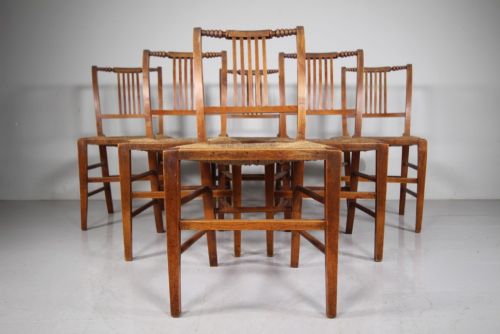
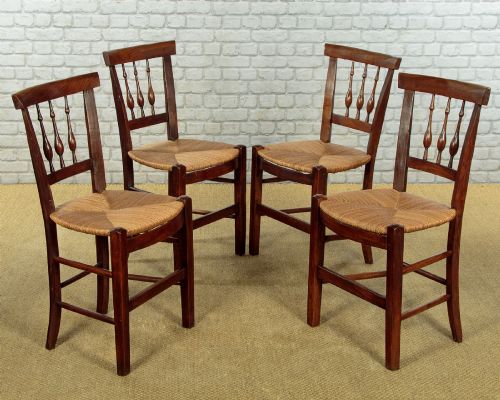
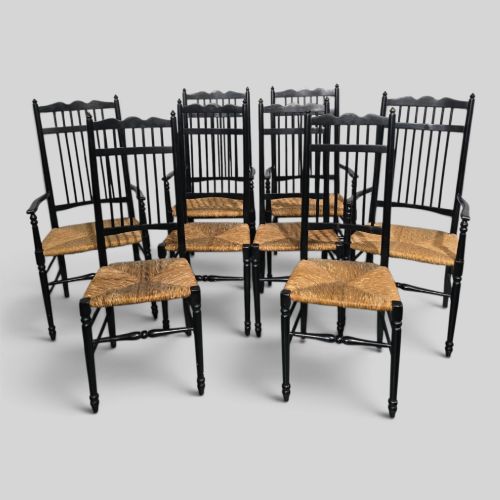
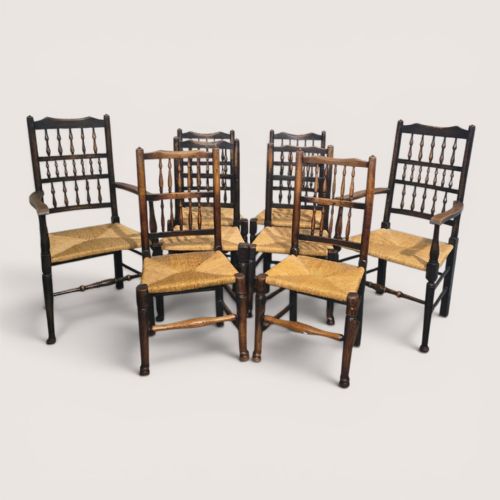
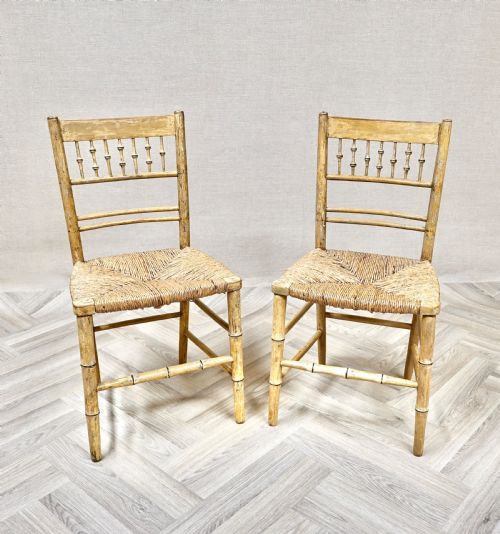
The selection ranges from single side chairs to extensive sets of eight or ten, often featuring spindle backs, ladder backs, or bar backs. Woods such as oak, elm, beech, fruitwood, and ash provide the primary frames, while woven rush forms the seats.
Makers working within these styles drew upon long-standing local traditions to produce hard-wearing kitchen and dining seating. The integration of woven cordage with timber frames remains the defining characteristic of this entire grouping.
Distinguishing quality across examples
Quality rests heavily on the integrity of the timber frame and the tightness of the woven rush seat. Heavier solid construction and balanced proportions separate robust dining sets from lighter utilitarian seating.
The refinement of the turning on spindles and ladder backs indicates the skill of the original workshop. Greater uniformity across larger sets of chairs adds significantly to their coherence and desirability.
The selection includes various formats, from individual child high chairs to expansive sets of ten dining chairs.
William Morris·Lawrence Neal·Dicon Nance·Heals
The Vintage Rush Dining Chairs Glossary
- Rush
- A marsh plant used for centuries to weave durable, textured chair seats. It provides a resilient surface that yields slightly to the sitter.
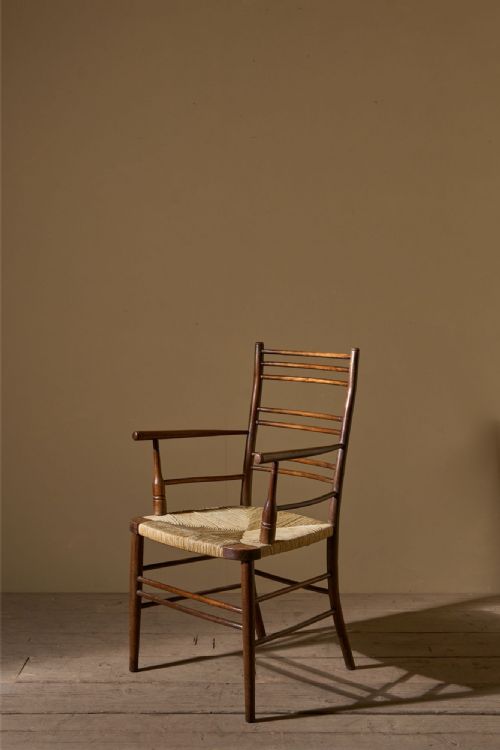
- Ladder back
- A chair back featuring horizontal wooden slats between the upright posts. This traditional form offers strong structural support.
- Spindle back
- A chair back composed of numerous thin vertical turned wooden rods. This design lightens the visual load while maintaining strength.
- Carver
- An armchair designed with armrests, traditionally placed at the head of a dining table. These often match a larger set of side chairs.
Vintage Rush Dining Chairs: Frequently Asked Questions
How do I care for rush seats?
Keep woven rush seats dry and clean them gently with a soft brush to remove dust. Avoid excess water, which can cause natural fibres to become brittle over time.
Applying a light, traditional paste wax to the wooden frames helps preserve the finish. Regular gentle maintenance protects both the timber and the woven seating surfaces.
Can I mix these chairs with modern tables?
These chairs pair effectively with contemporary tables by introducing organic textures and historical contrast to a modern interior. Their natural timber frames bridge different design eras smoothly.
Matching wood tones or picking up common colours helps integrate older seating into a modern dining space. The varied regional forms add character and visual warmth to simpler settings.
What is a harlequin set?
A harlequin set is a collection of chairs that share similar styles, materials, or periods but were not originally manufactured together as a single group. These assemblies often form organically over time.
Such sets work well around larger dining tables where slight variations in turning or tone enhance the eclectic country aesthetic. They offer an accessible way to acquire seating for larger gatherings.
How do I distinguish regional styles?
English country chairs often feature substantial elm or oak frames with simple ladder or spindle backs. French provincial versions frequently incorporate fruitwood and carved details like hoof feet.
Arts and Crafts pieces reflect a focus on honest construction and simplified structural forms. Examining the choice of timber and turning style helps identify the origin of each piece.