


Ruffled Glass Bowl
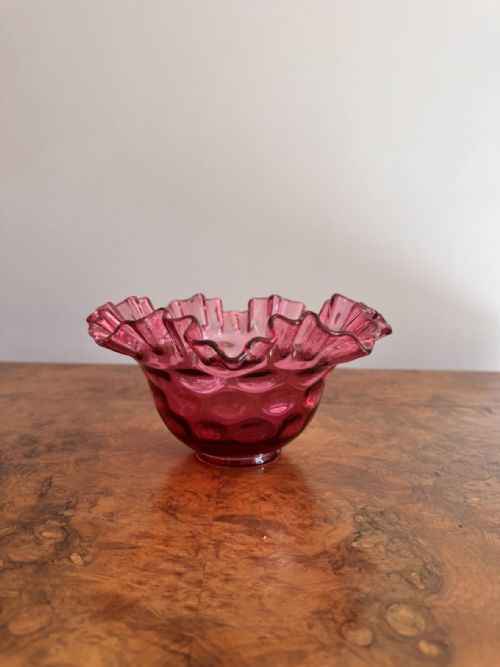
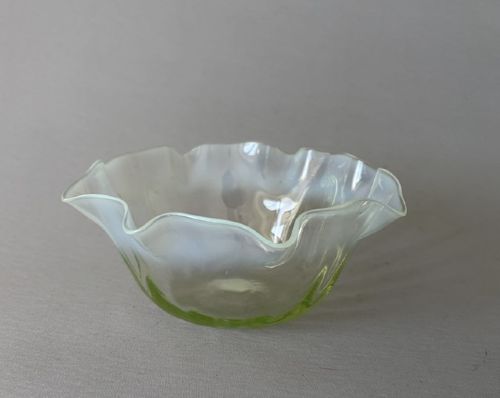
These ruffled glass bowl examples bring vibrant colour and crimped edges to a table, combining Victorian and Edwardian craftsmanship.
Ruffled Glass Bowl
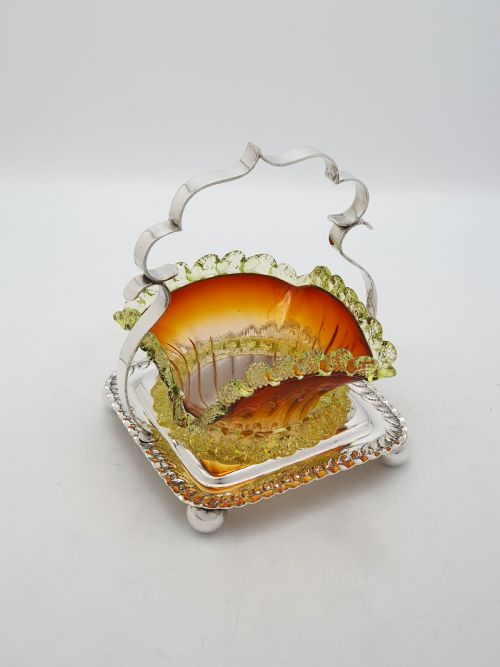
A ruffled glass bowl takes several forms on this page, including bonbon dishes, oil lamp bowls, table centrepieces, epergnes, and decorative glassware collections. These pieces primarily date from the Victorian and Edwardian eras, spanning the late nineteenth and early twentieth centuries.
How they were made
Makers shaped the hot glass by hand to create the characteristic crimped or fluted rims seen across these pieces. Techniques included applying enamel decoration or producing iridescent surfaces, as demonstrated by the Bohemian art glass examples.
Metalwork played a supportive role in many designs, utilising silver plate and brass for stands, mounts, and paired accessories like pierced spoons or epergne frames.
Listings feature pieces spanning from eighteen sixty to nineteen thirty, incorporating materials such as cranberry glass, silver plate, brass, and enamel.
What varies in quality
Quality rests on the richness and depth of the glass colour, especially in cranberry and iridescent varieties, where even tone elevates the piece. The complexity of the form, such as multi-vase epergnes or detailed enamel work, also distinguishes finer examples.
The integration of metal mounts, including silver plated frames and pierced spoons, influences the overall distinction of the item. Pieces from recognised makers like Loetz carry specific attributes in their glass formulation and finish.
Loetz factory
The Ruffled Glass Bowl Glossary
- Cranberry glass
- A transparent red or pink glass coloured by the addition of gold chloride. It forms the basis of many Victorian decorative bowls and epergnes.
- Epergne
- A centrepiece stand featuring multiple detachable vases or bowls branching from a central base. They often showcase ruffled rims and coloured glass.
- Bonbon dish
- A small open vessel designed for holding sweets or small confectionery. These frequently feature silver plated handles or stands.
- Iridescent glass
- Glass treated with metallic salts to produce a shimmering, rainbow-like sheen on the surface. This technique defines several Art Nouveau pieces.
Ruffled Glass Bowl: Frequently Asked Questions
What periods do these bowls come from?
The pieces span from the mid-nineteenth century through the Edwardian period and up to the early twentieth century. Victorian and Edwardian examples dominate the selection.
Production dates recorded in the listings range from eighteen sixty to nineteen thirty, capturing changes in glass styles across those decades.
How were these bowls originally used?
Many served as table centrepieces or bonbon dishes for displaying sweets during formal dining. Others formed parts of elaborate epergnes or served as decorative oil lamp reservoirs.
Their vibrant colours and ruffled edges made them prominent display items in Victorian and Edwardian parlours and dining rooms.
What materials accompany the glass?
Silver plate and brass frequently appear as mounting materials for dishes and epergnes. Enamel decoration also enhances the surface of certain glass bowls and lamp reservoirs.
Combinations of clear glass with amber, pink opaque, or cranberry glass create varied visual contrasts across the different object types.
How do I identify a Loetz bowl?
Loetz pieces are identified through their characteristic iridescent art glass finish. This Bohemian glassware displays a distinct metallic sheen on its ruffled surfaces.
Such pieces reflect the Art Nouveau aesthetic prevalent around nineteen hundred.