


Royal Worcester Gilded Plate
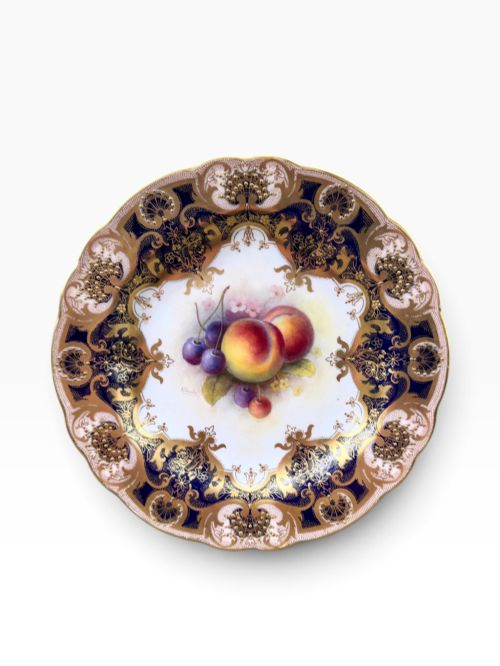
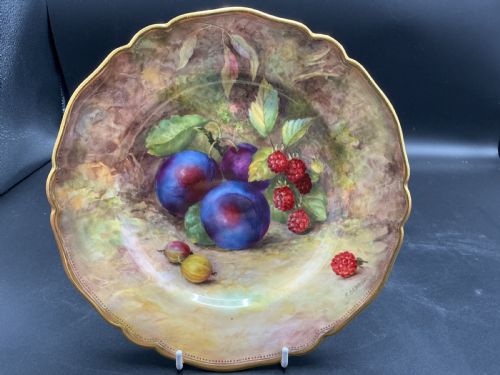
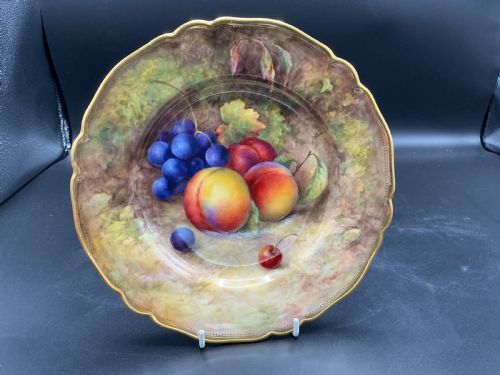
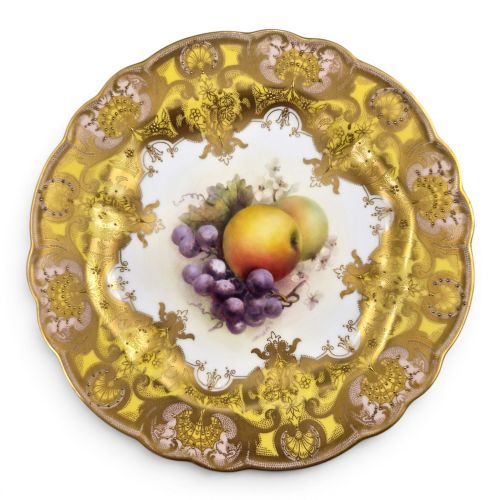
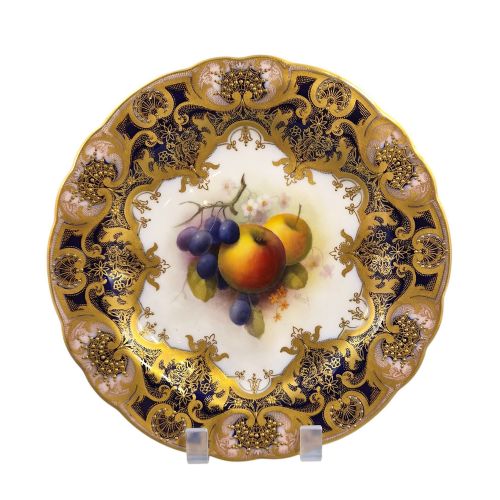
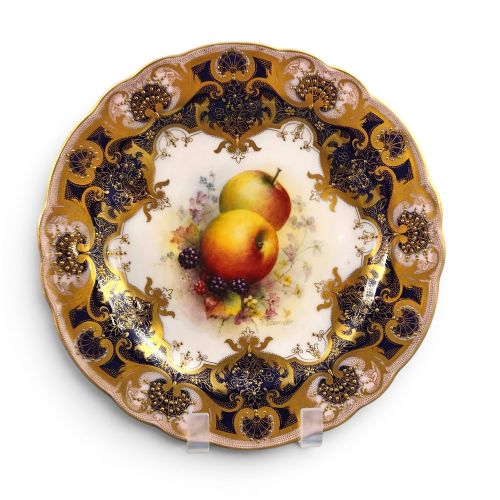
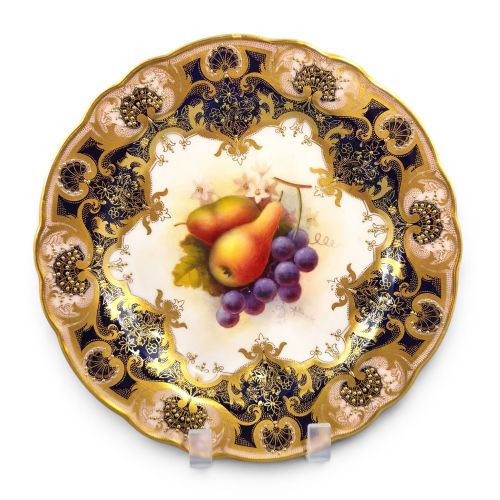
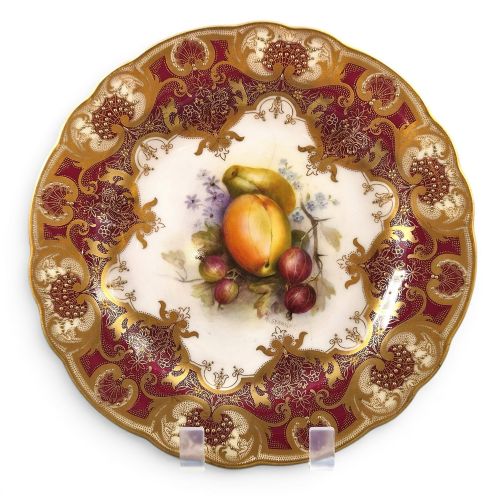
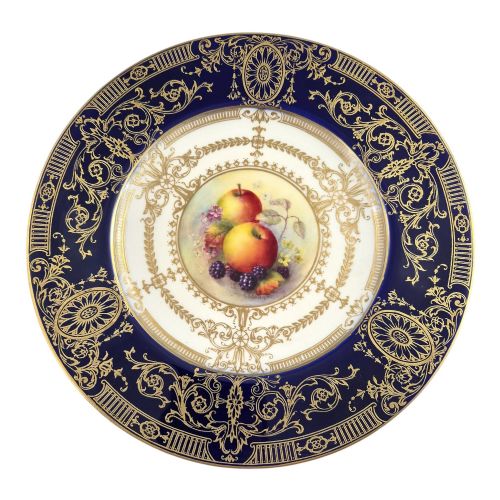
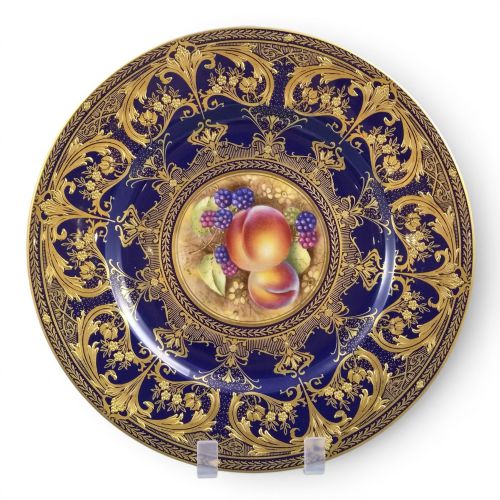
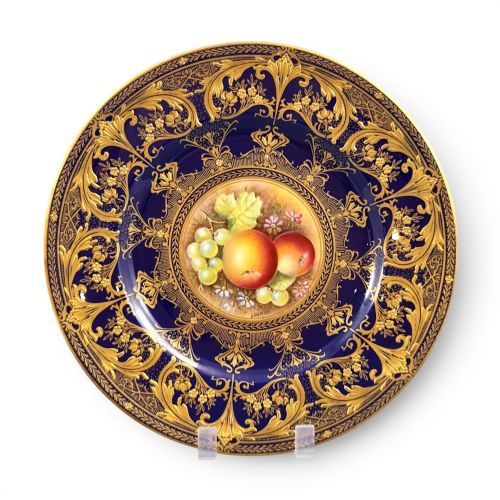
These royal worcester gilded plate examples are fine porcelain display pieces hand-painted by notable factory artists.
Royal Worcester Gilded Plate
A royal worcester gilded plate is typically a decorative cabinet piece or soup dish created to display hand-painted artistry rather than for daily dining use. The versions most common on this page span from the late Victorian and Edwardian eras through the mid-twentieth century.
Makers focused heavily on pictorial subjects, producing cabinet plates featuring painted fruit, game birds, swans, and delicate florals. Forms range from standard circular plates to large rope edge plates and pierced border designs.
Pieces frequently carry the signatures of renowned factory artists such as Richard Sebright, Albert Shuck, or Charles Baldwyn. Collectors encounter works spanning multiple decades, including the 1890s, the 1920s, and later mid-century examples.
Assessing Quality and Execution
Quality rests heavily on the identity of the artist whose signature appears on the surface, with hand-painted fruit and bird studies by known masters commanding significant attention. The complexity of the gilding, such as tooled gilt work against cobalt backgrounds, distinguishes finer production pieces from standard wares.
The crispness and preservation of the enamel work and the delicacy of moulded forms, including rope edges and pierced borders, determine the overall execution. Earlier Victorian and Edwardian items often display particularly intricate brushwork compared to later mid-century output.
Object forms span cabinet plates, soup dishes, teacup sets, and rope edge plates.
Grainger And Co·Kerr And Binns·Royal Worcester
The Royal Worcester Gilded Plate Glossary
- Cabinet plate
- A decorative ceramic plate intended for display in a cabinet rather than for practical table use. These typically feature intricate hand-painted subjects.
- Blush ivory
- A signature soft, creamy ceramic ground developed by the factory to resemble real ivory. It is frequently enhanced with gilt details and floral painting.
- Gilding
- The application of gold leaf or powdered gold onto the porcelain surface. It highlights rims, handles, and borders.
- Tooled gilt
- Gold leaf that has been impressed or incised with decorative patterns after application. This technique adds texture and catches the light differently than flat gilding.
- Rope edge
- A moulded ceramic rim designed to resemble a twisted rope. This structural detail appears on various serving and display plates.
Royal Worcester Gilded Plate: Frequently Asked Questions
Were these plates used for dining?
Most of these items served as ornamental cabinet plates or dessert pieces rather than everyday tableware. Their delicate painted fruit and gold work were intended for visual display.
Dishes formed part of specialised sets or stood alone as decorative works. Owners traditionally exhibited them in glazed cabinets.
How do I identify the artist?
Many plates feature small handwritten signatures near the edge of the painted central scene. Names like Richard Sebright or Albert Shuck indicate specific factory painters.
Matching the signature style to known factory records helps confirm the era of production. Backstamps on the reverse provide additional dating clues.
What is blush ivory?
Blush ivory is a matte, peach-toned glaze introduced by the factory to imitate the look of genuine ivory. It provides a warm background for floral painting.
This finish is frequently accented with raised gold gilding. Pieces featuring this technique date predominantly around the turn of the twentieth century.
How should I display them?
Cabinet plates require secure wall hangers or dedicated plate stands designed for heavy porcelain. Proper support prevents accidental tipping or rim damage.
Display areas should remain away from direct, harsh sunlight to protect the enamel colours and gold leaf over time.