


Royal Navy Ship Art
Royal navy ship art brings maritime history into the room through paintings, models, and embroideries that document the vessels of the fleet.
Materials and construction
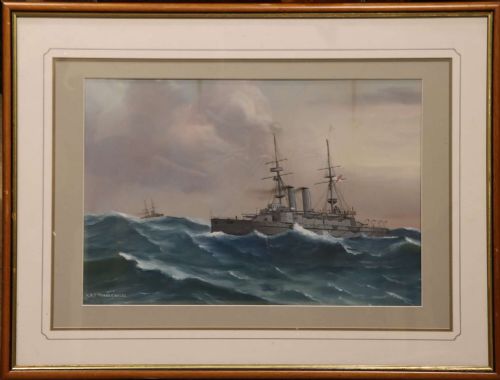
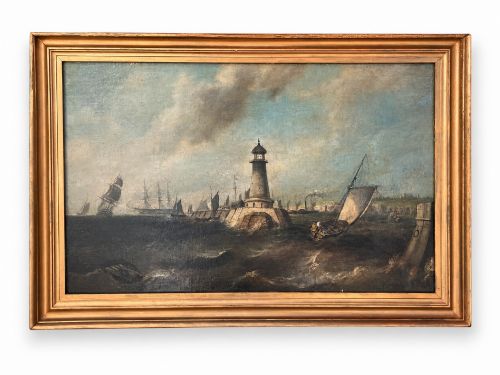
Makers utilised traditional artistic media including oil on canvas, watercolour, and gouache, often framed in giltwood or original oak. Canvas and paper provide the support for flat works, whilst wood and textiles form the basis for models and woolies.
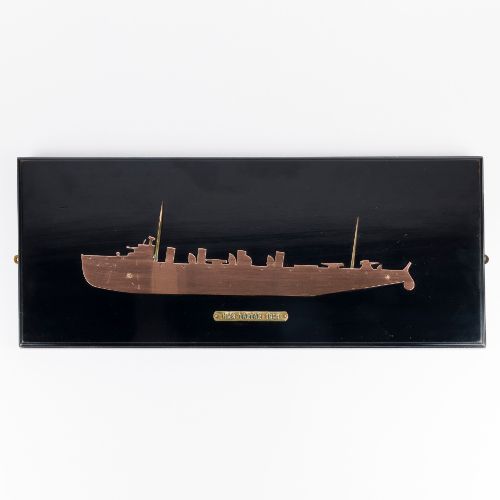
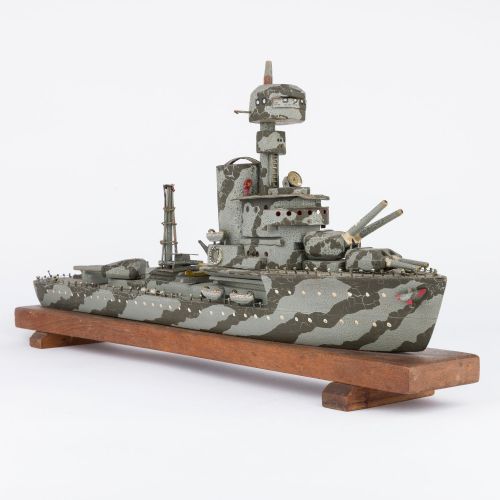
Scale models and wall plaques employ shaped and painted wood to replicate the hull and superstructure of battleships and destroyers. Embroidered textile pieces, known as woolies, use coloured yarns to build up detailed depictions of rigging and flags against a canvas ground.
Distinguishing quality
Quality rests upon the accuracy of naval architecture and the skill of the execution, whether in paint handling or textile work. Works by identified artists or contemporary recorders typically exhibit superior proportion and rigging detail compared to naive pieces.
The condition of the original frame and the preservation of the surface contribute significantly to the standing of a piece. Fading in watercolours or damage to delicate wooden model rigging alters the integrity of the object.
The selection includes both named vessels like HMS Victory and depictions of historical fleet reviews.
Nicholas Condy·Eric Tufnell·Vincenzo D Esposito·Samuel Owen·Charles Dixon·WF Mitchell
The Royal Navy Ship Art Glossary
- Woolie
- A sailor-made embroidered picture utilising wool yarn on a canvas backing to depict a ship at sea. These traditional pieces often incorporate silk threads for flags and detailed rigging.
- Gouache
- An opaque water-based paint that allows for rich colour application and fine detail in maritime scenes. Artists frequently utilised this medium for precise renderings of naval vessels.
- Man-of-war
- A powerful armed sailing warship of the Royal Navy from the days of the age of sail. The term appears in titles describing historical fleet subjects.
- Scale model
- A physical three-dimensional representation of a ship built in reduced proportions. These objects document the exact configuration of historic vessels.
- Giltwood
- Wood carved and coated with gold leaf or a gold-coloured finish to form a decorative frame. Such surrounds often accompany period oil paintings and watercolours.
Royal Navy Ship Art: Frequently Asked Questions
What is a sailor woolie?
A sailor woolie is a form of folk art created by nineteenth-century seamen using leftover coloured wool yarns to stitch portraits of their ships.
These tactile works often combine various embroidery stitches to render the sea, hull, and intricate rigging in relief.
Where should I hang these artworks?
These framed paintings and works on paper suit studies, hallways, or living spaces with stable humidity and indirect light.
Keeping them away from direct sunlight protects watercolours and gouaches from fading over time.
How do models differ from paintings?
Models offer a three-dimensional physical reconstruction of a vessel's structure, whereas paintings provide a two-dimensional atmospheric view.
Both forms document naval history but require different approaches to display and environmental care.