



British Naval Oil Painting
A british naval oil painting captures maritime might and the likenesses of commanding officers across centuries of canvas and oil paint.
British Naval Oil Painting
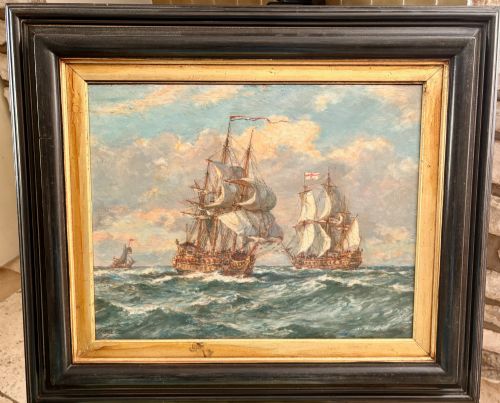
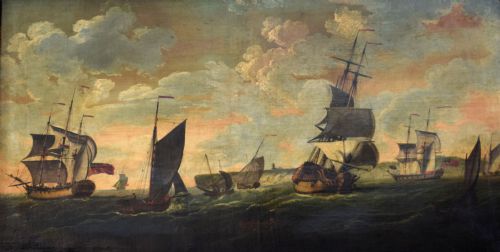
A british naval oil painting encompasses both vast seascapes of warships in battle and formal portraits of admirals and royalty in naval uniform. You will frequently encounter nineteenth-century canvases alongside earlier eighteenth-century depictions of frigates and galleons off the coast.
The subjects range from historical engagements like Trafalgar to detailed studies of named vessels such as HMS Swift and HMS Queen Charlotte. Mid-century works extend into the twentieth century, recording figures such as King George VI and Prince Philip in service dress.
Materials and Techniques
Artists relied primarily on oil paint applied to stretched canvas, often housed within wooden frames embellished with gilding or gold leaf. The medium allowed for subtle gradations in sky and water, as well as the crisp detailing of rigging, cannon ports and gold-braided uniforms.
Preparation involved priming the canvas before building up layers of pigment to render the tumultuous motion of the sea or the dignified stillness of a portrait subject.
Several admirals stand ready on canvas holding swords and torches, apparently prepared to illuminate the enemy at a moment's notice.
Evaluating Quality
Quality rests upon the artist's command of maritime anatomy, from the correct rigging of a frigate to the convincing swell of the ocean. Portraiture quality is judged by the psychological depth in the sitter's expression and the precise rendering of medals, lace and uniform detail.
Works attributed to known painters or executed during the lifetime of the depicted subject command greater attention than later studio copies or anonymous school pieces.
Bernard Gribble·Sir Thomas Lawrence·George Frederick Clarke·Henry L Gates·Samuel Lane·John Laviers Wheatley·Maurice Codner·Francis Holman·Robert Ker Porter·Ambrosini Jerome·Richard Hall
The British Naval Oil Painting Glossary
- Frigate
- A fast, medium-sized sailing warship with three masts, frequently depicted in coastal and battle scenes. They formed the eyes of the fleet.
- Galleon
- A large, multi-decked sailing ship used primarily by European nations from the 16th to 18th centuries, often seen in early sea battles.
- Gilding
- The application of gold leaf or powder to wood frames, providing a decorative border that complements the dark tones of an oil painting.
- Seascape
- A work of art depicting the sea, ships and coastal views, distinct from pure land-based portraiture.
- Provenance
- The documented history of ownership of a painting, helping to establish its authenticity and attribution to a specific artist.
British Naval Oil Painting: Frequently Asked Questions
How do I date a naval portrait?
Dating relies primarily on the style of the uniform, the rank insignia worn by the officer, and the hairstyle or clothing of the sitter. Comparing these elements with established service records often narrows down the decade.
Signatures, framing materials and canvas stamps further support the timeline, though many historic works remain attributed to broader periods rather than exact years.
What is the difference between a seascape and a portrait?
A seascape focuses on ships, weather and naval engagements upon the water, placing the vessel or battle as the primary subject. Figures in these works are usually incidental to the movement of the fleet.
In contrast, a naval portrait places an individual officer or monarch in the foreground, often using a ship or coastal view merely as a backdrop to denote their profession.
Where should I hang an oil painting?
These works require stable environmental conditions away from direct sunlight, excessive heat sources and damp walls. Natural, indirect light helps reveal the fine brushwork and layered tones of the oil paint.
Ensure the wall can support the weight of the wooden frame, and use appropriate fixings designed for heavier art pieces.