

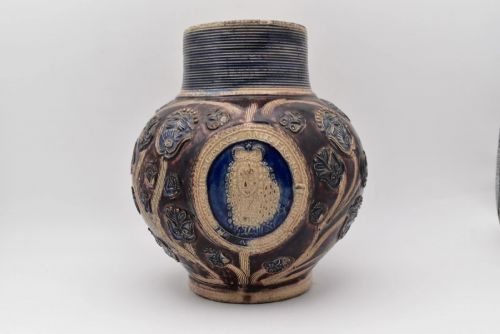


Royal Commemorative Ceramic
These royal commemorative ceramic pieces mark coronations, jubilees and royal marriages across centuries of British history.
Royal Commemorative Ceramic
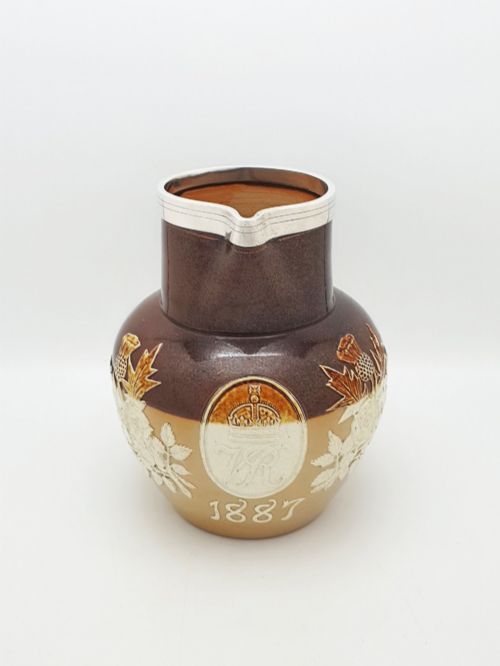
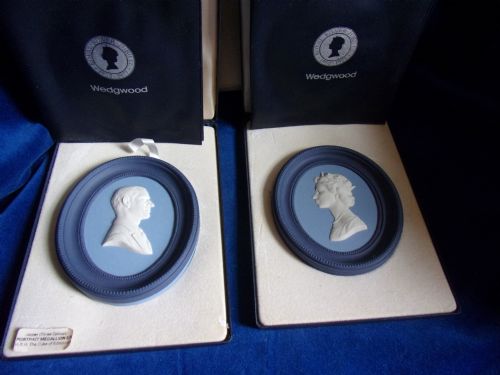
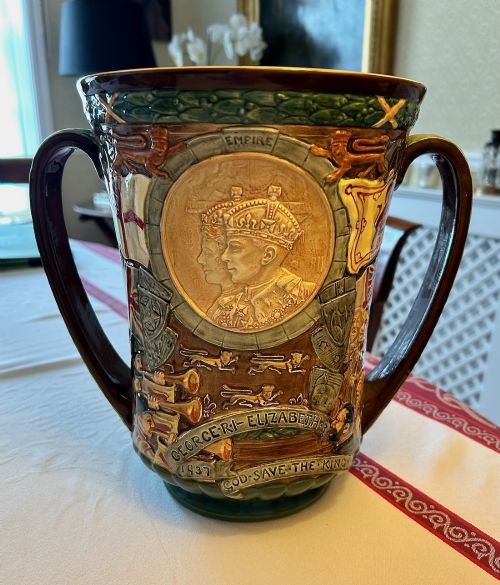
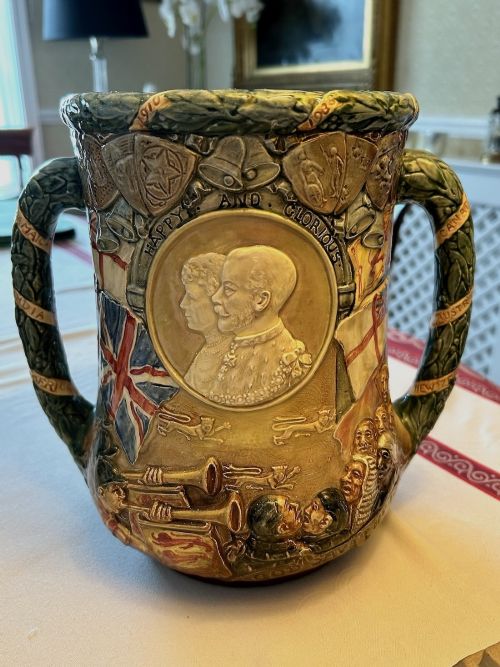
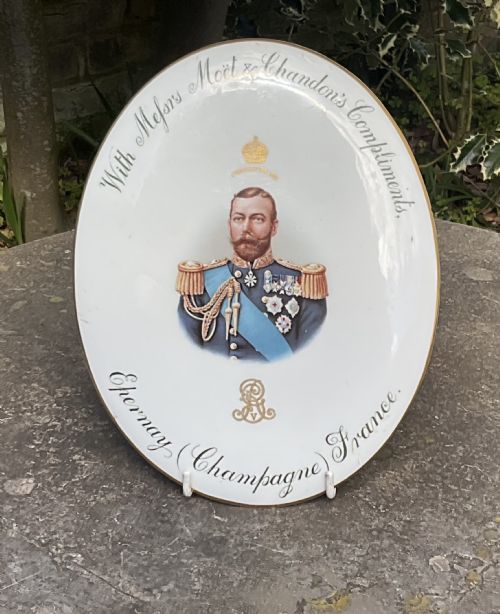
Royal commemorative ceramic objects capture moments of dynastic celebration, recording monarchs from William III and the Georgian era through to the Victorian period and twentieth-century jubilees. The pieces on this page span decorative figures, plates, jugs and plaques that served to honour royalty in homes across Britain.
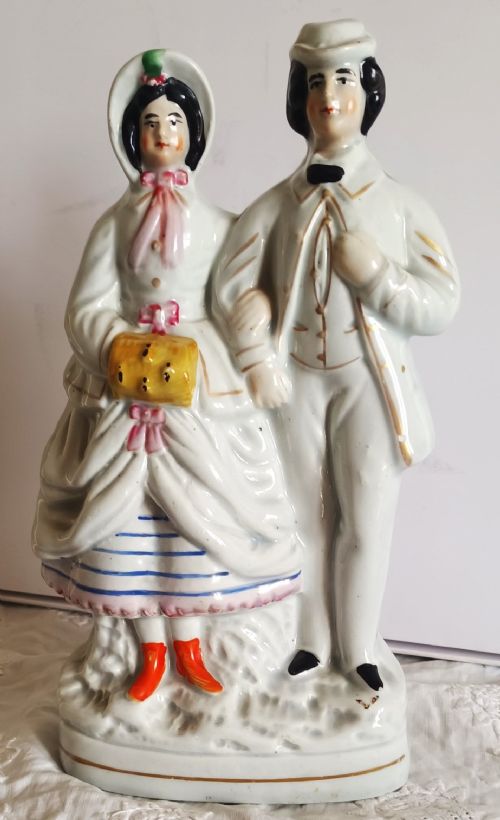
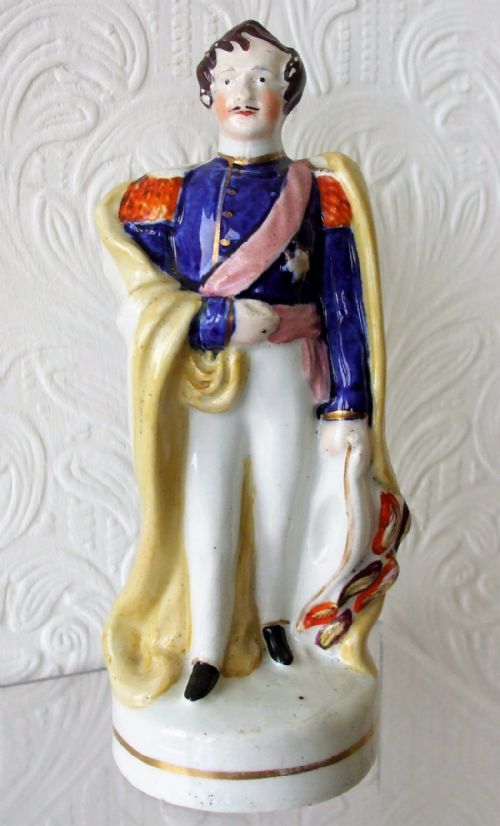
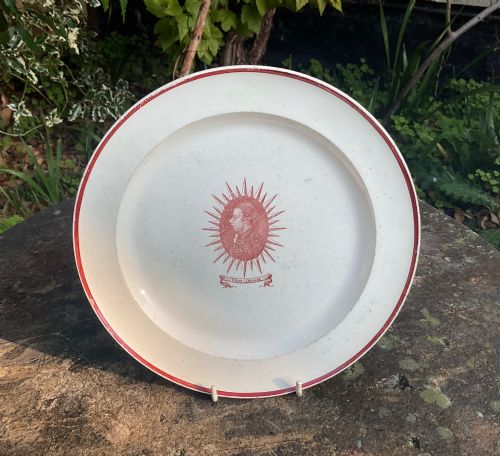
Staffordshire pottery figures of Queen Victoria, Prince Albert and various princes form a significant part of the selection alongside creamware plates and salt-glazed stoneware. Makers such as Royal Doulton and Wedgwood produced later commemorative editions, whilst eighteenth-century creamware and Westerwald stoneware represent the earlier end of the form.
How they were made
Potters shaped these wares from earthenware, creamware, stoneware and Parian body, applying cobalt glaze, enamel colours and occasionally gold leaf for decoration. Moulds captured the likenesses of monarchs and family members for Staffordshire figures and commemorative busts.
Specialised techniques included salt glazing on Westerwald stoneware jugs and transfer printing in flow blue on Prattware sets. Firing methods determined the durability and finish of plates, loving cups and wall plaques produced for coronations and jubilees.
Royal Commemorative Ceramic Retail Price Guide 2026
Typical asking prices for royal commemorative ceramic among the pieces listed under this phrase on Sellingantiques today, from the lower quarter to the upper quarter. They describe what is for sale here now, not the wider market.
Listings feature works spanning the 17th century through to the 1970s, utilising earthenware, stoneware, creamware and Parian body.
What varies in quality
Quality in these commemorative pieces rests on the crispness of modelling in figures and the clarity of transfer printing or hand-painted enamel decoration. Early stoneware jugs and pearlware or creamware plates show differing degrees of finesse in their potting and glaze application.
Royal Doulton·Coalport·Doulton Lambeth·Wemyss
The Royal Commemorative Ceramic Glossary
- Creamware
- A fine-grained earthenware with a pale yellowish-cream glaze developed in Yorkshire during the eighteenth century. It was widely used for plates and jugs bearing royal transfer prints.
- Parian
- A fine white biscuit porcelain resembling marble, introduced in the nineteenth century and utilised for portrait busts such as those of Princess Alexandra.
- Stoneware
- A hard, dense pottery fired at high temperatures until vitrified, making it impervious to liquid without a glaze. Early examples include Westerwald jugs from the seventeenth century.
- Prattware
- Earthenware decorated with typical low-fired metallic oxide colours under a clear glaze. These wares often include children's sets and commemorative pieces from the nineteenth century.
- Loving cup
- A large drinking vessel with two or more handles, frequently issued by potteries like Royal Doulton to mark royal jubilees and coronations.
Royal Commemorative Ceramic: Frequently Asked Questions
What events do these pieces commemorate?
These ceramics mark significant royal occasions including coronations, jubilees, royal marriages and portraits of reigning monarchs.
The listings show pieces for events ranging from William III and George III to Queen Victoria, Edward VII, and George V and VI.
How do I identify a Staffordshire figure?
Staffordshire figures typically depict royal personages, statesmen or literary figures modelled in earthenware and finished with hand-painted enamels.
They range from flat-backed portrait figures meant for mantelpieces to large standing representations of nineteenth-century royals.
What is the difference between earthenware and stoneware?
Earthenware is a porous pottery fired at lower temperatures, requiring a glaze to hold liquids, whereas stoneware is fired until vitrified and non-porous.
Stoneware pieces like the Westerwald jugs offer greater durability and distinct salt-glazed surfaces.
How should I display commemorative plates and plaques?
Plates and wall plaques can be mounted using secure wall hangers designed specifically for antique ceramics or displayed upright in plate stands.
Keep them away from direct sunlight and areas of high humidity to protect enamel colours and glazes.