





Ceramic Couple Statuette
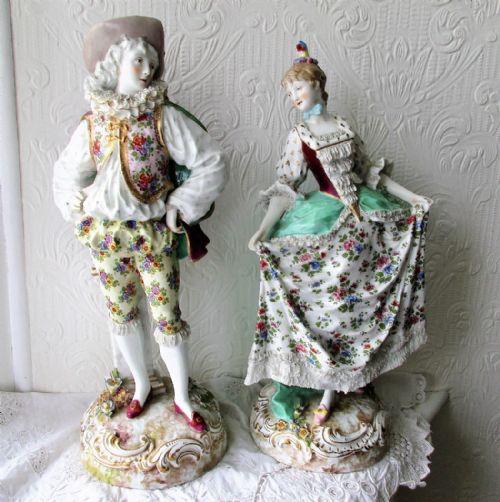
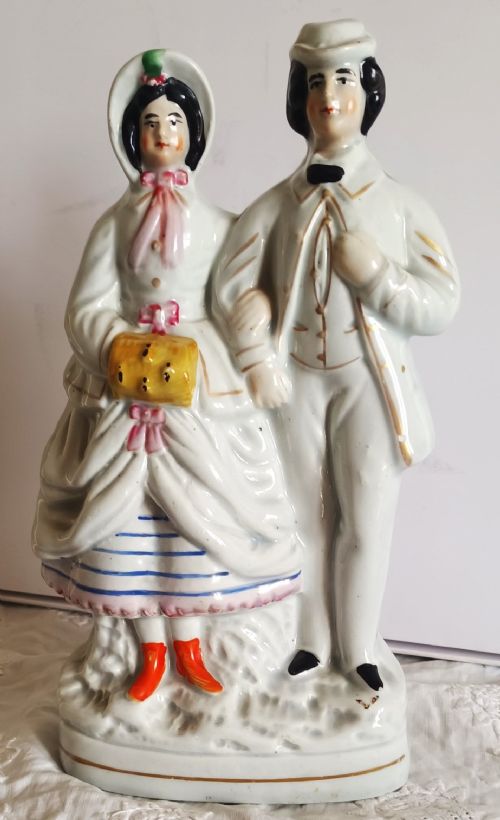
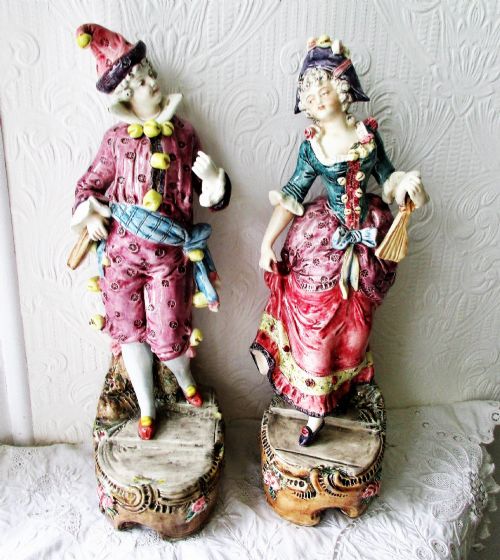
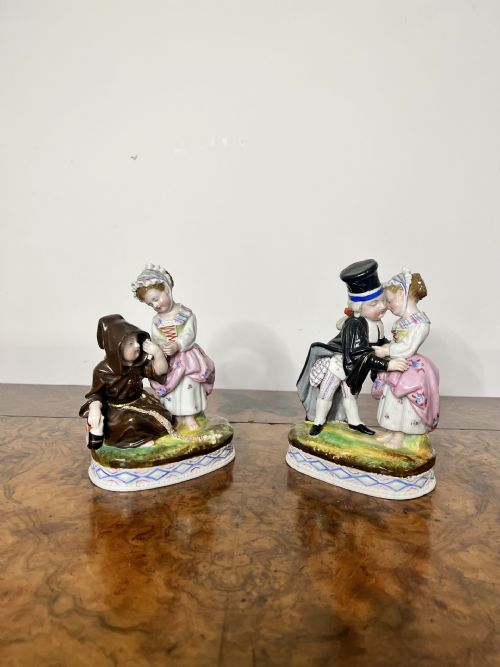
These ceramic couple statuette pieces capture paired figures in porcelain, earthenware, and bisque, offering collectors charming representations of historical, musical, and pastoral subjects.
Ceramic Couple Statuette
A ceramic couple statuette typically depicts two paired figures, ranging from Victorian Staffordshire royalty and Dutch fishermen to French carnival characters and classical shepherds. These figures appear predominantly in nineteenth century and early twentieth century creations, often styled after earlier Derby or continental models.
Buyers will encounter pairs of figures manufactured across Europe, including English potteries, German porcelain works such as Sitzendorf, Volkstedt, and Dresden, alongside French and Dutch factories. The forms include musical figures, gardeners, and children with animals, reflecting both romantic and everyday pastoral themes.
Materials and production methods
Manufacturers utilised specialised moulding techniques to shape complex multi-figure pairs, followed by kiln firing and hand-painting. Factories like Chantilly, Minton, and Samson employed skilled artisans to execute intricate details on both glazed and biscuit porcelain surfaces.
Ceramic Couple Statuette Retail Price Guide 2026
Typical asking prices for ceramic couple statuette among the pieces listed under this phrase on Sellingantiques today, from the lower quarter to the upper quarter. They describe what is for sale here now, not the wider market.
Pastoral figures often bring unexpected company to the shelf, pairing shepherds and musicians with surprisingly cooperative lambs.
Factors that distinguish quality
Quality in these figures rests upon the crispness of the moulding and the delicacy of the hand-painted enamels, where finer examples preserve sharp facial expressions and intricate costume details. Finer pieces maintain clean lines in the porcelain or earthenware bodies without firing flaws or muddy glaze pooling.
The reputation of the producing factory or workshop heavily influences the standing of a piece, with established houses such as Volkstedt, Sitzendorf, or Minton achieving superior artistic execution. Completeness as an original pair and the clarity of factory marks further separate standard production items from more distinguished works.
Volkstedt Porcelain·Sitzendorf Porcelain·Samson Porcelain·Royal Capodimonte Factory·Minton·Carl Thieme·Triebner Ens And Co·Rozenburg
The Ceramic Couple Statuette Glossary
- Bisque Porcelain
- Unglazed ceramic material with a matte, smooth texture resembling marble. It is fired once before decoration, giving figures a soft, porous finish.
- Earthenware
- Porous pottery fired at lower temperatures than porcelain. It requires an opaque or transparent glaze to become completely watertight.
- Glaze
- A glassy coating fused to ceramic surfaces during firing. It provides colour, shine, and impermeability to the underlying clay body.
- Gold Leaf
- Extremely thin gold beaten into sheets and applied to ceramic surfaces for decoration. It adds metallic highlights to clothing and bases.
- Rococo Revival
- A nineteenth-century design style reviving the asymmetrical scrolls, C-curves, and naturalistic motifs of the eighteenth century. It appears frequently on the ornate bases of continental figures.
Ceramic Couple Statuette: Frequently Asked Questions
What are ceramic couple statuettes?
These decorative objects consist of paired figures modelled in clay or porcelain, often depicting historical personages, musicians, or pastoral characters.
Originating largely from nineteenth-century European factories, they serve as ornamental mantelpiece ornaments and cabinet displays.
How were these figures used historically?
Victorian and continental households displayed these figures prominently in parlours and drawing rooms as signs of refinement and culture.
They functioned purely as decorative art, celebrating themes of romance, music, and rural life.
How do I care for antique porcelain figures?
Keep porcelain and earthenware away from direct sunlight and areas of high humidity to protect delicate enamel paints and gold leaf.
Dust them gently with a soft, dry brush, avoiding liquid cleaners that might penetrate unglazed bisque surfaces.
How do I identify the maker?
Look closely at the underside of the base for painted or impressed factory marks, ciphers, or numbers.
Comparing modelling styles and glaze characteristics with documented factory archives helps confirm the origin.