




Rounded Pine Table
These rounded pine table examples span the nineteenth century and bring practical country utility into any interior space.
Rounded Pine Table
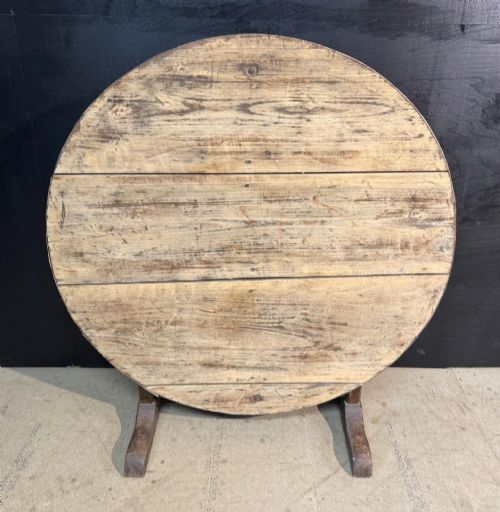
A rounded pine table serves domestic needs across kitchen, tavern, and occasional settings with characteristic simplicity. Most examples date from the nineteenth century, encompassing Victorian, Welsh vernacular, and Scandinavian country traditions.
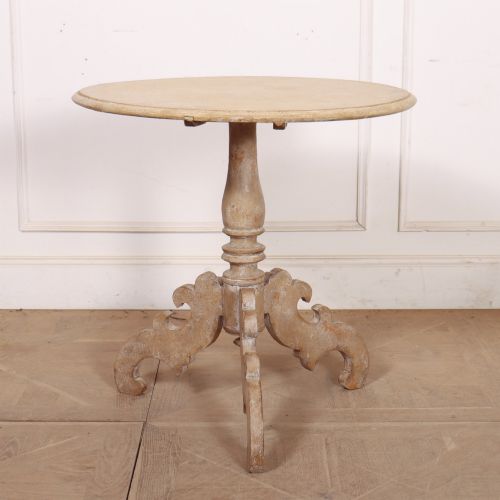
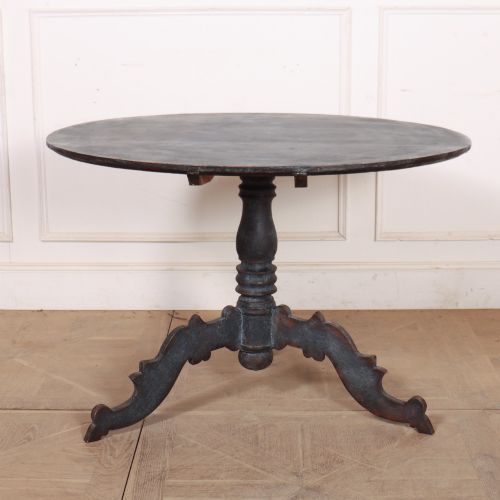
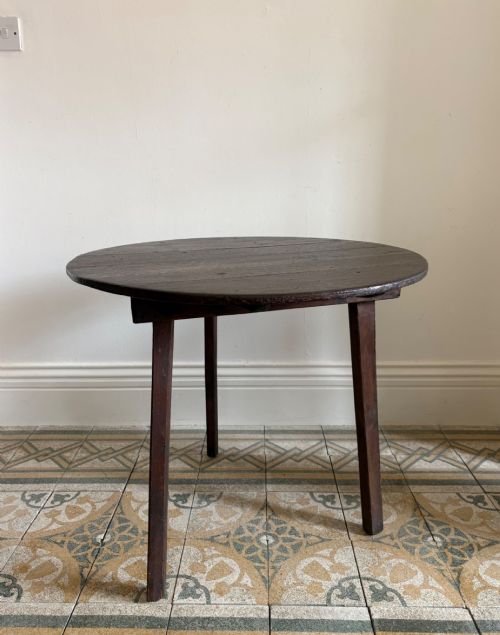
The inventory on this page centres heavily on cricket tables featuring three legs, alongside painted lamp tables, supper tables, and tilt-top breakfast formats. Circular kitchen tables and demi-lune occasional pieces also appear regularly.
Origins span British, English, Welsh, and Swedish workshops, demonstrating how regional cabinet makers adapted basic softwood timbers into sturdy household furniture. These formats range from small side tables up to larger dining surfaces.
How they were made
Makers utilised solid pine timber for tops and structural bases, occasionally pairing plank tops with oak or incorporating cast iron and brass elements for enhanced stability. Painted wood surfaces, sometimes in Swedish painted finishes or bleached tones, protect the softwood underneath.
Construction methods rely on turned legs, bobbin turning, and tilt-top mechanisms suited to everyday nineteenth century use. Carpenters fashioned these tables using traditional joinery appropriate for rustic farmhouse and tavern environments.
Listings feature nineteenth century periods including specific dates such as eighteen seventy and eighteen eighty.
What varies in quality
The integrity of the timber base and the finish of the circular or plank top dictate the standard of each piece. Tables retaining original painted surfaces or distinct regional turning styles stand apart from plain utility items.
Proportions and leg placement affect visual balance, particularly on three-legged cricket tables where structural harmony is essential. The distinction lies in the crispness of the turning and the depth of the patination accumulated over time.
The Rounded Pine Table Glossary
- Cricket table
- A small three-legged table traditionally associated with English and Welsh country houses. The three-legged design ensured stability on uneven flagstone floors.
- Tilt top
- A table top attached to a central pillar or base with a hinge mechanism allowing it to fold vertically. This clever design saved valuable floor space when the table was not in use.
- Demi-lune
- A half-moon shaped table designed to sit flush against a wall. These pieces function well as occasional tables in narrow hallways or reception rooms.
- Bobbin turning
- A type of lathe-turned leg decoration resembling a string of wooden beads or bobbins. This decorative detail appears frequently on nineteenth century furniture.
- Plank top
- A table top constructed from several solid timber boards joined edge to edge. This method provided a wide, durable surface for kitchen and tavern work.
Rounded Pine Table: Frequently Asked Questions
How do I date a pine table?
Dating relies on examining construction techniques, joinery methods, and the type of timber preparation visible underneath. Nineteenth century examples often display hand-turned legs and patination consistent with age.
Comparing the style against regional vernacular traditions helps narrow down the period of manufacture.
Where were these tables used?
These tables served primarily in domestic kitchens, farmhouses, and rural taverns for dining and food preparation. Smaller occasional formats found places in bedrooms and sitting rooms.
Their compact circular footprints made them adaptable for everyday tasks across various rooms.
Are painted pine tables original?
Many Swedish and Welsh tables retain old painted finishes applied during the nineteenth century or earlier. Original paint adds character and protects the underlying softwood timber.
Evaluating the surface requires looking at how the paint has aged and worn in relation to the timber beneath.