
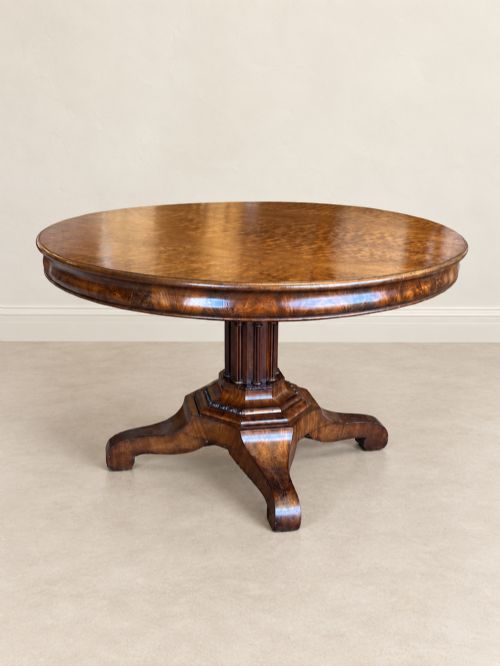
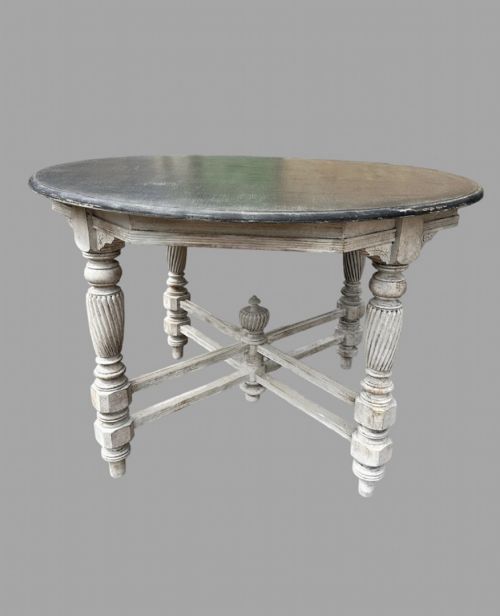
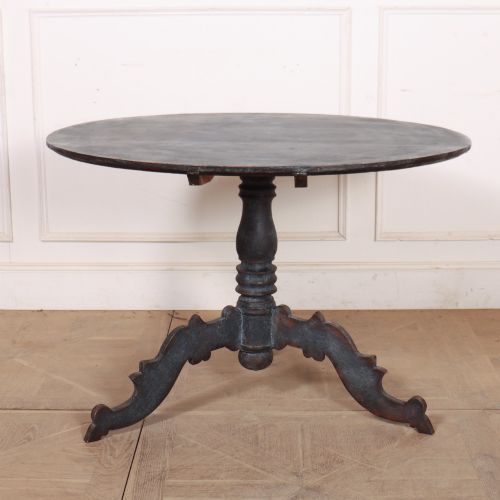
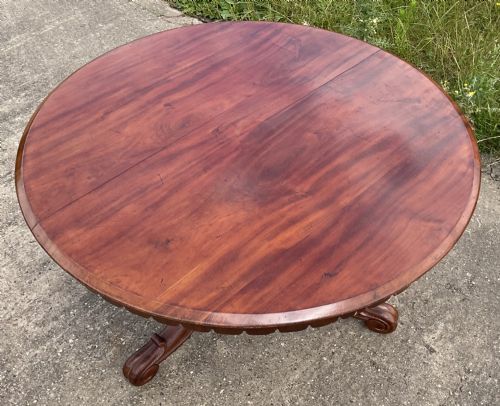




Round Wooden Centre Table
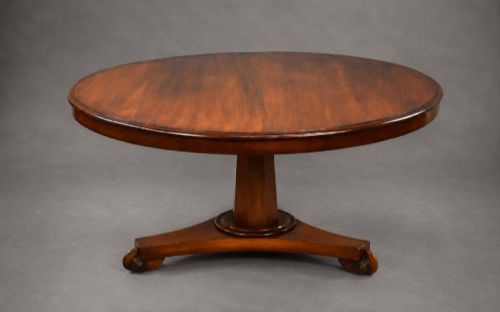
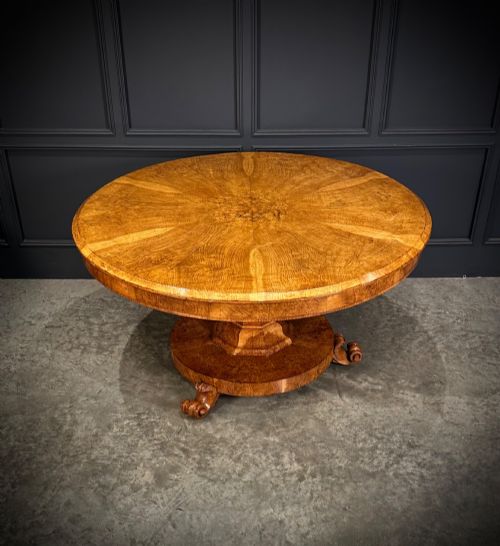
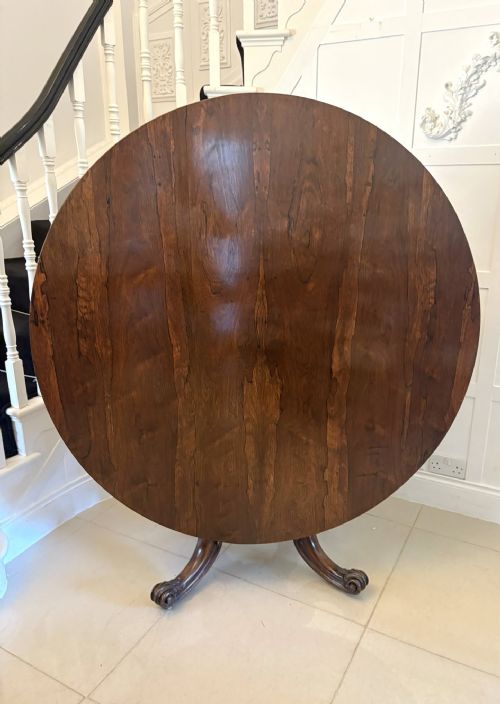
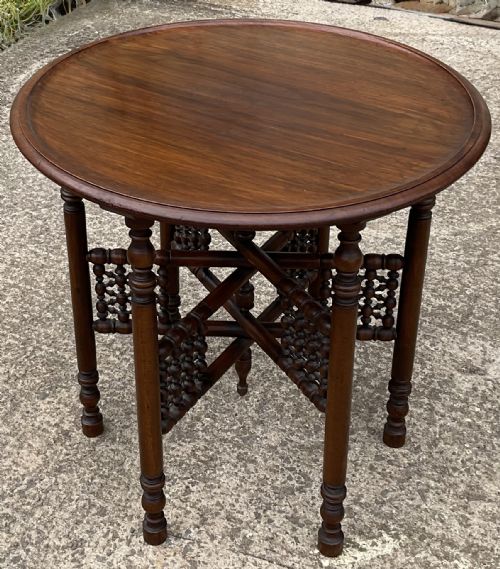
A round wooden centre table anchors a room with balance, offering a functional surface shaped from mahogany, walnut, oak, and rosewood across various periods.
Round Wooden Centre Table
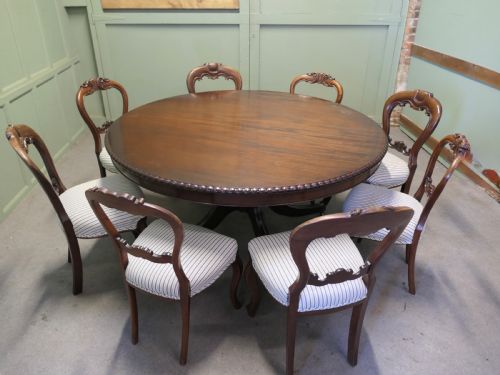
A round wooden centre table serves as a focal point in a room, designed to stand independently rather than against a wall. The selections span periods from the Regency and Victorian eras through the early 20th century, including the 1920s, 1930s, and 1940s.
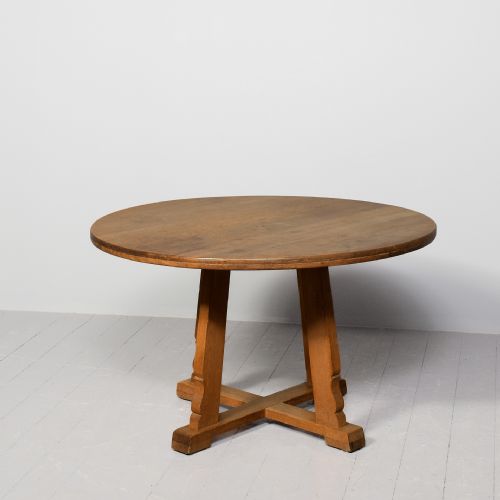
The forms vary widely in scale and function, encompassing dedicated centre tables, breakfast tables, coffee tables, and occasional tables. Buyers encounter circular tops supported by pedestals or legs, executed in styles ranging from Victorian and William IV to Art Deco, French Chateau, and Biedermeier Revival.
Woods feature prominently among the listings, with mahogany, walnut, burr walnut, oak, and rosewood appearing alongside painted surfaces, elm, sycamore, and exotic timbers like gonçalo alves. Pieces originate from diverse workshops, including English, Scottish, Swedish, German, and French makers.
How they were made
Cabinetmakers utilised solid timbers and figured veneers, applying techniques such as crossbanding, marquetry, and carving to shape circular table tops. Bases typically consist of central pedestals with branching feet or sturdy multi-legged frames constructed from oak, mahogany, or walnut.
Surfaces received specialised treatments, including French polishing to highlight the grain of burr walnut, mahogany, and rosewood, or painted finishes applied to pine, sycamore, and birch. Tilt-top and snap-top mechanisms relied on precision iron and brass catches to allow tops to pivot upright when not in use.
Some tilt-tops were built so well the only thing they dropped was your jaw when you remembered they fold flat.
What varies in quality
The selection of timber dictates much of the visual merit, distinguishing plain surfaces from highly figured burr walnut, pollard oak, or richly grained gonçalo alves. Cabinetmaking standards show in the crispness of hand-carved details, the precise alignment of crossbanded borders, and the intricacy of marquetry inlay.
Structural integrity governs daily utility, evident in the stability of pedestal mountings, the smooth operation of tilt-top mechanisms, and the enduring strength of glued and jointed frames. Original surface patination and finish preservation also separate standard examples from finer works.
The Round Wooden Centre Table Glossary
- Tilt-top table
- A table with a hinged top that rotates to a vertical position, allowing it to be stored compactly against a wall when not in use.
- Crossbanding
- A border technique where thin strips of veneer are laid around the perimeter of a table top so the grain runs perpendicular to the main centre panel.
- Marquetry
- The art of applying pieces of veneer to a structure to form decorative patterns and pictures, utilising various coloured woods.
- Gonçalo alves
- A dense exotic hardwood with striking contrasting grain patterns, frequently utilised in Regency furniture for its decorative appearance.
- Pie crust edge
- A raised, carved decorative moulding around the perimeter of a circular table top, resembling the fluted edge of a pastry crust.
Round Wooden Centre Table: Frequently Asked Questions
How were round centre tables used historically?
These pieces functioned as central gathering points in principal rooms, holding lamps, decorative ornaments, or serving as breakfast and supper tables. Their freestanding nature allowed them to occupy the middle of a space rather than sitting against a perimeter wall.
Larger scaled versions accommodated dining or tea service, while smaller occasional and coffee table formats supported daily domestic use in sitting rooms and parlours throughout the Victorian and 20th-century periods.
How do I identify a Regency period table?
Regency pieces often display classical architectural influences, utilising dense timbers like mahogany and gonçalo alves with restrained brass detailing or reeded pedestal supports. The proportions typically reflect early 19th-century design standards, c.1820.
Makers working in this idiom drew inspiration from ancient Greek and Roman forms, frequently incorporating circular tops balanced on heavy pillar-and-claw bases or tripartite platforms.
How do I care for a wooden surface?
Maintaining a historic wooden finish requires keeping the table away from direct heat sources and strong sunlight, which can dry out timber and fade polished surfaces. Regular dusting with a soft, dry cloth prevents particulate accumulation.
Application of appropriate wax polish maintains the moisture and sheen of walnut, mahogany, and rosewood without building up heavy chemical residues.