


Round Wood Centre Table
A round wood centre table anchors a room with its generous proportions and timber grain.
Round Wood Centre Table
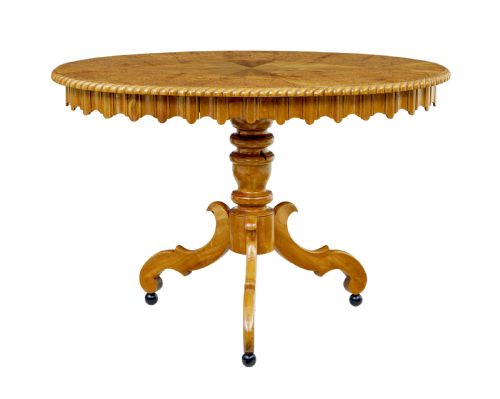
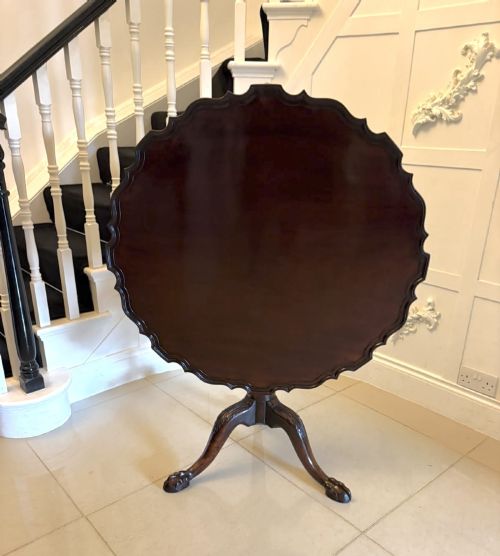
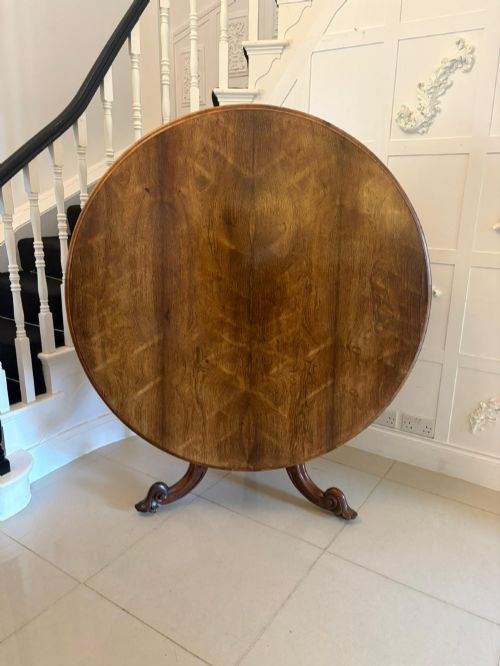
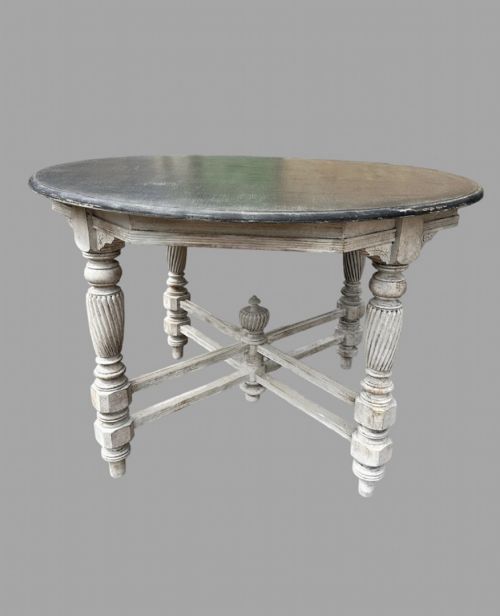
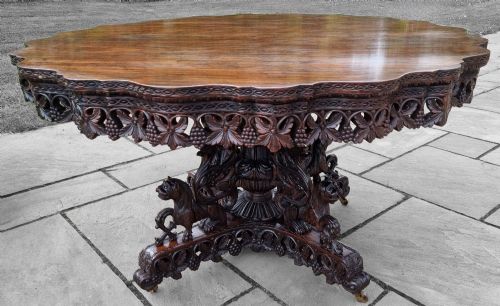
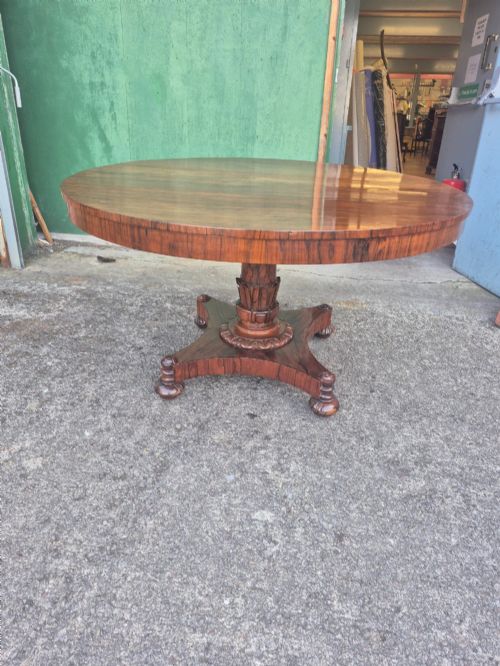
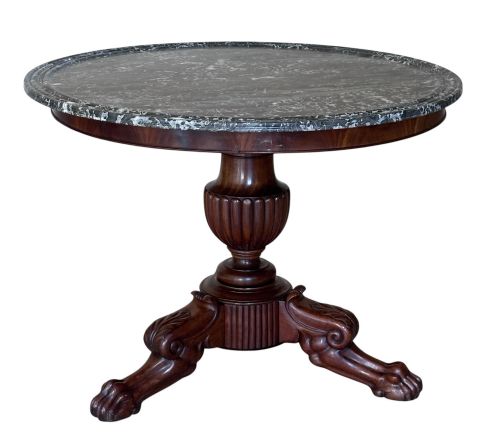
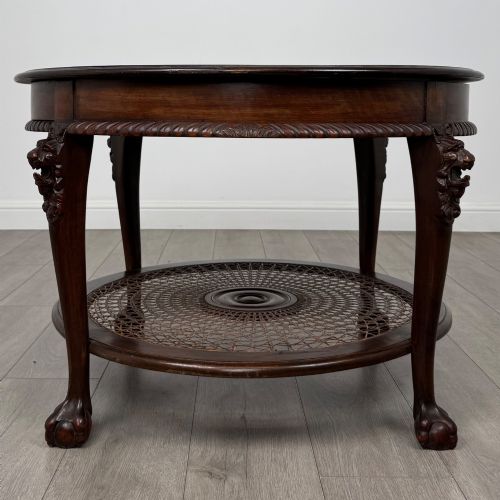
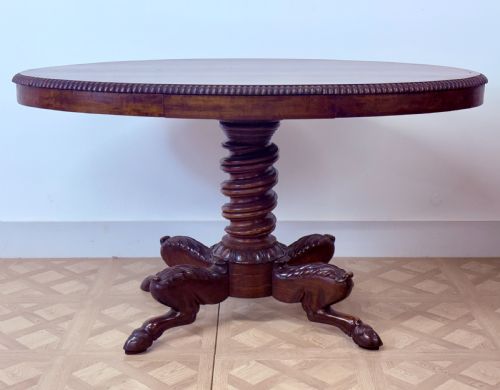
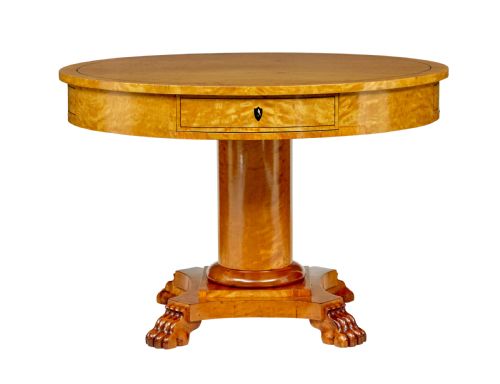
A round wood centre table stands independently in a room, designed to be viewed from all sides rather than pushed against a wall. The examples on this page span the eighteenth, nineteenth, and twentieth centuries, incorporating styles from Regency and William IV to French Restoration and Art Deco.
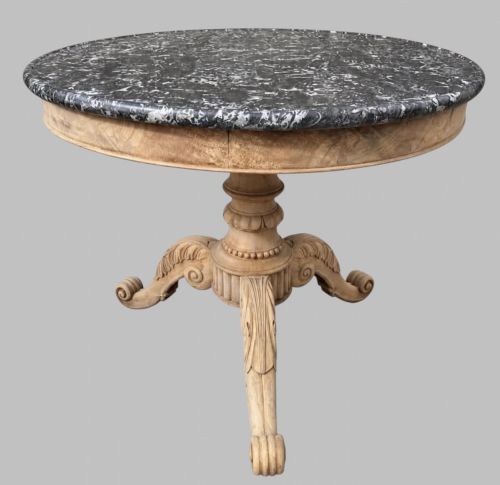
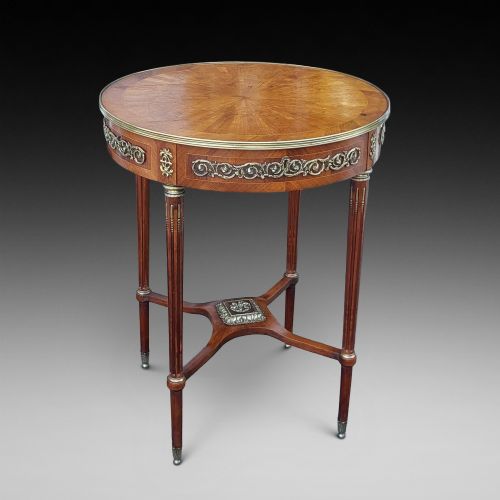
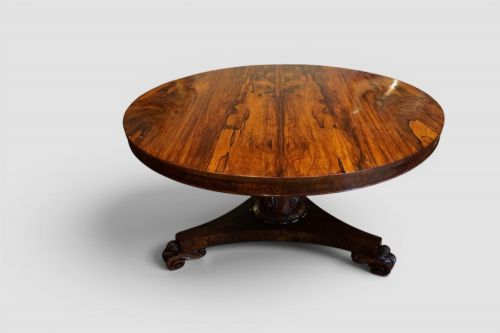
Rosewood and mahogany dominate the offerings, often shaped into circular breakfast tables, tilt-top dining tables, or smaller occasional and coffee tables. Many pieces rest on central pedestals with triform or tripod bases, while others take the form of French gueridons with marble tops.
Materials and construction
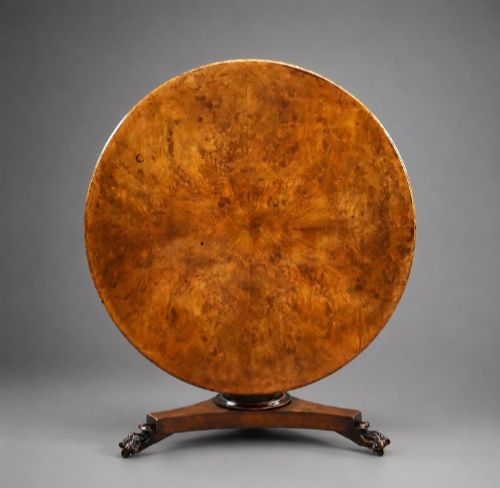
Cabinet makers utilised dense hardwoods such as mahogany, walnut, and rosewood, frequently applying burr veneers to tabletops to highlight swirling grain patterns. Marquetry inlay in contrasting timbers also appears across various nineteenth-century examples.
Pedestal tables often combine solid timber frames with stable core woods, supporting heavy marble slabs or tilting mechanisms designed for convenience when not in use.
Swedish and French regional variations appear frequently alongside English furniture styles from the Regency and Victorian eras.
Judging the work
Quality rests on the selection of timber veneers and the crispness of carved details on pedestals and aprons. Superior tables display seamless matching in burr walnut or rosewood surfaces and stable joinery that prevents movement in the circular top over time.
The sophistication of the base construction, whether a heavily carved triform support or finely cast brass mounts, separates standard production from exhibition pieces.
Anton Seuffert·Egan Workshop·François Linke
The Round Wood Centre Table Glossary
- Gueridon
- A small French round table, often supported by a single central column or tripod base. These frequently feature marble tops and decorative wood veneers.
- Tilt-top
- A tabletop hinged to the pedestal so it can pivot vertically to save space when not in use. This mechanism is common in nineteenth-century breakfast and dining tables.
- Triform base
- A three-sided pedestal foot configuration that provides stability for heavy circular tables. It often rests on scroll feet or castors.
- Marquetry
- Decorative woodwork where pieces of various coloured timbers are fitted into a veneer to form geometric or pictorial designs. Irish Killarney work is a notable example.
- Burr walnut
- Timber taken from a growth or knot on the walnut tree, prized for its swirling, mottled grain patterns. Cabinet makers select it for high-status tabletops.
Round Wood Centre Table: Frequently Asked Questions
Where should I place a centre table?
A round wood centre table works best in the middle of a large entrance hall, drawing room, or library where people can walk around it completely. Because these pieces have finished backs and sides from every angle, they act as visual focal points.
Ensure there is enough clearance around the perimeter for chairs or everyday movement. Many owners use them to display a large floral arrangement, bronze, or collection of books.
What is a tilt-top mechanism used for?
The tilt-top mechanism allowed large dining and breakfast tables to be folded flat and pushed against a wall when the room was needed for other activities. This space-saving design was popular throughout the Regency and Victorian periods.
Today, the catch is usually left locked in the flat position for daily use. When moving the table, tilting the top makes it easier to navigate doorways.
How do I identify a Victorian table?
Victorian tables frequently utilise heavy rosewood or mahogany, often featuring deep carved pedestals and circular tops supported by triform bases. The proportions tend to be substantial and sturdy.
Earlier Regency examples often display lighter, more restrained classical lines, while later Victorian pieces embrace bolder carving and occasional marquetry inlay.