
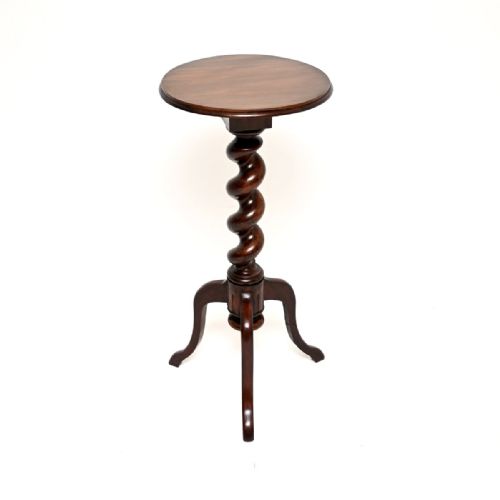
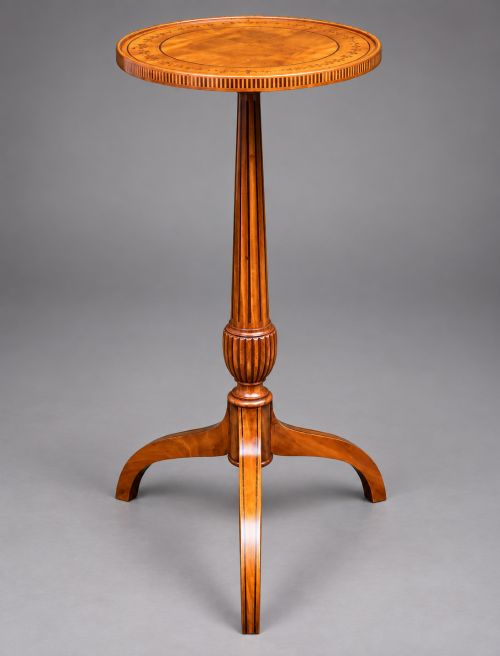
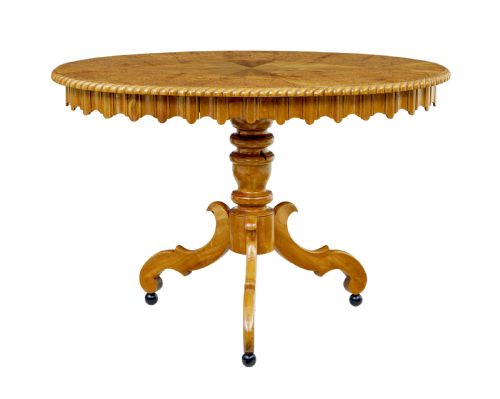
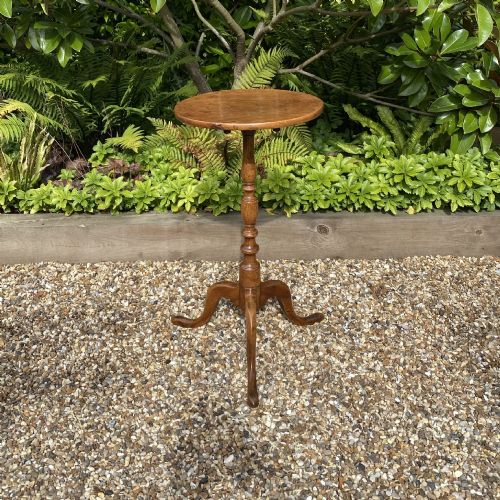

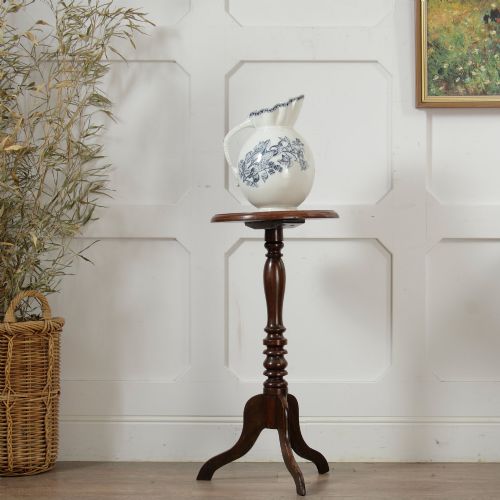
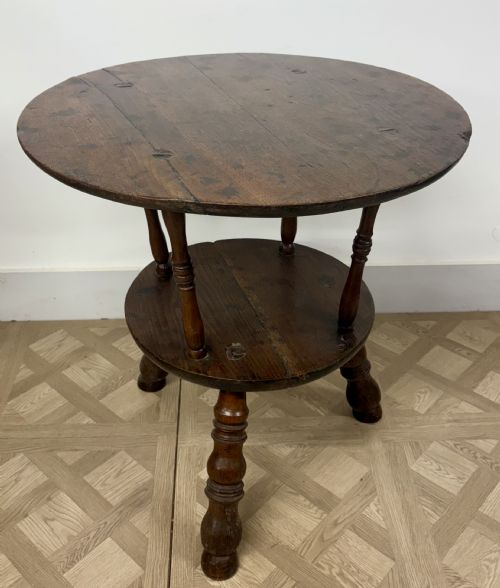
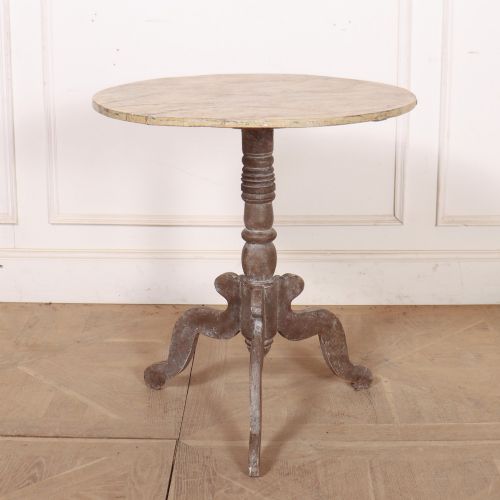
Round Wood Accent Table
A round wood accent table brings practical surface space to a corner, and these pieces span centuries of cabinet-making.
Round Wood Accent Table
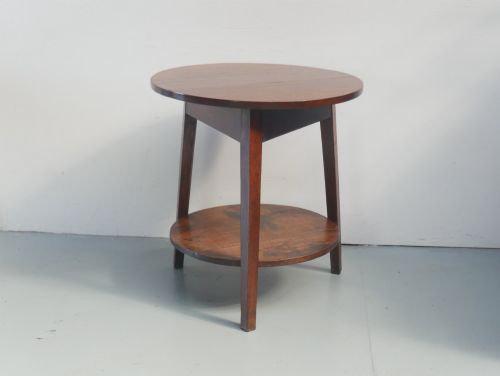
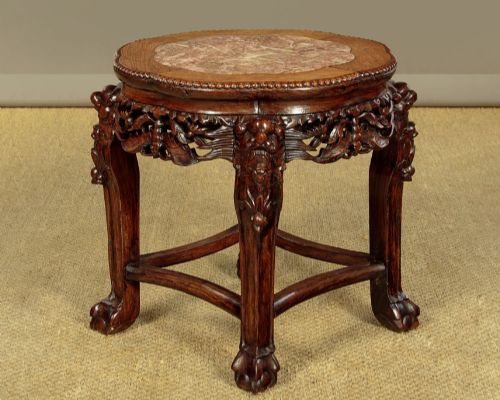
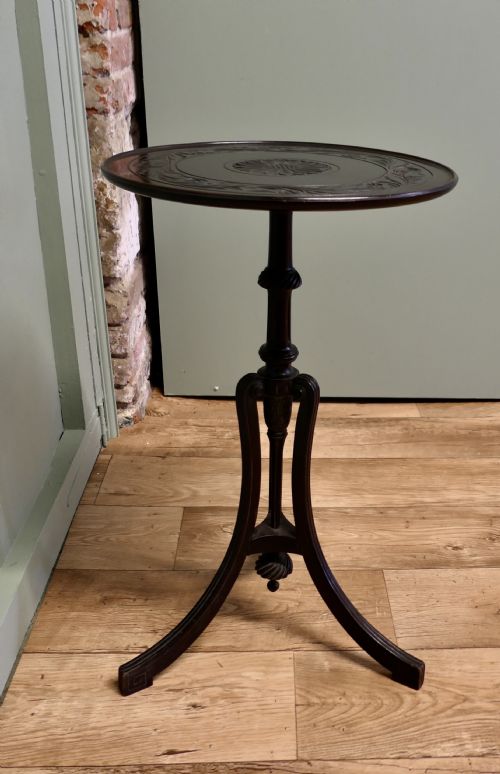
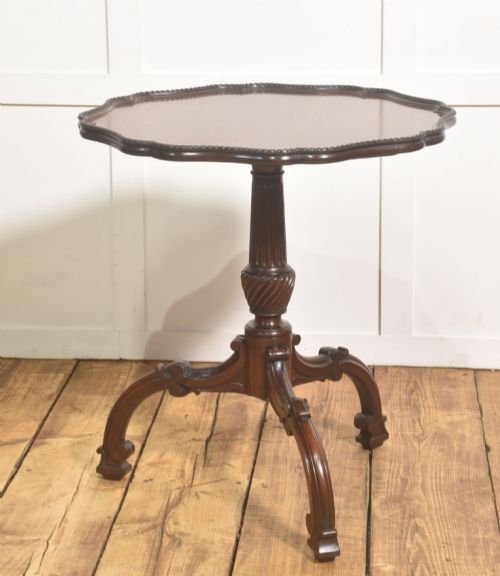
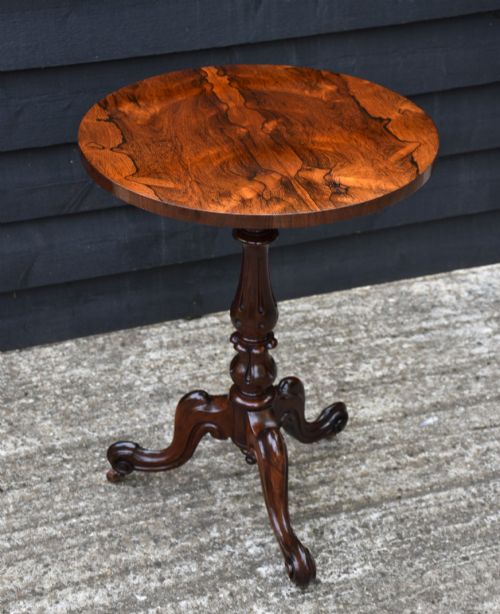
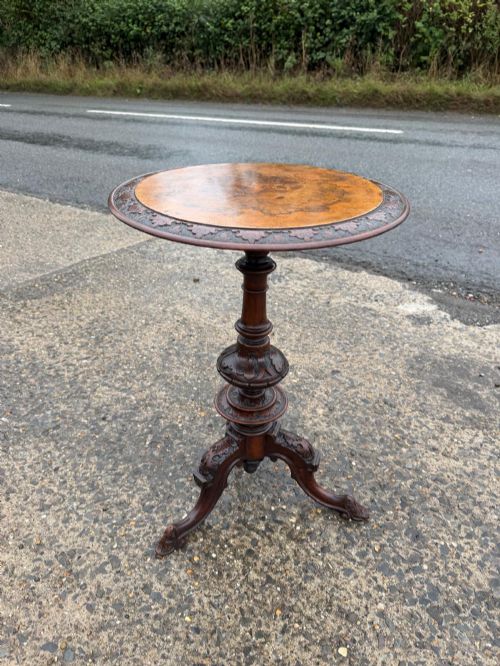
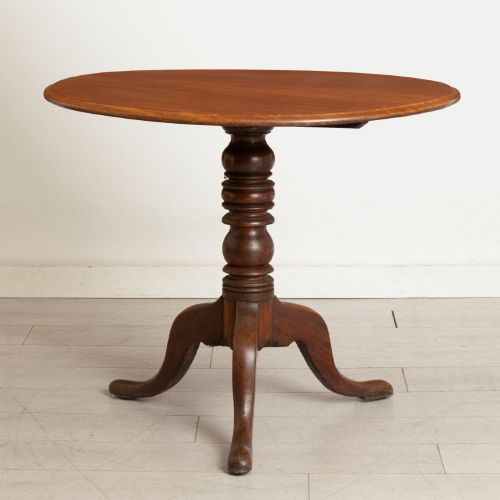
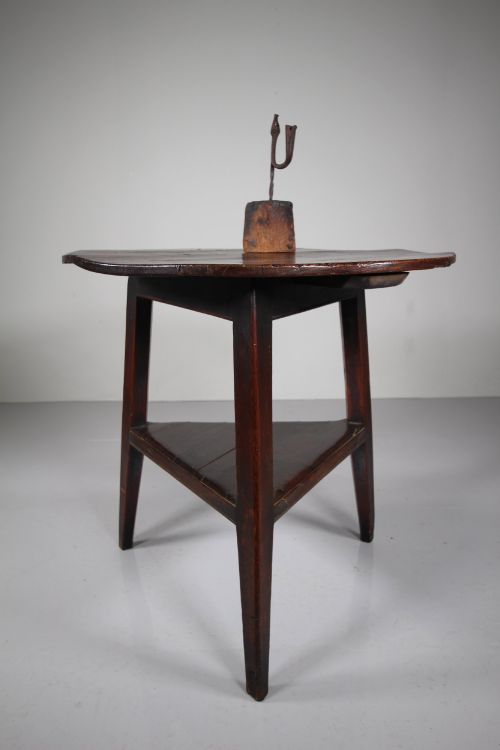
A round wood accent table serves as a small surface for lamps, drinks, or books within a room. These pieces range from simple three-legged cricket tables to tilt-top wine tables and pedestal designs.
The selection here includes examples from the eighteenth, nineteenth, and twentieth centuries, taking the form of side tables, occasional tables, and coffee tables. Mahogany and walnut appear frequently alongside oak, elm, and painted finishes.
Many of these tables originate from English and Swedish workshops, spanning periods from the Georgian era through to Art Deco. Buyers will find both tripod bases and pedestal supports amongst the items listed.
How they were made
Cabinet-makers constructed these tables using solid hardwoods such as mahogany, walnut, oak, and yew, often selecting timber with distinct grain patterns like burr wood or birdcage mounts. Turning lathes shaped upright pillars and legs, whilst joinery methods secured circular tops to central pedestals or tripod frames.
Surface decoration involved marquetry inlay, painted finishes, and hand-carving, sometimes incorporating brass fittings or bobbin turnings. Tilt-top mechanisms relied on wooden catches and pivots to allow the surface to fold vertically when not in use.
The listings include mahogany, walnut, oak, rosewood, and painted wood across eighteenth, nineteenth, and twentieth-century periods.
What varies in quality
The standard of a round wood accent table rests upon the choice of timber and the precision of its turning. Higher quality items display finely figured veneers, well-balanced tripod legs, and crisp hand-carving rather than plain, unvaried boards.
Construction details also separate finer examples from simpler utilitarian pieces, particularly in the stability of the central column and the tightness of the joinery. Tables featuring intact tilt mechanisms or delicate marquetry show greater skill in their original production.
François Linke·Liberty of London·Anton Seuffert
The Round Wood Accent Table Glossary
- Cricket table
- A small, three-legged circular wooden table originating from the eighteenth century, traditionally built with a triangular underframe for stability on uneven floors.
- Tilt-top table
- A table with a hinged top that rotates from horizontal to vertical, designed to save space when pushed against a wall.
- Tripod table
- A small occasional table supported by a single central pillar resting on three spreading feet.
- Wine table
- A compact occasional table designed to hold a glass and bottle, typically standing on a slender pedestal base.
- Marquetry
- Decorative veneer work forming pictures or geometric patterns using various coloured woods.
Round Wood Accent Table: Frequently Asked Questions
What is a tilt-top table used for?
A tilt-top table served as a versatile surface for tea or reading that could be folded flat against the wall when floor space was needed.
In period interiors, these tables spent much of their time upright to keep them out of the way in smaller rooms.
How do I identify a cricket table?
A cricket table has three legs and a circular wooden top, often supported by lower stretchers that brace the frame.
This sturdy three-legged construction prevented wobbling on flagstone or uneven floors in older houses.
Where should I place an accent table?
These tables fit easily beside armchairs or sofas to hold a reading lamp, a cup, or decorative objects.
Their compact round shape makes them useful for filling awkward corners without blocking pathways through a room.
How do I care for a wood table?
Wooden tables require protection from direct sunlight and excessive moisture to prevent the finish from drying out or warping.
Regular dusting with a dry cloth and occasional application of appropriate wax will maintain the lustre of the timber.