
Round Tripod Occasional Table
A round tripod occasional table offers nimble, versatile small-scale surface space born from Georgian and Victorian domestic life.
Round Tripod Occasional Table
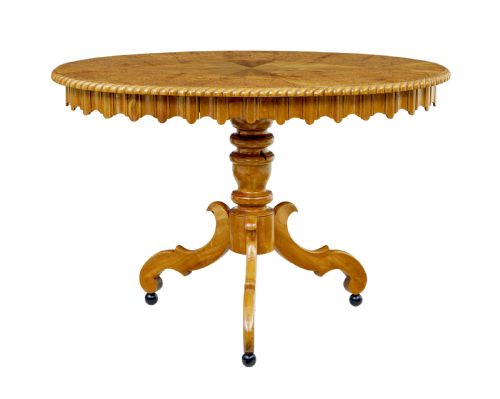
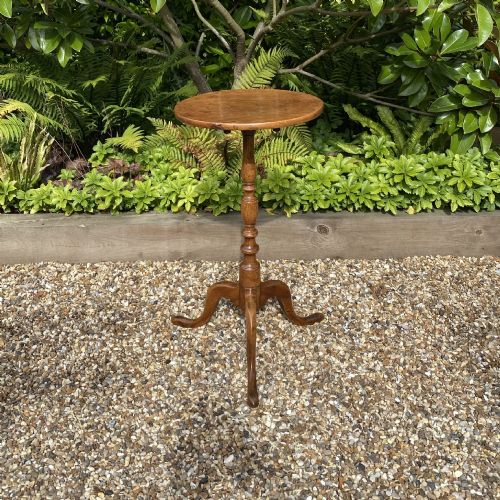
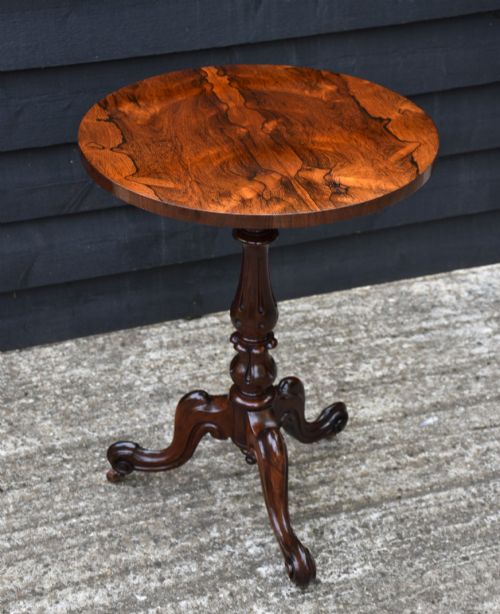
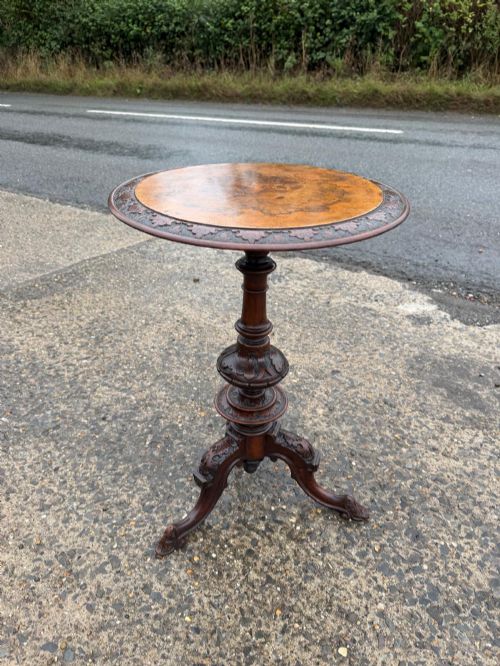
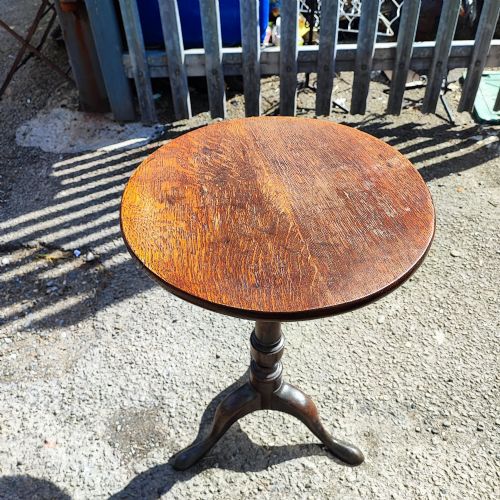
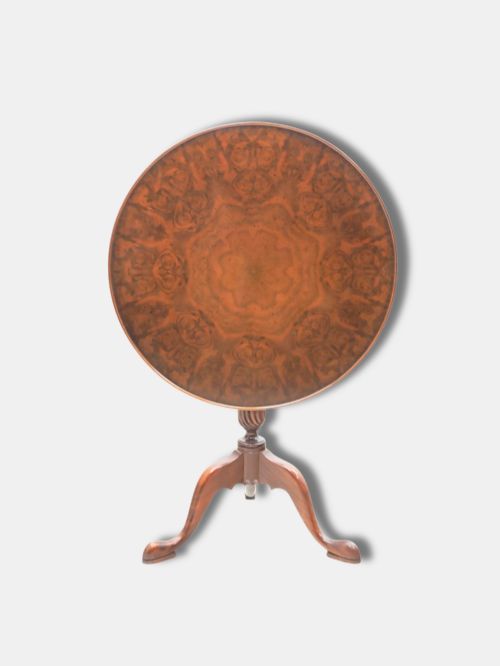
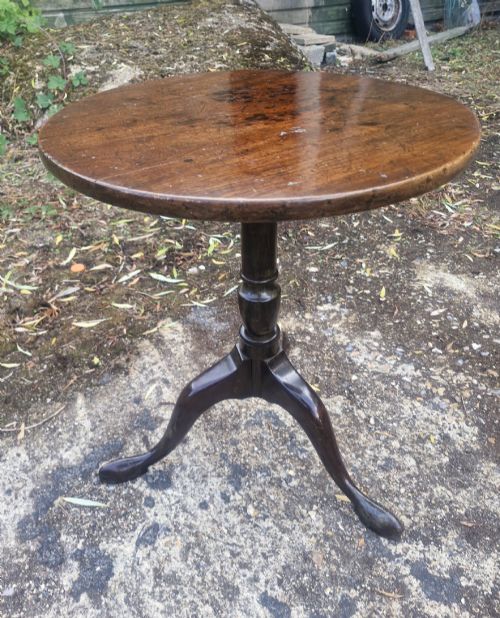
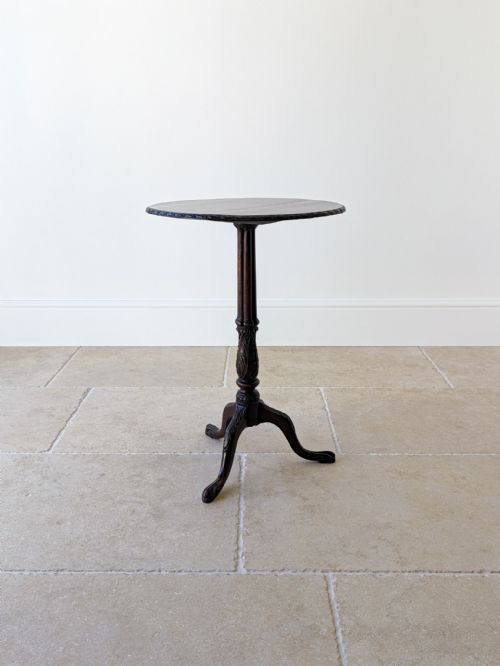
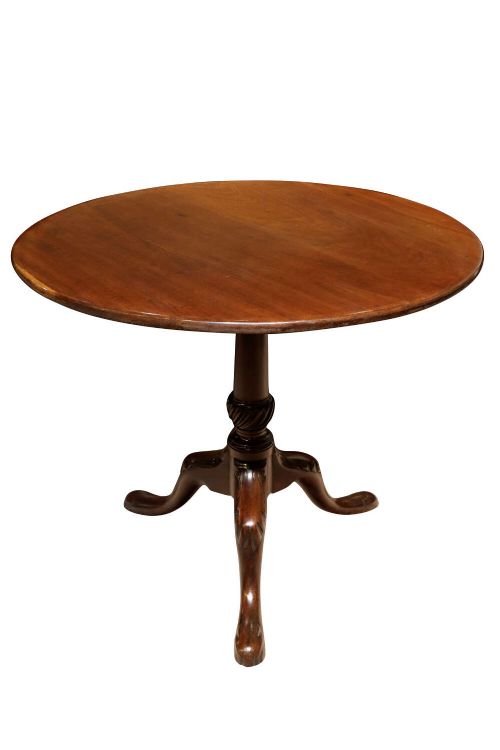
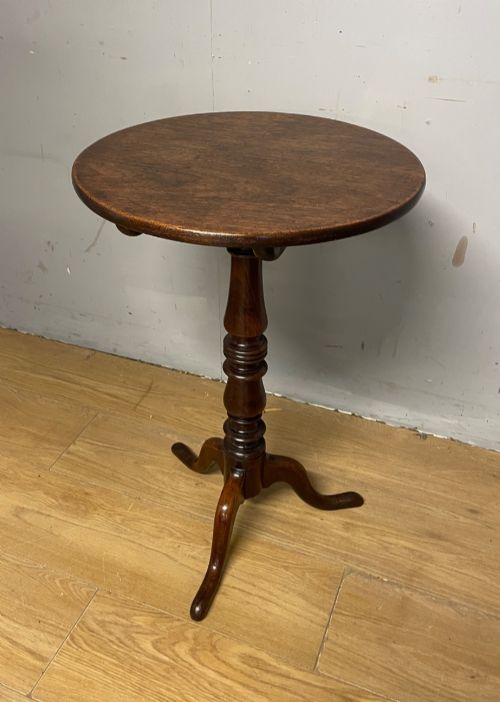
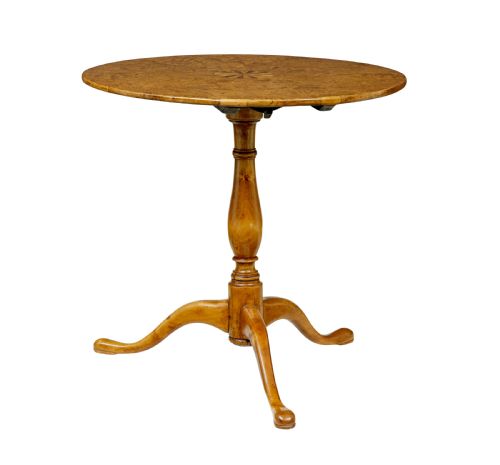
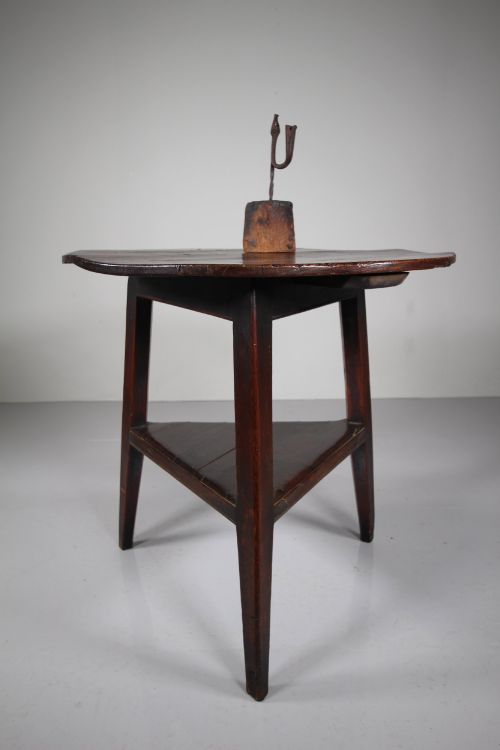
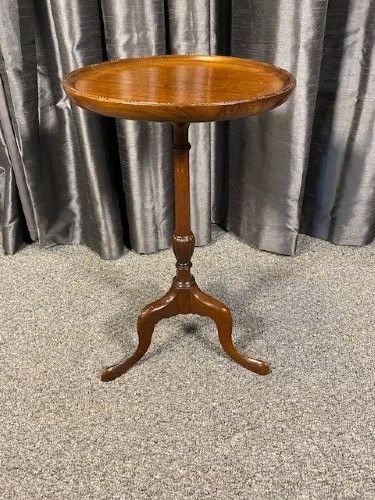
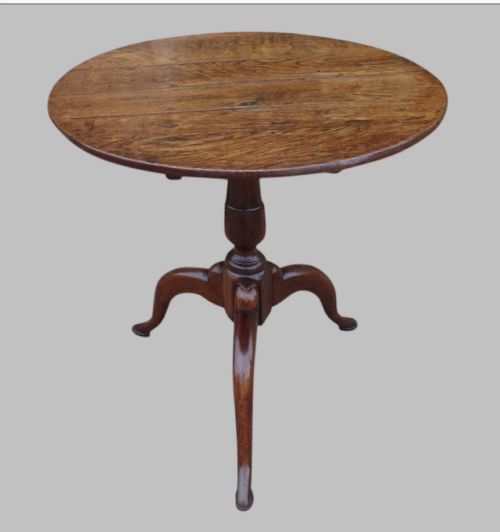
A round tripod occasional table is a compact domestic piece supported by a central pillar and three splayed legs, frequently encountered in mahogany, oak, and walnut. These nimble pieces encompass wine tables, lamp tables, and cricket tables originating across the eighteenth, nineteenth, and early twentieth centuries.
The version most likely to meet you on this page is the Georgian or Victorian tilt-top mahogany wine table, designed to be stood against a wall when not holding a glass or taper. Alongside these stand robust country oak cricket tables and inlaid walnut variants from the nineteenth century.
Originating to serve specific domestic needs beside a hearth or armchair, these tripod tables span formal English period rooms and painted Swedish country interiors alike. Their three-legged geometry provided stable footing on uneven rushes and carpets before modern flooring became standard.
Materials and Construction
Cabinet makers utilised dense timbers such as mahogany, rosewood, and walnut for finer urban examples, turning the central pedestals on lathes and cutting the tripod legs to shape. Oak and pine served for sturdier country cricket tables, joined with traditional pegged construction designed for heavy daily use.
Many sophisticated examples incorporate a birdcage mechanism beneath the top, allowing the circular surface to both rotate and tilt upright against the pedestal. Tops were frequently fashioned from solid timber boards or enhanced with burr wood veneers, marquetry, and painted finishes.
Some nineteenth-century examples were specifically adapted as tarot tables, bringing clandestine fortune-telling sessions to Victorian parlours.
Judging Quality
Quality rests upon the proportion between the top and the base, where a well-balanced tripod feels planted and secure rather than top-heavy. The crispness of the turned column and the clean integration of the legs reveal the maker's hand.
Finer pieces show careful selection of timber grain, such as flame mahogany or burr walnut, matched across the circular top. The complexity of mechanisms like birdcage mounts or functional tilt-top catches also separates standard utility pieces from higher-status workshop productions.
Anton Seuffert
The Round Tripod Occasional Table Glossary
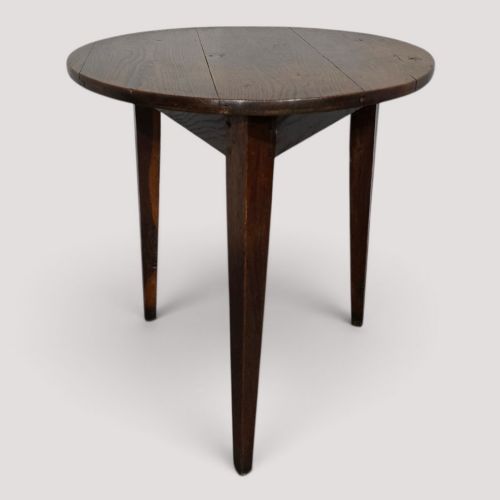
- Cricket table
- A small, three-legged occasional table typically constructed from oak or pine with a round top, originally designed for domestic use in country settings. The three legs ensure stability on uneven floors.
- Tilt-top
- A hinged table top that rotates and folds into a vertical position when not in use, allowing the piece to be stored flat against a wall. This mechanism saved valuable floor space in period rooms.
- Birdcage
- A timber framework beneath a table top that permits the surface to revolve and tilt independently of the central pedestal. It connects the top to the column using small turned spindles.
- Tripod base
- A supporting structure consisting of three radiating legs joined to a central vertical pillar. This design prevents rocking on irregular surfaces.
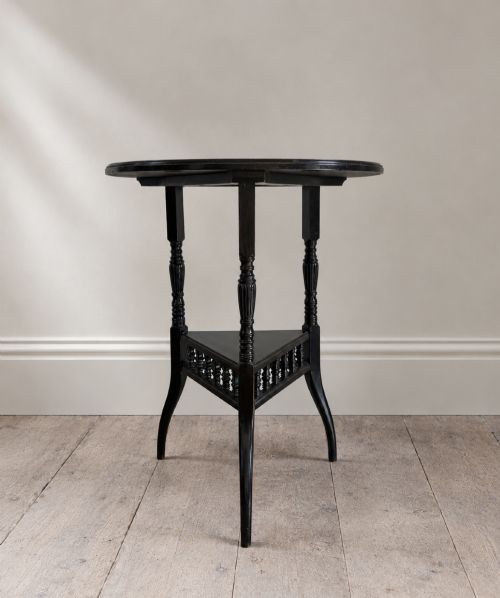
- Ebonised
- Wood treated with a dark stain or finish to imitate ebony. This technique was particularly popular during the nineteenth century and the Arts and Crafts movement.
Round Tripod Occasional Table: Frequently Asked Questions
What is a birdcage mechanism?
A birdcage is a small wooden frame fitted beneath the table top that lets the surface rotate and tilt without turning the main column. This clever hinge allows the entire top to fold flat against the pedestal.
Cabinet makers used this feature on finer Georgian and Victorian examples to save space when the table was pushed against a parlour wall between uses.
Why do these have three legs?
Three legs naturally rest firmly on any irregular floor surface without wobbling, unlike a four-legged table that requires even ground. This practical geometry suited older homes with uneven timber floorboards.
The splayed tripod design also offers generous clearance for feet and chairs drawn close to the central pillar.
Where were they used?
These versatile pieces served beside armchairs and sofas to hold candles, glasses, books, or tea wares. Their portable scale allowed servants to move them around the house wherever surface space was needed.
In grander rooms they functioned as lamp or wine tables, while simpler oak versions stood by hearths in country houses.