
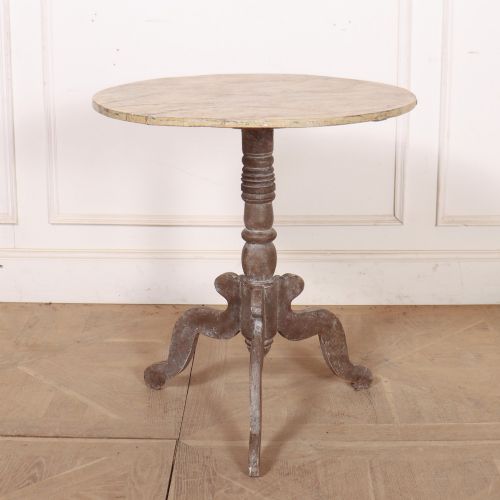
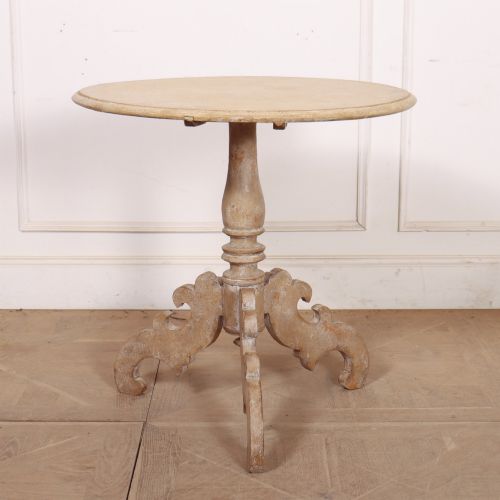
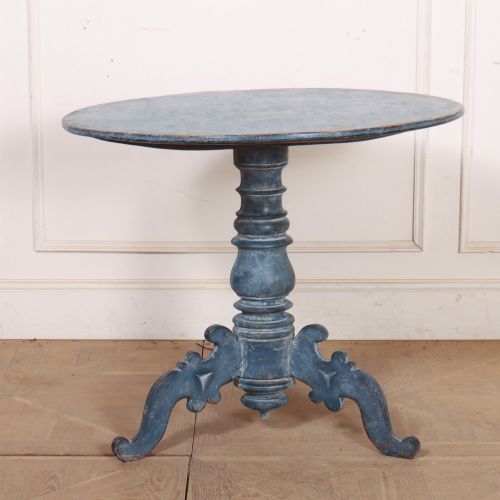
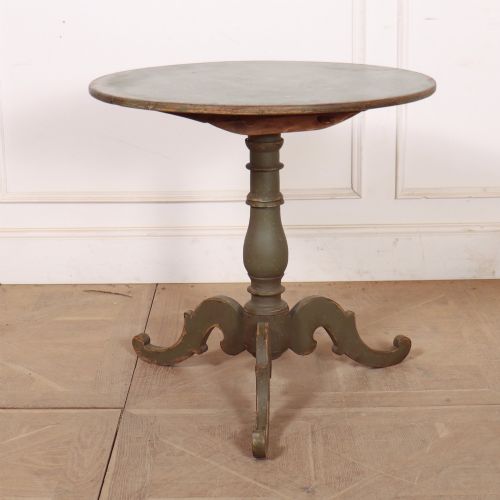


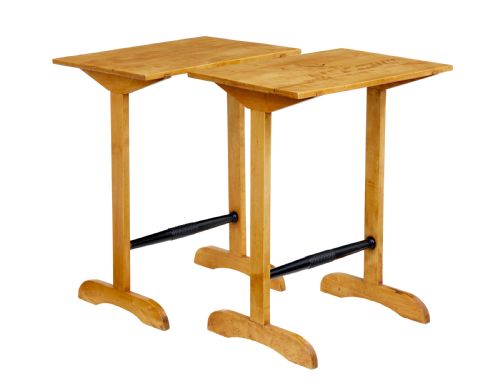


Scandinavian Lamp Table
A Scandinavian antique lamp table brings sturdy northern timber and pale painted finishes to a room, holding a light beside a chair.
Scandinavian Lamp Table
A scandinavian antique lamp table brings practical surface space to a room, drawing on country and formal traditions from the north. These items serve primarily as side tables, occasional tables, and pedestal tables placed beside seating for illumination or display.
The pieces appearing here lean heavily into nineteenth-century origins, alongside early twentieth-century examples. Forms range from simple tripod and octagonal tops to pedestal and occasional designs.
Swedish country styles dominate the selection, alongside Swedish Biedermeier, Karl Johan, Gustavian, and Rococo revival influences. Buyers encounter painted softwood and pine surfaces beside rich birch and burr elm timbers.
How they were made
Cabinetmakers utilised native northern woods such as birch, pine, softwood, alder root, and burr elm. These timbers were turned, carved, and joined to create sturdy frames capable of daily use.
Painted finishes play a central role, often employing layered paint on softwood or pine to achieve the characteristic Swedish country look. Natural wood variations like burr elm and birch highlight the grain through clear polishing or simpler finishes.
Listings feature items spanning the nineteenth century up to 1920, predominantly constructed from pine, birch, and painted wood.
What varies in quality
The refinement of the carving and the choice of timber set finer examples apart from simpler utilitarian pieces. Dense grains like birch and burr elm offer a different visual weight compared to painted pine or softwood.
The preservation of original painted surfaces significantly influences the character of a piece. Subtle details in the turning of pedestals and tripod bases reflect the skill invested by the maker.
The Scandinavian Lamp Table Glossary
- Tripod base
- A support structure featuring three legs radiating from a central column. This arrangement provides stable balance on uneven floors.
- Gustavian
- A Swedish neoclassical design style originating in the late eighteenth century, known for restrained ornamentation and light paint.
- Biedermeier
- A Central and Northern European style focusing on utility and clean lines with figured wood veneers. It emphasises comfort and domestic warmth over heavy ostentation.
- Burr elm
- Wood taken from a growth deformity on an elm tree, showing intricate swirling patterns. Cabinetmakers prize it for decorative tabletops.
- Pedestal table
- A standalone table supported by a single central pillar resting on a base. This form allows maximum legroom around the surface.
Scandinavian Lamp Table: Frequently Asked Questions
What is a scandinavian antique lamp table used for?
These pieces function primarily as small side tables or occasional tables placed next to seating areas. They provide a sturdy surface for a reading lamp, a book, or decorative objects.
Historically, they adapted to various rooms in the house as movable surfaces for lighting before widespread electricity. Today, they serve the same practical purpose while adding northern European character to an interior.
How do I identify a gustavian table?
Gustavian pieces typically feature restrained neoclassical motifs, such as fluting, subtle carving, and pale painted finishes. The style takes inspiration from French Louis XVI design but adapts it with northern simplicity.
Look for symmetrical lines and light grey or white paint that highlights the carved details without overwhelming the form.
What woods were used in these tables?
Cabinetmakers utilised accessible regional timbers including pine, softwood, and birch. More decorative examples feature burr elm or alder root for striking grain patterns on the surface.
Many softwood frames received layers of paint, whilst birch and elm were often finished to showcase the natural grain.
How do I care for a painted wooden table?
Protect painted and polished surfaces from direct sunlight and excessive moisture to preserve the finish. Dust gently with a dry cloth and avoid harsh chemical cleaners.
Maintaining a stable room temperature prevents the timber beneath the paint from expanding or contracting excessively over time.