



Round Snap Top Table
A round snap top table gives a room a circular centrepiece that folds flat against the wall when not in use.
Round Snap Top Table
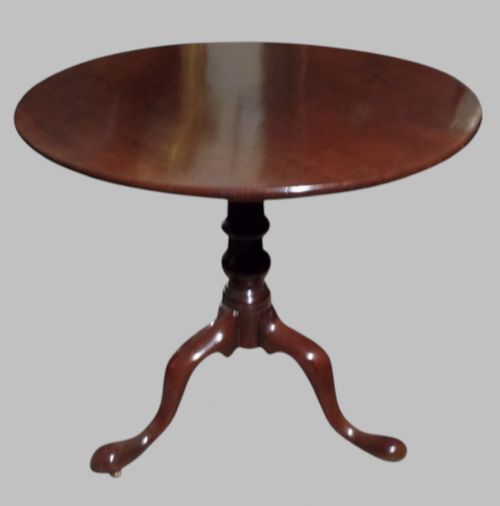
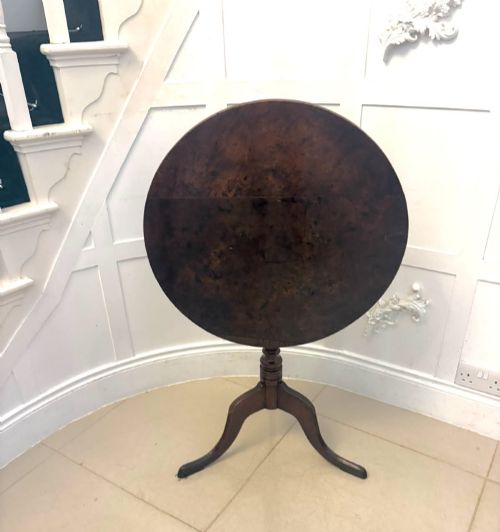
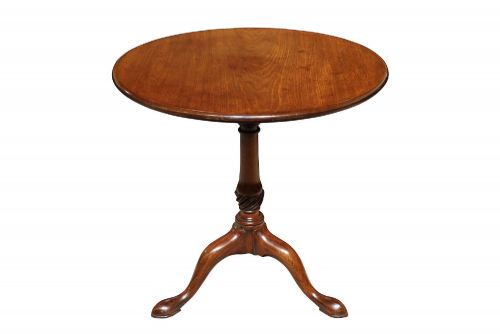
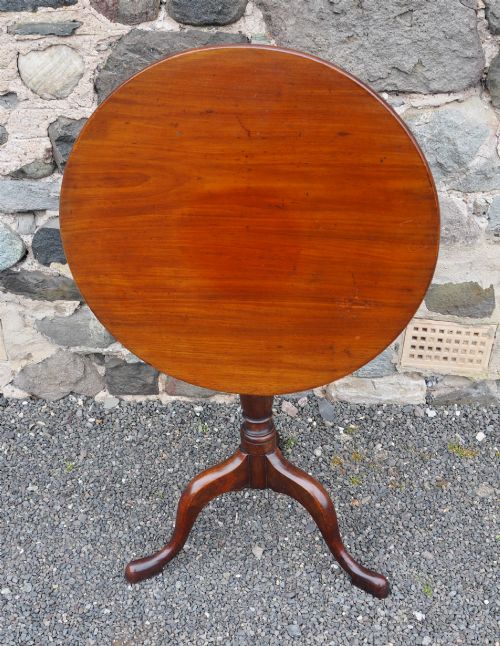
A round snap top table serves various functions as an occasional, wine, breakfast, dining, or supper table depending on its scale and height. When searching for a round snap top table, buyers encounter forms that tilt their circular tops vertically via a catch mechanism, historically saving space in smaller rooms.
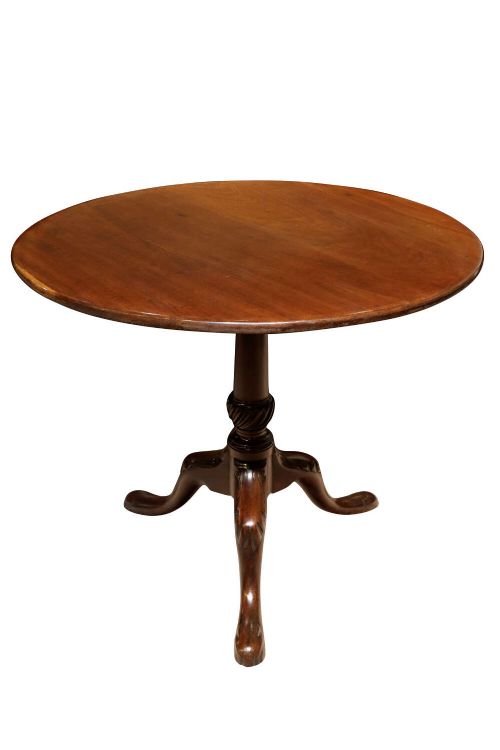
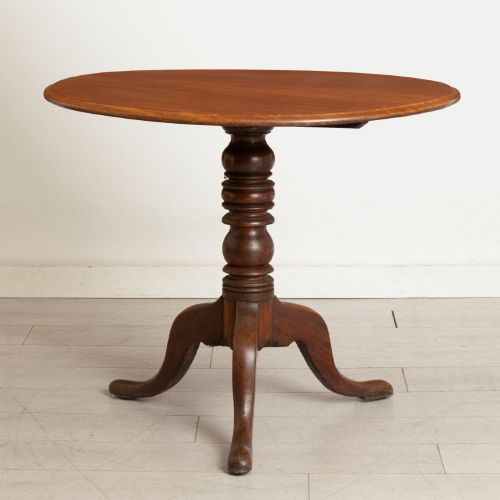
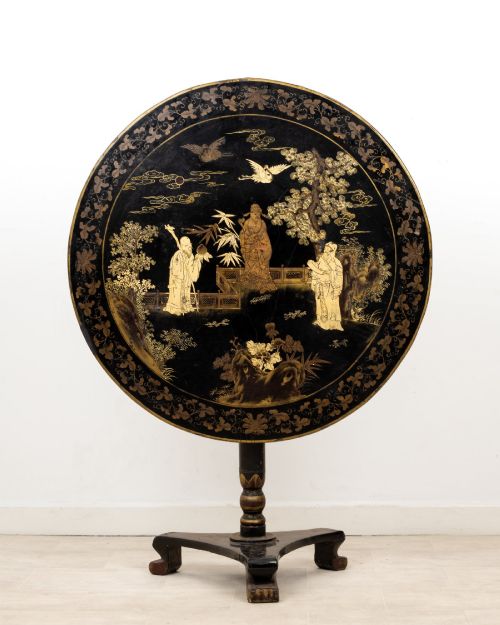
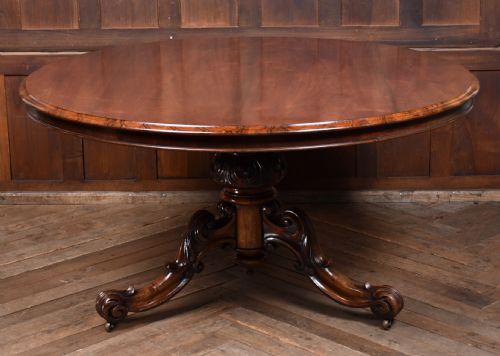
Most examples originate from the eighteenth and nineteenth centuries, spanning the Georgian, Regency, and Victorian periods. Mahogany and oak dominate the selection, alongside rosewood, walnut, birch, and lacquer, often supported on tripod bases or central pedestals.
Materials and construction methods
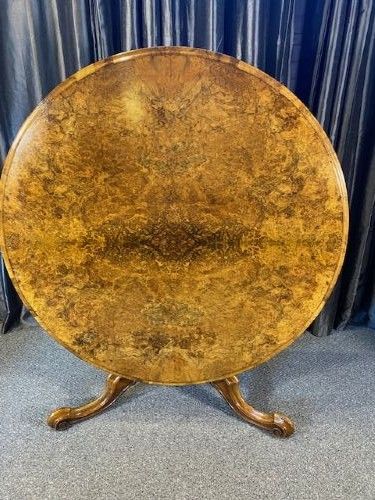
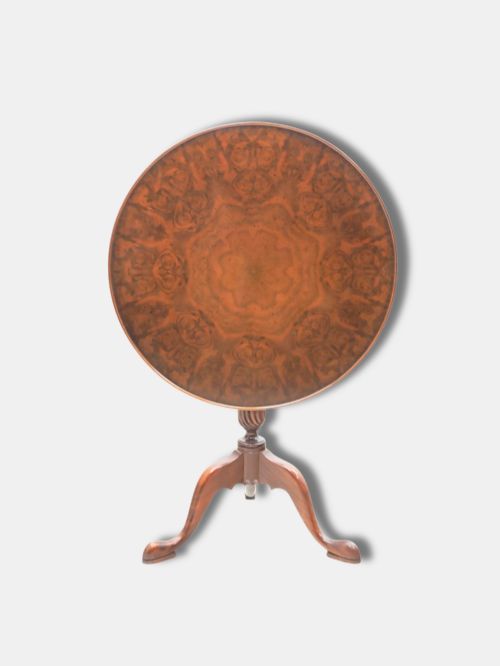
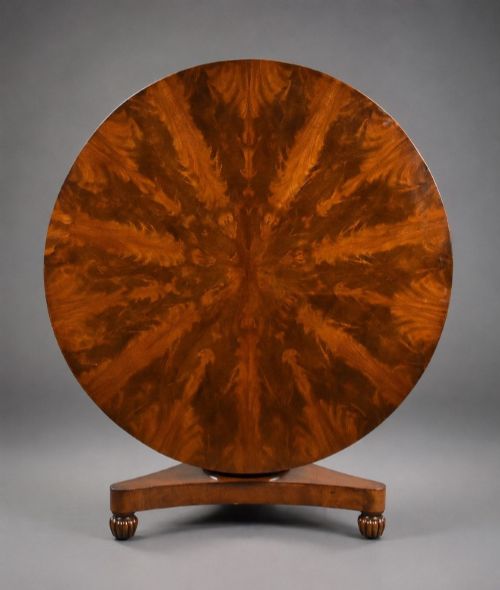
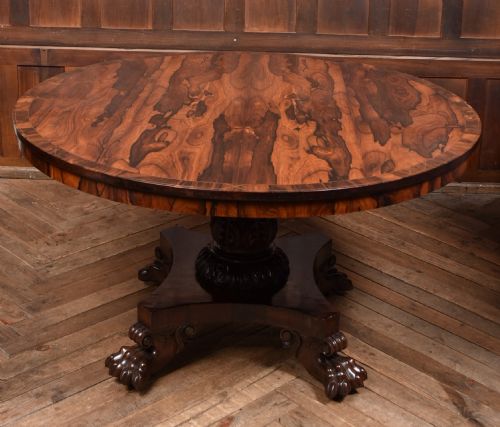
Cabinetmakers utilised solid timbers and veneers, turning mahogany, oak, rosewood, walnut, and birch into circular tops and slender shafts. Flame mahogany veneer, burr walnut, and plum pudding mahogany provide decorative grain figures on the primary surfaces.
The tilting mechanism relies on wooden or brass catches and blocks that secure the top to the tripod base or pedestal. Birdcage attachments appear on certain Georgian examples, allowing the circular top to both rotate and tilt.
Materials range from solid mahogany, oak, and birch to decorative veneers including rosewood, walnut, flame mahogany, and burr walnut.
Assessing quality and craftsmanship
The choice of timber grain dictates much of the visual appeal, with figured selections like plum pudding mahogany or burr wood marking out finer productions. The crispness of the turning on the tripod stem and the proportions of the cabriole legs also distinguish standard workshops from master cabinetmakers.
Stability in the snap action and the tightness of the birdcage mechanism reflect the precision of the original joinery. Tables that retain their original brass fittings and undisturbed surface patination hold greater integrity.
The Round Snap Top Table Glossary
- Snap-top
- A table top fitted with a catch mechanism that tilts the surface into a vertical position. This allows the piece to be stored flat against a wall.
- Birdcage
- A wooden framework beneath the table top that enables the surface to revolve as well as tilt. This construction is typical of finer eighteenth-century tripod tables.
- Tripod base
- A three-legged support system curving outward from a central pillar. It provides stability on uneven floors.
Round Snap Top Table: Frequently Asked Questions
What is a snap top table used for?
These tables functioned as movable surfaces for dining, drinking wine, or placing lamps during the evening. Their tilting mechanism allowed servants to clear them away and store them against the wall.
Today they serve as flexible occasional tables in sitting rooms or hallways where floor space remains at a premium.
How do I date a tilt top table?
Dating relies on stylistic clues in the timber, legs, and tilting mechanism. Georgian examples often feature tripod bases with pad or claw feet and sometimes birdcage actions.
Victorian pieces frequently display heavier rosewood or walnut pedestals with platforms or carved scroll feet. Regency versions incorporate flame mahogany veneers and brass details.
What does birdcage mean on these tables?
A birdcage refers to the small wooden lattice structure fixed beneath the table top. It connects the top to the central pillar using small spindles that let the surface spin in a full circle.
This feature sits above the tilting hinge, allowing the table to both rotate horizontally and fold vertically.