


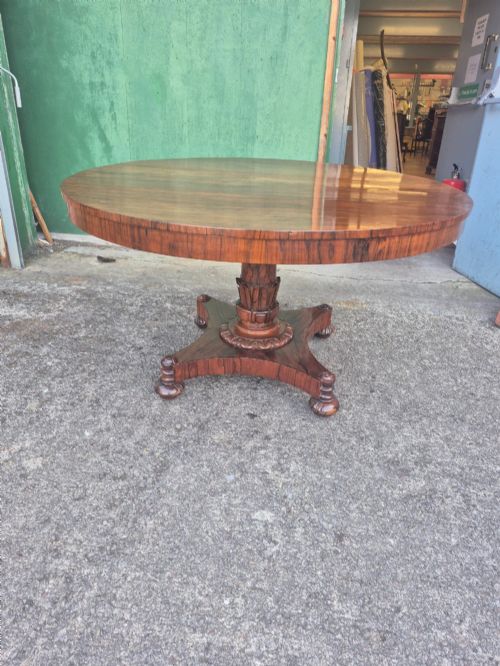
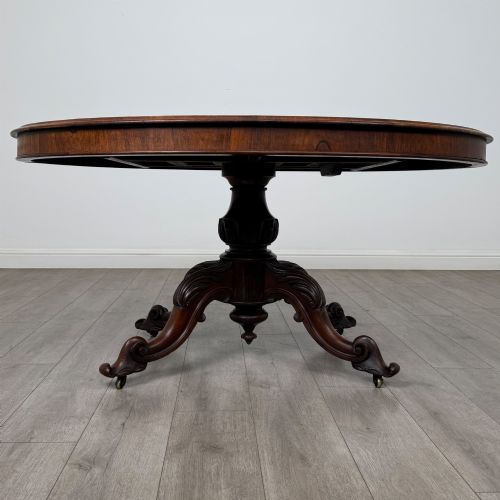
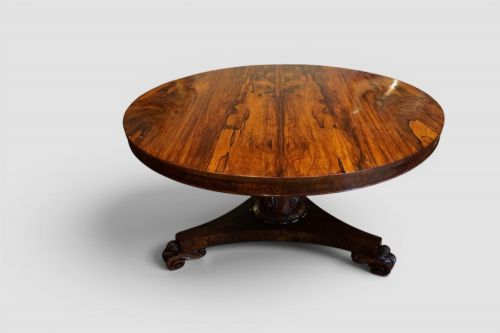
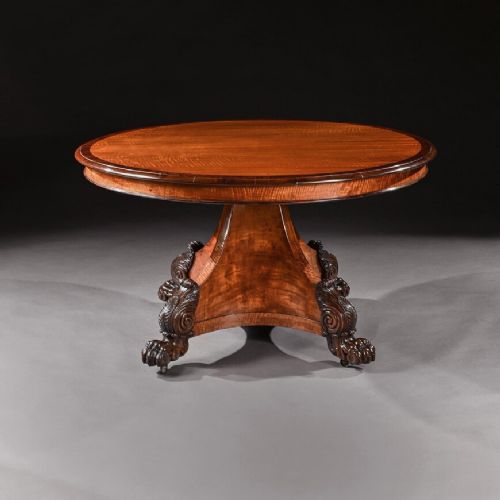
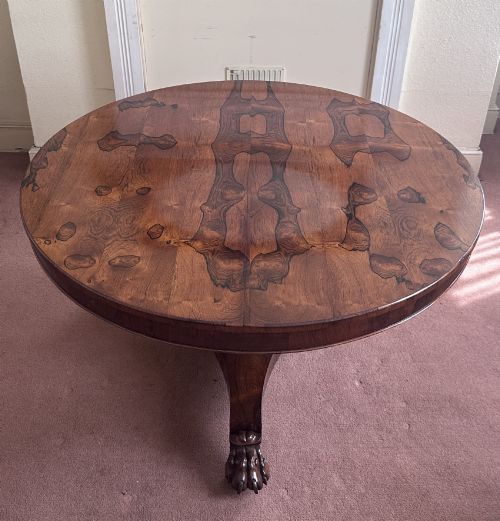
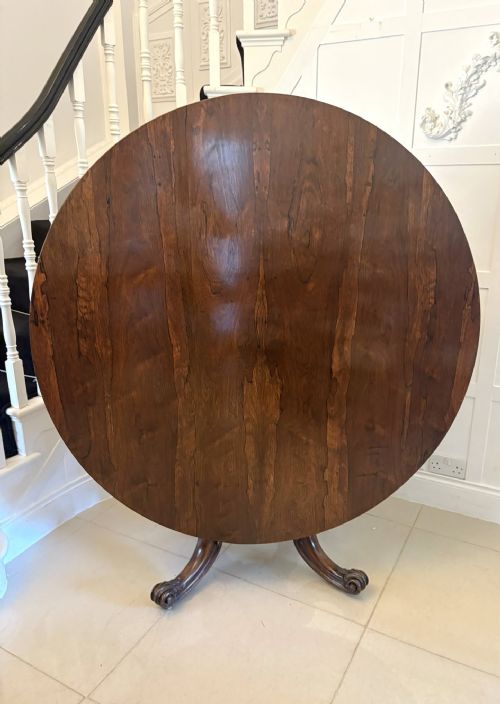
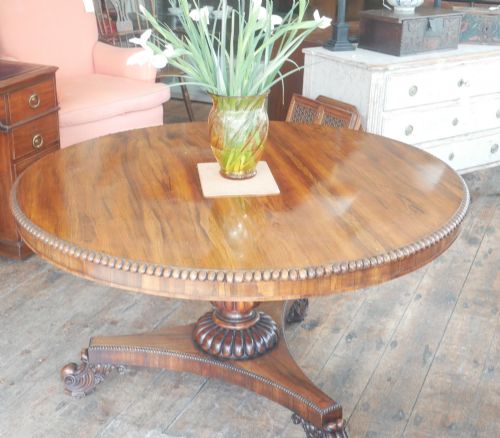
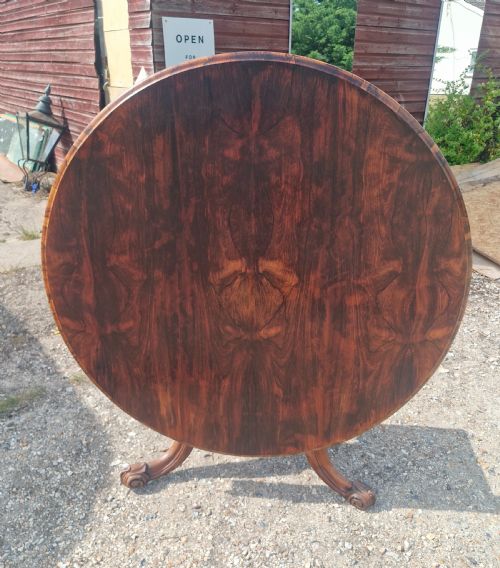
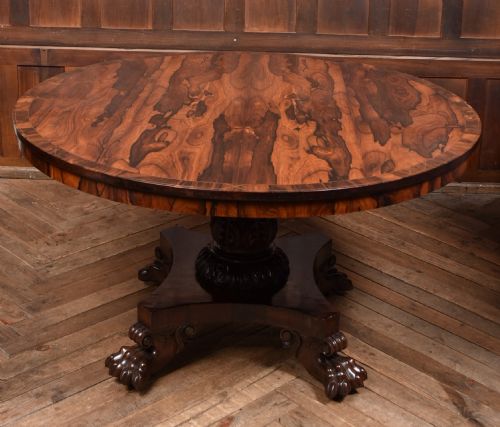
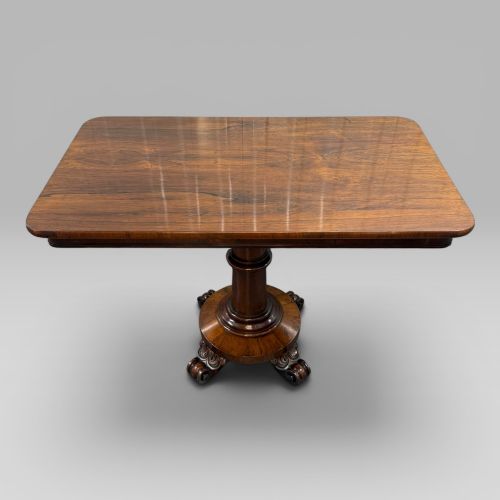
Round Rosewood Centre Table
A round rosewood centre table stands as the architectural anchor of a well-furnished room, offering versatile circular form and rich timber grain.
Round Rosewood Centre Table
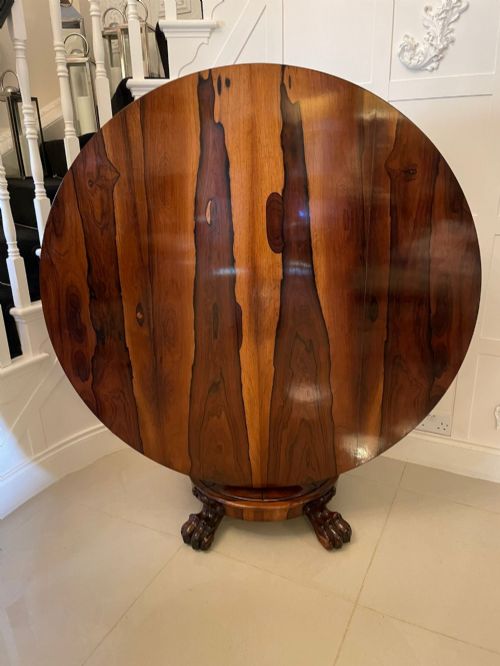
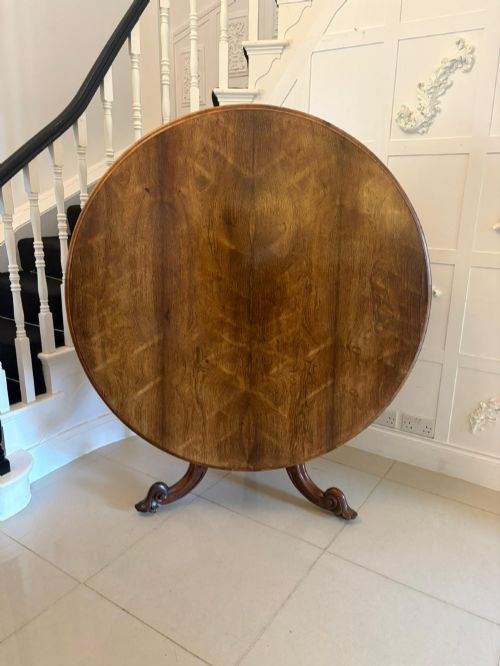
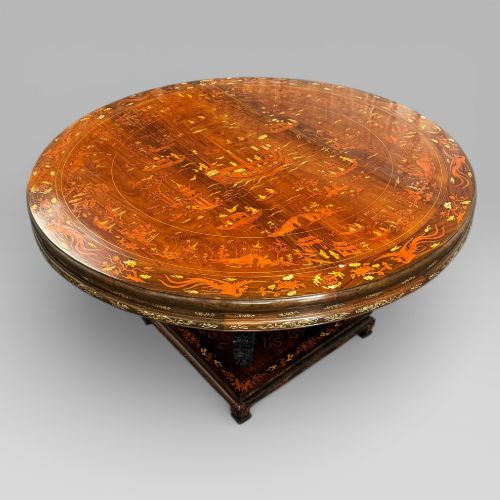
When you search for a round rosewood centre table, you examine circular freestanding tables designed to occupy the middle of a room rather than sit against a wall. The examples on this page span the Regency, William IV, and Victorian periods, alongside Anglo-Indian and Chinese Export interpretations.
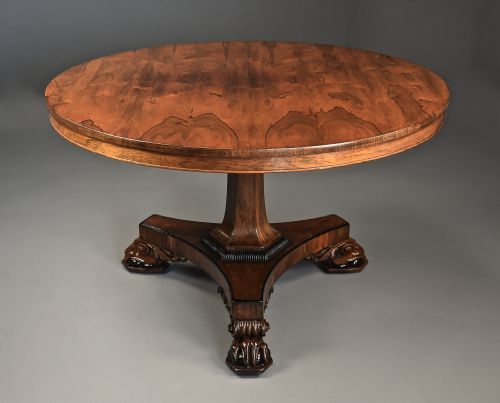
Most pieces date from the nineteenth century, adopting forms such as breakfast tables, tilt-top tables, and pedestal dining tables. They utilise robust central pillars and triform or platform bases to support substantial circular timber tops.
How they were made
Cabinet makers utilised dense mahogany or pine carcases overlaid with figured rosewood veneer to create rich, dark surfaces with striking grain patterns. Selected pieces incorporate contrasting inlay using satinwood, brass stringing, or mother-of-pearl detail.
Structural stability relies on heavy central pedestal columns, frequently mounted on triangular plinths with carved paw feet or castors. Tilt-top mechanisms employ brass catches and sturdy timber blocks to allow the circular surface to pivot when not in use.
What varies in quality
The choice of rosewood veneer determines the visual depth of the surface, with highly figured timber commanding greater presence than plain stock. Crispness in hand-carved acanthus leaves on the pedestal and well-executed brass inlay separate standard production from superior cabinet work.
Joinery execution at the pillar junction and the alignment of the tilt mechanism dictate the physical stability of the table. Original surfaces showing deep patina and minimal restoration hold stronger character than heavily refinished examples.
Edwards & Roberts·Peters of Genoa·Gillows
The Round Rosewood Centre Table Glossary
- Triform base
- A three-sided platform or foot arrangement that provides stable floor support for a central pedestal column. This configuration appears frequently on Regency and William IV tables.
- Tilt top
- A hinged mechanism allowing the circular tabletop to pivot into a vertical position for storage or room clearance. This engineering feature is common on nineteenth-century breakfast tables.
- Snap top
- A spring-loaded or latched variation of the tilt mechanism that locks the tabletop securely in the horizontal position during use. It prevents accidental tipping while dining.
- Figured rosewood
- Timber cut to expose decorative grain patterns such as feathering or flame effects rather than uniform dark heartwood. It was selected for primary display surfaces.
- Pedestal
- A central column supporting the weight of the tabletop above a grounded base. It frees the perimeter of the table from traditional legs.
Round Rosewood Centre Table: Frequently Asked Questions
How do I use a centre table?
A centre table stands freely in the middle of a room, functioning as a display surface for lamps, books, or floral arrangements. In historical interiors, they often doubled as breakfast or occasional dining surfaces.
Because these tables are finished on all sides, they allow movement around the perimeter and break up large floor plans effectively.
How do I date a rosewood table?
Dating relies on stylistic clues in the pedestal base and timber treatment, moving from the classical restraint of Regency design to the heavier, carved proportions of the William IV and Victorian eras. Regency and George IV examples often feature brass inlay and simpler pillar turnings.
Later Victorian versions frequently display more robust scroll feet and elaborate snap-top hardware. Examining the secondary timbers beneath the top also helps confirm the period of manufacture.
How do I care for rosewood?
Rosewood benefits from stable indoor humidity and protection from direct sunlight to prevent the rich reddish-brown timber from fading. Regular dusting with a soft, dry cloth preserves the polished finish.
Avoid placing damp items or hot cups directly on the antique veneer. Periodic application of quality wax maintains the moisture and lustre of the timber surface.